
Few pieces of equipment sit closer to a player’s performance than the glove. It is the single point of contact between hand and mallet, and on the rein hand it governs every subtle correction passed down to the pony. Yet glove fit is one of the most commonly overlooked details in the sport, players will deliberate at length over a mallet’s weight or a saddle’s tree, then reach for whatever glove is labelled “Medium” and hope for the best.
The truth is that a glove which does not fit precisely will quietly undermine your game. Too loose, and it bunches in the palm, dulls the tactile feedback you rely on, and lets friction blisters form over a long afternoon of chukkas. Too tight, and it restricts the very finger movement you need roll your hand around the grip. The perfect polo glove, by contrast, disappears on the hand. It feels like a second skin: snug, responsive, and entirely forgotten once play begins.
This guide explains exactly how to measure your hand at home, how to read a polo glove size chart correctly , including a sizing quirk specific to the sport that catches out even experienced players, and how material choice should shape the size you ultimately select. Whether you are buying your first glove or refining a fit you have never quite trusted, the goal is the same: a glove that lets your hand do its work without ever getting in the way.
Why glove fit matters in Polo
Polo asks more of a glove than almost any other sport, because the two hands perform entirely different roles. Under the right-handed-only convention that governs the modern game, every player carries the mallet in the right hand and the reins in the left. This is not a restriction on left-handed people, they are welcome in the sport, but a safety rule ensuring all players swing on the same side. The practical consequence is that your two hands need different things from a glove.
The mallet hand
The right hand grips the mallet through fast, repeated swings, and a polo mallet is a substantial implement. As the Beaufort Polo Club notes:
The length of the stick varies according to the height of the pony being played and varies from 48 to 53 inches., Beaufort Polo Club
Across a chukka, that grip is made and remade dozens of times. The mallet hand needs reliable grip, clean tactile feedback through the cane, and protection from the friction generated by the handle sliding through a tiring hand. Premium gloves often add reinforced grip zones or textured palms precisely for this reason, and some include knuckle protection for the impacts that come with close play.
The rein hand
The left hand manages a double set of reins and must translate small, deliberate movements into clear signals to the pony. Here, fit is about control and friction relief: many polo gloves for mens add reinforcement between the index and middle fingers, where the reins pass and wear is heaviest. A glove that slips or bunches on the rein hand costs you precision at exactly the moment you need it most.
Because each chukka runs to a maximum of seven and a half minutes and a match spans four to six to 8 of them, small irritations compound. A seam that pinches or a fingertip that bunches becomes a genuine distraction by the final chukka. Fit, in other words, is not a question of comfort alone, it is a performance variable.
“Players will agonise over a mallet’s weight and then grab whatever glove says ‘Medium’ — and it quietly costs them the game. The glove is your only point of contact with both the mallet and the reins, so a fit that’s even slightly wrong dulls the feel your hands depend on. We treat sizing as a performance decision, not a formality.” – Alejandra Falkinhoff, CEO, Ona Polo
How to measure your hand for a polo glove
You need only a soft tailor’s tape measure. If you do not have one, a length of string or a strip of paper and a ruler will do the job just as well. There are two measurements that matter, and you should take both.
Step 1: Measure your hand circumference
Open your dominant hand and wrap the tape around the fullest part of your palm, just below the knuckles, leaving the thumb out. Keep the tape snug against the skin without compressing it. Make a relaxed fist as you take the reading , measuring slightly clenched ensures the finished glove will not pinch when you grip the mallet. Record the figure in both inches and centimetres.
Step 2: Measure your hand length
Lay your hand flat with the fingers together. Measure from the crease where your palm meets your wrist to the tip of your middle finger. Record this figure too. Hand length is the governing measurement for most polo-specific size charts, so do not skip it.
Step 3: Use the larger reading
If your two measurements point to different sizes , a broad palm with shorter fingers, for instance, or the reverse , choose the larger size. A glove that is fractionally roomy can be worked in; one that is genuinely too small never becomes comfortable.
The string method
No tape measure to hand? Wrap a piece of string or ribbon around your palm, mark the point where it overlaps, then lay it flat against a ruler. The same approach works for length. It is surprisingly accurate and perfectly adequate for selecting a size.
A note on which hand to measure
Always measure your dominant hand. It is typically a quarter to half an inch larger than the other, thanks to greater muscle development, and sizing to it prevents an unwelcome surprise when the glove arrives. If you intend to glove both hands, the dominant-hand measurement remains the safe basis for your size.
Common measuring mistakes to avoid
- Measuring the wrong hand. Use the dominant hand, which is usually slightly larger.
- Pulling the tape too tight. Over-tightening gives a falsely small reading and a glove that restricts movement. The tape should rest against the skin, not indent it.
- Including the thumb. The circumference wraps around the palm only, with the thumb excluded.
- Measuring only one dimension. Length and circumference can place you in different sizes; you need both to choose well.
- Measuring cold hands. Hands change size through the day. Measure when warm and at their normal size, not first thing in the morning.
- Trusting your “usual” size. A Medium in a bulky winter glove is not a Medium in a thin polo glove. Brands grade differently, and a single size can vary by a centimetre or two between makers.


Understanding glove sizing systems
Two systems coexist in the glove world, and recognising which one a brand uses is the key to a confident purchase.
Numeric sizing maps your hand measurement directly to a size, so a hand measuring roughly eight inches takes a size 8 glove. The classic shorthand is simply that the number of inches around your hand equals your glove size.
Letter sizing (XS through XXL) groups those numbers into bands. It is more forgiving but less precise, which is why quality makers often publish the underlying measurements alongside the letters.
The table below offers a representative mapping of hand circumference to letter size. Treat it as a general guide rather than an absolute standard , it is a synthesis of equestrian and general glove conventions, and any individual brand’s own chart always takes precedence.
| Letter size | Circumference (in) | Circumference (cm) |
| XS | 6 – 7 | 15 – 17.5 |
| S | 7 – 8 | 17.5 – 20 |
| M | 8 – 8.7 | 20 – 22 |
| L | 8.7 – 9.4 | 22 – 24 |
| XL | 9.4 – 10.4 | 24 – 26.5 |
| XXL | 10.4 – 11.8 | 26.5 – 30 |
Sources vary, which is precisely why you measure rather than assume. One outdoor brand maps a men’s Medium to nine inches; an equestrian specialist uses numeric half-sizes based on circumference. The lesson is constant: read the specific chart for the glove you are buying.
The Polo sizing quirk: Length versus Circumference
Here is the detail that catches out even seasoned players. Dedicated polo glove makers tend to size their gloves by hand length , the distance from the base of the palm to the tip of the middle finger , whereas most equestrian and general outdoor brands size by circumference. Measure only one dimension, or carry over your “usual size” from a riding glove, and you can easily end up a size out.
The representative polo size chart below runs by hand length. It illustrates how a polo-specific brand structures its sizing, from XX-Small to XX-Large:
| Glove size | Hand length (cm) | Hand length (in) |
| XX-Small | 17.0 | 6.7 |
| X-Small | 17.6 | 6.9 |
| Small | 18.2 | 7.2 |
| Medium | 18.8 | 7.4 |
| Large | 19.4 | 7.6 |
| X-Large | 20.0 | 7.9 |
| XX-Large | 20.6 | 8.1 |
The practical takeaway is simple. Take both measurements, then follow the method the brand actually uses. For a polo glove, lead with your length measurement and use circumference as a cross-check to confirm the palm will not be tight. One further caution: the “width” figures that polo brands sometimes publish are flat-hand widths, not full wrap-around circumferences, so never compare a polo brand’s width column directly against an equestrian brand’s circumference column.
Men’s and Women’s glove sizing
Hand size differs between men and women on average , roughly 8.6 inches of circumference for men against about 7 inches for women , but shape matters just as much as size. Women’s gloves are generally cut with narrower palms and longer, more slender fingers, while men’s gloves are built with wider palms and shorter, thicker fingers. As a rule of thumb, women’s gloves run about one to one-and-a-half sizes smaller than men’s.
These are averages, not rules. A man with slim fingers may find a women’s cut fits more precisely, and a woman with broad hands may prefer a men’s glove. Unisex models are usually scaled to men’s proportions, so players with smaller or narrower hands should size carefully. The measurement always trumps the label , let your numbers, not the section of the catalogue, guide the choice.
How material affects sizing
Material is the factor most players overlook, and it can shift your ideal size by half a size in either direction. The central question is how much the glove will stretch and conform over time.
“Material is the variable players overlook, and it can move your ideal size by half a size in either direction. It comes down to one question: how much will the glove give? Leather relaxes into your hand, so you buy it snug; a technical synthetic barely stretches, so you buy it true. Get that logic right and the same hand can wear two different sizes.” – Alejandra Falkinhoff, CEO, Ona Polo
Leather gloves: buy snug
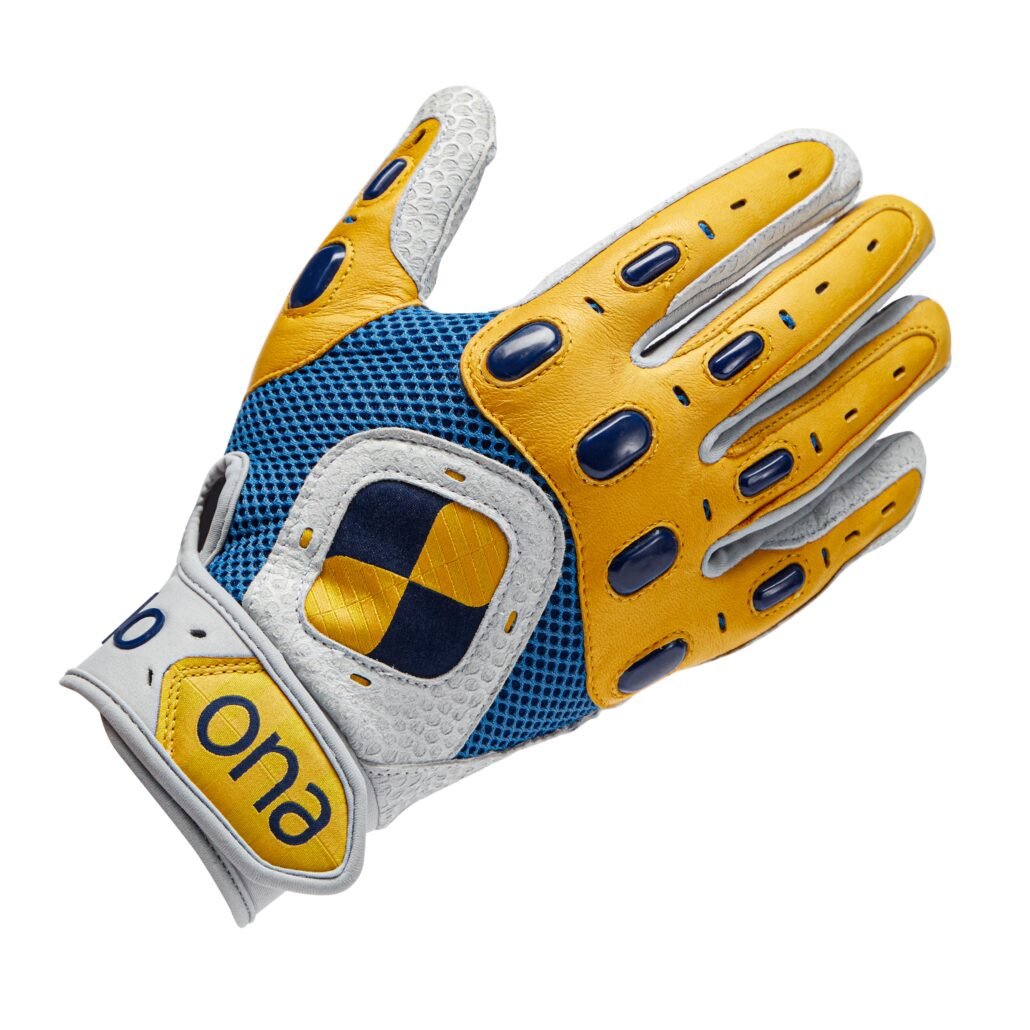
Leather , whether deerskin, goatskin, or fine peccary , moulds to the hand with use and stretches, primarily across the width rather than in finger length. Deerskin is especially accommodating, often giving around half a size, and has the rare quality of staying soft after getting wet. Because a quality leather glove will relax into a custom fit, you should buy it snug from the outset. A leather glove that feels perfect on day one will likely feel loose within a fortnight.
Synthetic and mesh gloves: buy true to size
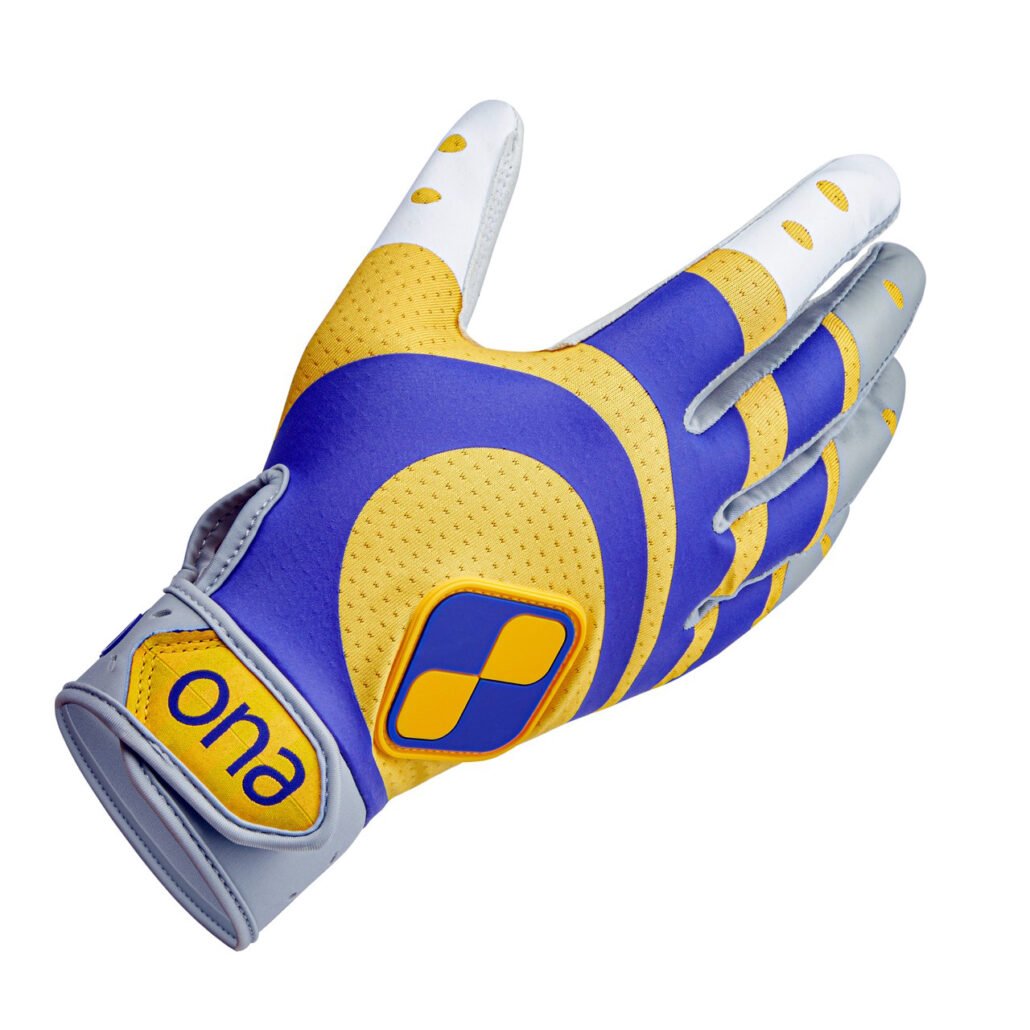
Technical synthetics, engineered suedes, and mesh-backed gloves offer lightness, quick drying, and excellent weather resistance, but they stretch very little. Buy these to your true measured size. What you feel in the first wear is broadly what you will have for the life of the glove.
Sizing between two sizes
If you land squarely between sizes, let the material decide. Choose the smaller size in leather, which will stretch to meet you, and the larger size in synthetic, which will not. And be alert to model-specific fit notes: gloves with rigid features such as carbon knuckle protection often run tight, so many players size up in those models specifically.
In practice, a serious player often keeps more than one pair: a supple leather glove for dry, hot days when grip and feel are paramount, and a weather-ready synthetic pair for wet chukkas when quick-drying performance matters more. Exploring a dedicated polo glove collection that spans both leather and synthetic constructions is the easiest way to match material to conditions , and to your sizing strategy.
One glove or a pair?
There is no rule dictating how many gloves a polo player wears, and conventions vary. Because the sport is played right-handed, some players glove only the right hand for grip on the mallet and protection during close play. Others wear a pair, gaining extra grip on the reins in the left hand and shielding both hands from rope burn and blisters.
It is largely a matter of preference, rather as golfers debate the merits of one glove versus two. Weather tips the balance: heat, heavy sweat, and rain all push players toward a full pair for security of grip. If you are new to the sport, starting with a glove on the mallet hand and adding a rein-hand glove as you find your preferences is a sensible path.
Signs your glove doesn’t fit
Signs it is too tight
- Restricted finger movement, or difficulty making a full fist around the grip.
- Pressure or discomfort along the seams.
- Numbness or cold fingers, a sign the glove is restricting circulation.
Signs it is too loose
- Material bunching in the palm or at the fingertips.
- Wrinkles over the ring finger , a classic equestrian tell that the glove is oversized and will cost you rein feel.
- The glove twisting on the hand and/or fingers, with reduced grip and friction blisters as it.
What the perfect fit feels like
A well-fitted polo glove follows the contour of your hand with no dead space at the fingertips. It slides on without a fight, lets you close a full fist without resistance, and lets each fingertip reach the end of its finger without pressure. To check finger length, interlace your fingers and press the glove material down to the base of the fingers: the seams should align cleanly with your hand. The overall sensation should be that of a second skin , present enough to grip securely, light enough to forget.
“The test of a glove is simple: once play begins, you should forget you’re wearing it. A perfect fit follows the contour of the hand with no dead space at the fingertips, lets you close a full fist without resistance, and disappears into the game. If you’re still aware of the glove by the final chukka, the fit is wrong — not the hand.” – Alejandra Falkinhoff, CEO, Ona Polo
Caring for your gloves to preserve the fit
A correct fit can be lost to poor aftercare, and leather is where most of that loss happens. A few habits will keep a glove fitting as intended for seasons rather than months.
- Never dry leather with direct heat. Radiators, hairdryers, and direct sun stiffen and shrink the hide. Air-dry flat at room temperature instead.
- Wash gently. Lukewarm water with a mild soap, ideally with the gloves on the hands, keeps the shape true. Rinse, then squeeze water out from the fingers downward.
- Reshape while damp. Putting leather gloves on as they dry lets them dry to your hand rather than into a shrivelled shape.
Hot water combined with heat will shrink leather , a property occasionally used deliberately to tighten an over-large glove, but otherwise a risk worth avoiding.
A quick glossary of polo shots
From your very first swing to the shots reserved for the pros, here’s every polo shot you need to know , a complete glossary from beginner to advanced.
The basic shots
Offside Forehand – The fundamental polo stroke, hit on the right side of the pony with a forward swing. The player leans forward in the “one” position, arm extended toward the ball, and swings through in the direction of travel. This is usually the first shot every player learns.
Offside Backhand – Also on the right side, but swung backward against the direction of travel. Used to send the ball behind you , often to a teammate or to clear the ball away from danger when you can’t hit forward.
Nearside Forehand – Hit on the left side of the pony with a forward swing. Requires the arm to cross slightly under or across the neck of the horse, demanding good coordination since it’s less natural than the offside shots.
Nearside Backhand – On the left side with a backward swing, sending the ball behind you on the nearside. Considered one of the trickier basic shots to master due to the angle and reach required.
The advanced shots
Under-the-Neck Shot – Played from either side, similar to the basic forehand, but you point 45° out (offside) or slightly across the pony’s line (nearside) in the starting “one” position. You ride closer to the ball’s line, hit it earlier and further in front of you, and drop your chin toward the mane to reach it. Your arm starts pointing opposite to your target direction. As skill improves, this shot can even be hit square or backwards on the far side, riding over the top of the ball, with care taken to keep the stick clear of the horse’s left foreleg.
Tail Shot – Hit the ball as late as possible on either side, rolling the wrist through it to send it around the horse’s tail. The offside version is especially useful for setting up team positional play.
Cut Backhand Shot – Played earlier than the tail shot, with the “one” position as square as possible to the horse’s line, leaning out of the saddle to hit the ball wider than normal.
Tapping – Not a single strike but a control technique: a short, crisp swing to nudge the ball at least 5 yards while keeping possession. The stick head is pulled back near the horse’s hind leg, wrist cocked around 45°, then pushed forward through the ball and rolled into a half follow-through, staying parallel to the horse and down the ball’s line.
Square Shot (Flick Shot) – Played on either side close to the pony. Offside: thumb down the flat side of the handle, arm pushed under the pony’s neck, hitting very early to avoid the horse’s foreleg. Nearside: arm goes under the neck from the left, leaning out left with a cocked backswing before playing forward. Meant for close-range, crisp goal-scoring shots traveling about 20–25 yards.
Millionaire Shot – A shot (traditionally hit by the team patron) requiring precise timing , striking the ground simultaneously with the ball to stop the stick following through into the pony’s legs.
Trick Shots – Two advanced/rare shots:
- An offside swing around the back of the pony to hit the ball forward between the two horses after being ridden off.
- A shot behind the pony’s hind legs, leaning back and dropping the stick down the ball’s line by feel rather than sight, when ridden over the ball from the nearside.
A polo glove is a small piece of equipment with an outsized influence on how you play. Get the fit right and it vanishes on the hand, letting you focus entirely on your line, your swing, and your pony. Get it wrong and it nags at you through every chukka, dulling your feel for the reins and the mallet alike.
The method is straightforward: measure both the length and the circumference of your dominant hand, read the specific brand’s chart by the dimension it actually uses, and let the material guide whether you size snug or true. Buy leather close, knowing it will stretch to meet you; buy synthetic to your measurement, knowing it will not. Confirm the second-skin feel before you commit, and care for the glove well enough to keep it. Do that, and your hands will be ready for whatever the game asks of them.
Finding your perfect polo glove
Choosing the right polo glove begins with an accurate measurement and ends with a glove matched to your hand, your playing style, and the conditions you ride in. From supple leather models built for grip and feel to weather-ready synthetic gloves engineered for wet chukkas, the right fit transforms a functional accessory into a genuine performance advantage. Explore a considered collection of polo gloves and the wider range of polo apparel and equipment , from pants and shirts to eyewear and protective gear , to equip yourself with the same attention to craftsmanship and detail that defines the sport itself.
Frequently asked questions
How do I measure my hand for a polo glove?
Use a soft tape measure. For circumference, wrap it around the fullest part of your palm just below the knuckles, excluding the thumb, while making a relaxed fist. For length, measure from the crease at your wrist to the tip of your middle finger. Measure your dominant hand and record both figures, polo gloves are usually sized by length, with circumference as a cross-check.
Should a polo glove be tight or loose?
A polo glove should fit like a second skin: snug and contoured to the hand, with no dead space at the fingertips, but never restrictive. You should be able to close a full fist without resistance. Leather gloves should be bought slightly snug because they stretch with wear, while synthetic gloves should be bought true to your measured size.
Do polo gloves stretch over time?
Leather gloves stretch, mainly across the width rather than in finger length, moulding to the hand with use, deerskin can give around half a size. Synthetic, suede-effect, and mesh gloves stretch very little, so what you feel on the first wear is close to their permanent fit.
What size polo glove should I buy if I’m between sizes?
Let the material decide. In leather, choose the smaller size, as it will stretch to meet your hand. In synthetic, choose the larger size, as it will not give. Gloves with rigid features such as carbon knuckle protection often run tight, so many players size up in those specific models.
Do polo players wear one glove or two?
Both are common. Because the game is played right-handed, some players glove only the mallet hand for grip and protection, while others wear a pair for extra grip on the reins and protection from rope burn. It comes down to preference and conditions, heat, sweat, and rain all encourage wearing a full pair.
Are men’s and women’s polo gloves sized differently?
Yes. Women’s gloves are generally cut with narrower palms and longer, slimmer fingers, and typically run about one to one-and-a-half sizes smaller than men’s. These are averages rather than rules, so always let your actual hand measurement guide the choice over the label.
How do I stop my leather polo gloves from shrinking?
Never dry leather with direct heat such as radiators, hairdryers, or direct sun, as this stiffens and shrinks the hide. Wash gently in lukewarm water with a mild soap, reshape the gloves while damp, ideally by wearing them as they dry, and condition them periodically to keep the leather supple.


Frequently asked questions
How do I measure my hand for a polo glove?
Use a soft tape measure. For circumference, wrap it around the fullest part of your palm just below the knuckles, excluding the thumb, while making a relaxed fist. For length, measure from the crease at your wrist to the tip of your middle finger. Measure your dominant hand and record both figures, polo gloves are usually sized by length, with circumference as a cross-check.
Should a polo glove be tight or loose?
A polo glove should fit like a second skin: snug and contoured to the hand, with no dead space at the fingertips, but never restrictive. You should be able to close a full fist without resistance. Leather gloves should be bought slightly snug because they stretch with wear, while synthetic gloves should be bought true to your measured size.
Do polo gloves stretch over time?
Leather gloves stretch, mainly across the width rather than in finger length, moulding to the hand with use, deerskin can give around half a size. Synthetic, suede-effect, and mesh gloves stretch very little, so what you feel on the first wear is close to their permanent fit.
What size polo glove should I buy if I’m between sizes?
Let the material decide. In leather, choose the smaller size, as it will stretch to meet your hand. In synthetic, choose the larger size, as it will not give. Gloves with rigid features such as carbon knuckle protection often run tight, so many players size up in those specific models.
Do polo players wear one glove or two?
Both are common. Because the game is played right-handed, some players glove only the mallet hand for grip and protection, while others wear a pair for extra grip on the reins and protection from rope burn. It comes down to preference and conditions, heat, sweat, and rain all encourage wearing a full pair.
Are men’s and women’s polo gloves sized differently?
Yes. Women’s gloves are generally cut with narrower palms and longer, slimmer fingers, and typically run about one to one-and-a-half sizes smaller than men’s. These are averages rather than rules, so always let your actual hand measurement guide the choice over the label.
How do I stop my leather polo gloves from shrinking?
Never dry leather with direct heat such as radiators, hairdryers, or direct sun, as this stiffens and shrinks the hide. Wash gently in lukewarm water with a mild soap, reshape the gloves while damp, ideally by wearing them as they dry, and condition them periodically to keep the leather supple.