
Few sports carry the same blend of history, athleticism and understated glamour as polo. Played on a field the size of nine football pitches, contested at a gallop, and refined over more than two thousand years, it is often called “the Sport of Kings” – yet for the modern spectator it is one of the most welcoming luxury sports there is. On any given Sunday, you can stand on the same turf as a ten-goal legend during the half-time divot stomp, glass of something cold in hand, watching the finest horses and horsemen in the world at work.
For the newcomer, though, the polo map can feel opaque. Where is the game actually played at its highest level? Which clubs matter, and why? What separates a quiet country ground from a stadium that draws thirty thousand people? This guide is written for the fan – whether you are planning your first day at the polo or simply want to understand the sport’s great cathedrals. We will travel through polo’s four heartlands and a handful of remarkable destinations beyond them, explaining the tournaments, the traditions and the terminology along the way, so that when you finally take your seat pitchside, you will know exactly what you are watching.
A brief history: From Persia and Manipur to the modern game
Polo is among the oldest team sports still played today, with origins traced back more than two millennia. Some of the earliest recorded matches took place in ancient Persia, in what is now Iran, from roughly the sixth century BCE, where the game served as training for elite cavalry – the source of its regal reputation. A parallel and arguably more direct ancestor is sagol kangjei, played in Manipur in northeast India, whose Imphal Polo Ground is often described as the oldest in the world. The word “polo” itself comes from the Balti term pulu, meaning “ball.”
The modern, codified game spread through British India in the nineteenth century. In 1862 two British soldiers founded the Calcutta Polo Club, recognised today as the world’s oldest surviving club. Polo reached England in 1869, and by 1874–75 the Hurlingham Club in London had drawn up the first English rules. The body that grew from those early efforts, the Hurlingham Polo Association, still governs the sport across the United Kingdom, Ireland and more than two dozen other countries – a reminder of how directly today’s game descends from those first Victorian chukkas.
Understanding the game: Terminology every fan should know
A little vocabulary transforms the spectator experience. Here are the essential terms you will hear trackside, and what they actually mean.
- Chukka (or chukker): a period of play lasting seven or seven-and-a-half minutes. High-goal matches run six to eight chukkas; most club matches run four to five depending on the level of play.
- Handicap / goals: every player is rated from −2 for beginners up to 10 for the elite. Crucially, this is a measure of ability, not goals scored. A team’s handicap is the sum of its four players’ ratings, and a genuine 10-goal handicap is vanishingly rare – only a handful of players in the world hold it at any time.
- High-goal, medium and low: tournaments are graded by combined team handicap. Low-goal spans roughly 0–8, medium 10–14, and high-goal 18–22 and above. When you see “high-goal” on a fixture, it is your signal that top professionals will be on the field.
- Patron: the team owner, usually an amateur, who funds the side and plays alongside hired professionals – a structure unique to polo.
- Line of the ball: the imaginary line along which the ball travels, which governs right of way. It is the single most important rule to grasp as a spectator; there is no offside in polo.
- Divot stomp: the cherished half-time tradition in which spectators walk onto the field to tread the turf divots back into place – part groundskeeping, part social ritual.
- Ride-off and hook: legal defensive moves – shouldering an opponent off the line, or blocking their swing with your mallet.
What makes a Polo Club prestigious?
Not all polo grounds are equal, and prestige in this world rests on four pillars. The first is the goal level a club hosts: only Argentina stages polo at the maximum 40-goal handicap, which is why it sits at the summit of the sport. The second is the lineage and reputation of a club’s signature tournament – a trophy contested for a century carries a weight no new event can match. The third is the calibre of patrons, teams and players it attracts; the presence of a Cambiaso, Castagonla or a Pieres elevates any fixture. And the fourth, which matters most to the fan, is the quality of the facilities and the welcome extended to spectators: the number and condition of the fields, the hospitality, and how easy it is to attend.
“A truly great club isn’t measured only by the handicap of its tournaments. It’s the standard of the grounds, the quality of the horses in the lines, and the sense that everyone – from a ten-goaler to a first-time visitor – is part of the same afternoon. That combination is rarer than people think.” – Alejandra Falkinhoff, CEO, Ona Polo
Argentina: The heart of world polo
If polo has a capital, it is Buenos Aires. Argentina produces the finest players and ponies on earth, and its high-goal season from September to December is the most important in the sport.
Campo Argentino de Polo (Palermo) and the Argentine Open
On Avenida del Libertador in the Palermo district of Buenos Aires stands the stadium universally known as “the Cathedral of Polo.” The Campeonato Argentino Abierto de Polo – the Argentine Open – traces its roots to 1893 and has been played at Palermo since 1928. It is the premier annual club tournament in the world and the only one contested at the maximum 40-goal level, held each November and December before packed, roaring stands. To watch its final is to see the sport at its absolute peak.
“There is nothing in polo quite like a final at Palermo. The noise, the horsemanship, the pressure at 40 goals – it changes how you understand the game. If you only ever see one match in your life, make it that one.” – Alejandra Falkinhoff, CEO, Ona Polo
The Triple Corona (Triple Crown)
The Argentine Open at Palermo is the culmination of the Triple Crown, Argentina’s elite spring circuit – though the order has recently changed. As of the 2025 season, for the first time in its history, the calendar opened with the Hurlingham Open (whose tournament dates to 1893, making it the oldest Open in Argentina), continued with the Tortugas Open, and closed with the Argentine Open at Palermo. Ahead of all three sits the Jockey Club Open, a separate warm-up tournament that isn’t part of the Triple Crown itself but is where teams sharpen their form before the season proper begins. Teams must carry a minimum 28-goal handicap simply to enter, which tells you everything about the level of play.
La Dolfina and Ellerstina: The great dynasties
La Dolfina and Ellerstina defined twenty-first-century polo for two decades, and Adolfo Cambiaso – widely regarded as the greatest player in the game’s history – remains central to that story. But the old two-team rivalry has since reshaped itself. Ellerstina brothers Facundo and Gonzalo (h.) Pieres invited the next generation of the Heguy family, cousins Cruz and Antonio Heguy of Indios Chapaleufú, to join them, forming Ellerstina–Indios Chapaleufú. Meanwhile Cambiaso’s La Dolfina joined forces with the Castagnola brothers’ La Natividad, and La Natividad–La Dolfina won the 2025 Triple Crown, beating Ellerstina–Indios Chapaleufú in the Palermo final. The result is a deeper, more competitive field than the old rivalry alone – several strong super-teams now contest the Triple Crown each season, not just two.
United Kingdom: Royalty and Heritage
England gave polo its modern rules, and its clubs remain steeped in history and royal association. The English high-goal season runs from spring through summer, culminating in a handful of celebrated finals.
Guards Polo Club, Windsor
Founded in 1955 by Prince Philip, Duke of Edinburgh, and set on Smith’s Lawn within Windsor Great Park, Guards is often called the most famous polo club in the world. It is Europe’s largest, with ten pitches and hundreds of matches each season. Its flagship event, the Cartier Queen’s Cup, is a prestigious high-goal tournament, and the club’s royal connections make a day here as much a social occasion as a sporting one.
Cowdray Park Polo Club, West Sussex
Known as “the home of British polo,” Cowdray Park was founded in 1910 and hosts the British Open Polo Championship for the Cowdray Gold Cup, established in 1956. Contested at 22-goal level, it is the premier tournament in Europe and one of the three global “Grand Slams” of high-goal polo, alongside the Argentine and U.S. Opens. Matches are played against the romantic backdrop of the ruins of Cowdray Castle, and the Gold Cup final draws the largest polo audience in the country.
Other Notable British Clubs
Beyond these two giants, Cirencester Park Polo Club – founded in 1894 on the Bathurst estate – is England’s oldest, while Ham Polo Club is the last surviving club within London itself. Together they sustain a season rich in tradition and accessible to visitors.
United States: From Meadowbrook to Wellington
American polo is governed by the United States Polo Association, founded in 1890 and one of the oldest sports governing bodies in the country. Its member clubs stretch coast to coast, but the sport’s modern centre of gravity lies in Florida.
National Polo Center, Wellington, Florida
Formerly the International Polo Club Palm Beach, this facility was acquired by the USPA and rebranded as the National Polo Center. It is the epicentre of American polo, hosting the Gauntlet of Polo and, as its crown jewel, the U.S. Open Polo Championship, first played in 1904. The winter season here – with its famous Sunday brunch polo, Champagne lawns and divot stomps – is the most glamorous fixture on the American calendar.
Santa Barbara, Greenwich and Beyond
On the West Coast, the Santa Barbara Polo & Racquet Club, founded in 1911, is among the oldest in the nation, set spectacularly between the mountains and the Pacific. On the East Coast, Greenwich Polo Club in Connecticut offers some of the highest-level polo in the country and welcomes thousands of spectators to its public Sunday matches, with affordable car passes that make it one of the easiest premier venues for newcomers to attend.
Spain: Sotogrande’s summer season
Founded in 1965, Santa María Polo Club in Sotogrande is one of Europe’s finest venues and, during its summer season, rivals Guards and Cowdray for prestige. Its International Polo Tournament, running from late July through August, is divided into Bronze, Silver and Gold Cups across several grass grounds. Crucially for fans, matches are largely free to attend and thoroughly family-friendly, making Sotogrande one of the most enjoyable and accessible introductions to top-level polo anywhere in the world.
Other great polo destinations
France: Chantilly and Deauville
The Polo Club du Domaine de Chantilly, less than an hour from Paris, is among the largest clubs in Europe and hosts the Open de France, the climax of the French high-goal season. Matches from spring to autumn are typically free to the public – an elegant, easygoing day out in the French countryside. On the Normandy coast, the Deauville International Polo Club – founded in 1907 and host to players from King Alfonso XIII of Spain to Winston Churchill over the decades – stages the Coupe d’Or each August as part of the Barrière Deauville Polo Cup, the most prestigious polo tournament in France after the Open de France itself.
Switzerland: Snow Polo at St. Moritz and Gstaad
First staged in 1985 on the frozen surface of Lake St. Moritz, the Snow Polo World Cup is the original and most prestigious tournament of its kind, and the only high-goal event played on snow. Held each January against an Alpine backdrop, it draws tens of thousands of spectators and has inspired snow-polo events worldwide. Come summer, Switzerland hosts polo again at altitude: the Hublot Polo Gold Cup Gstaad, staged at 1,000 metres in the Bernese Alps since 2007, is the most prestigious polo tournament in the Alps, with free public access and a lively Polo Village alongside the matches.
India: Living History
India remains the sport’s living museum. Beyond the Calcutta Polo Club, the world’s oldest, the princely city of Jaipur carries a storied polo heritage – its legendary teams of the 1930s toured England and dominated the season. That heritage runs deeper still: Jaipur Polo Club was founded in 1918 with players drawn from both the Jaipur and Jodhpur royal houses, later folding into the Rajasthan Polo Club in 1957. Jodhpur has its own distinct lineage, built by Maharaja Sir Pratap Singh, who founded the Jodhpur Lancers and turned them into a polo powerhouse. The sport is still organised nationally by the Indian Polo Association, founded in 1892 and led today by the 61st Cavalry – the world’s last serving horse-mounted cavalry regiment – with the Army Polo and Riding Club maintaining Delhi’s international-standard ground after the old Delhi Polo Club dissolved in 1983. Beyond these historic centres, polo has found new life at Leh in Ladakh, and in Udaipur, Hyderabad and Bengaluru – a direct thread back to the game’s origins, still being played today.
The United Arab Emirates
With a season running from October to April, the UAE has become a modern hub, home to well-appointed venues such as the Dubai Polo & Equestrian Club and the Al Habtoor Polo Club. Combining luxury hospitality with high-goal play, the Emirates offer a contemporary counterpoint to polo’s older heartlands


The fan experience: How to attend a match
Polo is far more welcoming than its reputation suggests. Many of the greatest clubs – Sotogrande, Chantilly, St. Moritz among them – offer free or low-cost general admission, while others sell affordable car passes for a pitchside tailgate. The rituals are part of the pleasure: Champagne and Pimm’s, gourmet picnics or a leisurely Sunday brunch, and above all the half-time divot stomp, when fans of every kind walk the field beside the professionals.
“People assume polo is closed off, but the opposite is true. Walk out for the divot stomp, talk to the grooms, watch how the ponies are cared for between chukkas – that’s where you fall in love with the sport. You don’t need to know anyone to feel welcome.” – Alejandra Falkinhoff, CEO, Ona Polo
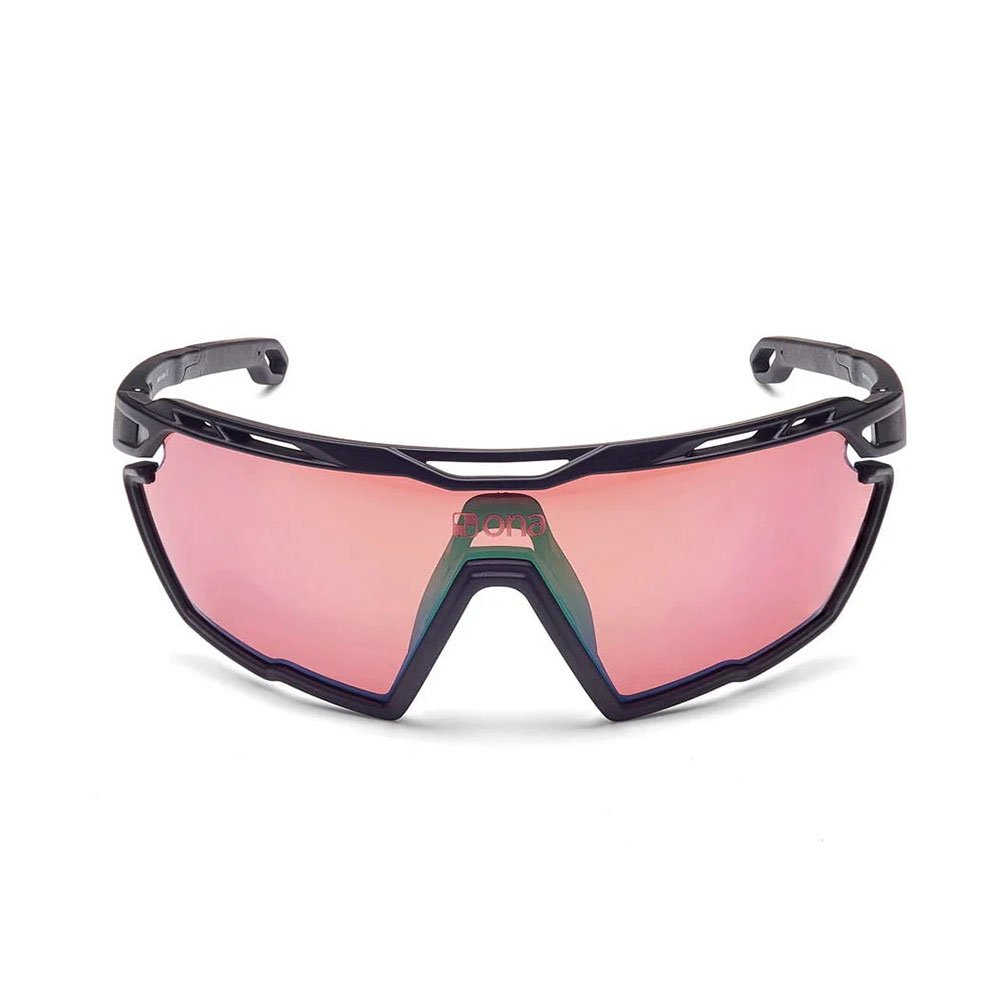
Dress tends toward smart-casual elegance. For daytime matches, breathable, refined layers work best under the sun, and a good pair of polarised sunglasses is close to essential for following the ball across a vast, bright field – the kind of considered eyewear that belongs as much in the stands as it does on a player. Ladies are gently advised to favour wedges or flats over stiletto heels, which sink into the turf. Comfortable, weather-appropriate apparel will carry you happily through an afternoon that often stretches into early evening.
A note for aspiring players
Many fans arrive at their first match and leave wanting to ride. The good news is that getting started costs less than people expect: most clubs offering lessons will supply the pony, tack, bridle and mallet, and often a hat too. A novice really just needs a pair of jeans, some kind of boot – short or long – and a glove for grip on the reins.
It’s once the sport takes hold, as it does for most people, that quality equipment starts to matter. A properly fitted saddle is one of the best investments a player can make – it builds the rider’s confidence through a fast turn, and it matters just as much for the horse, who needs the fit as much as you do. The same goes for gloves, elbow pads for ride-offs, a certified helmet, and protective eyewear: kit worth buying once you know you’re staying in the game.
“Nobody needs top-of-the-range kit on day one – borrow whatever the club gives you and just ride. But once you’re hooked, invest properly. The right equipment isn’t about looking the part – it’s what lets you commit fully, turn after turn, without hesitating.” – Alejandra Falkinhoff, CEO, Ona Polo
From the thundering stands of Palermo to the royal lawns of Windsor, the castle ruins at Cowdray, the Florida sunshine of Wellington and the free, family-filled grounds of Sotogrande, the world’s great polo clubs each offer their own window into a sport that has enchanted spectators for centuries. What unites them is a rare combination of heritage, horsemanship and hospitality – and the happy fact that, unlike so many elite pursuits, polo throws its gates open to anyone curious enough to attend. Whether you make the pilgrimage to the Argentine Open, catch a Gold Cup final in the English summer, or simply spend a free afternoon on a grass bank in Spain, the polo world rewards the fan who arrives ready to look, learn and enjoy.