A polo ball struck cleanly on the near side does not slow down to check whether the player behind it is wearing sunglasses or protective eyewear. The two can look almost identical on the pony lines. The difference is in the tests the lens and frame have survived, and the only reliable way to know which tests those were is to understand the standards behind the markings.
What is an eyewear impact standard? An eyewear impact standard is a published test protocol that defines the projectile, speed, mounting and pass/fail criteria a lens and frame must survive before a manufacturer may claim that level of protection. For performance eyewear, the three that matter most are ANSI/ISEA Z87.1 (United States, occupational), EN 166 (Europe, occupational, now succeeded by EN ISO 16321-1) and MIL-PRF-31013 (US military ballistic spectacles).
This guide is the reference point for those standards on the Ona Polo journal. It explains what each test does, how the numbers compare, how to read the tiny characters moulded into a frame, and how to tell a genuine claim from a marketing phrase. Lens tints and filter categories are covered separately in our lens guide; here the subject is impact protection alone.
Why the standard matters more than the adjective
“Impact resistant”, “shatterproof”, “military grade”, “tactical”: none of these words has a defined test behind it. A standard does. When a manufacturer marks a frame “Z87+” or cites “MIL-PRF-31013 clause 3.5.1.1”, it is pointing to a specific projectile, fired at a specific speed, at a lens mounted on a specific headform, with defined failure criteria. That is something you can check. An adjective is not.
This matters in polo because the hazards are unusual. There is a hard ball, a swinging mallet, clods of turf thrown up by galloping ponies, and the ever-present risk of a fall. No single laboratory test reproduces all of that. Understanding what each test actually simulates lets you judge how relevant it is to a chukka.
“When we started developing eyewear for polo, the first thing we learned was that the words on the box mean nothing. The standard number does. We want every player to be able to look at a frame and know exactly what it has been tested against.” – Alejandra Falkinhoff, CEO and founder, Ona Polo


ANSI/ISEA Z87.1: the American occupational benchmark
Scope and current edition
ANSI/ISEA Z87.1 is the American National Standard for Occupational and Educational Personal Eye and Face Protection Devices, developed by the International Safety Equipment Association (ISEA). The 2020 edition was approved on 11 March 2020. According to ANSI, the current edition is now ANSI/ISEA Z87.1-2025, which clarifies marking guidance (including for prescription lens carriers) and updates language on impact testing, lens haze and minimum coverage. Products tested to the 2020 edition remain legitimately marked; the 2025 edition is simply the latest reference.
The 2020 text states its own limits plainly: among the exposures “not covered in this standard” it lists “sports and recreation”. Z87.1 was written for workshops, laboratories and industrial sites, not polo grounds. Sports eyewear brands adopt it because it is rigorous, widely recognised and publicly defined, not because it was designed for sport.
Basic impact versus high impact
Since the 2010 revision, Z87.1 has divided protectors into non-impact-rated (marked “Z87”) and impact-rated (marked “Z87+”).
- Drop ball test (every protector): a 25.4 mm (1 in) steel ball dropped from 127 cm (50 in). The protector fails if the lens fractures, a piece detaches from the inner surface, the ball penetrates or the lens is not retained.
- High-mass impact (for “+”): a pointed 500 g projectile dropped from 127 cm onto the protector mounted on a headform.
- High-velocity impact (for “+”): a 6.35 mm (0.25 in) steel ball fired at 45.7 m/s (150 ft/s) for spectacles, 76.2 m/s (250 ft/s) for goggles and 91.4 m/s (300 ft/s) for faceshields.
The standard’s definition of “retained” is worth knowing: the lens must not separate or be visibly displaced from the frame by more than 25% of its intended mounting structure. A lens that pops out on impact has failed, even if it has not cracked.
Optics, coverage and the 2020 changes
Z87.1 is not only an impact test. Clear plano lenses must transmit at least 85% of light and show no more than 3% haze, with tight tolerances on refractive power, astigmatism and prism. There is also a minimum coverage area of 40 × 33 mm in front of each eye on the medium headform, or 34 × 28 mm for small-headform frames, which are then marked “H”. The 2020 revision added an optional relaxed-optics level, criteria and a marking for anti-fog lenses (“X”), and changes to transmittance allowances.
Prescription: Z87-2
Prescription lenses carry “Z87-2” in place of “Z87”, with “+” added when impact-rated (“Z87-2+”). Prescription lens carriers mounted behind a plano protector may carry only the manufacturer’s mark, not Z87 markings. That rule stops an insert from borrowing the rating of the shield in front of it.
Who certifies Z87.1?
In the United States, Z87.1 compliance is declared by the manufacturer. The standard does not require a third-party certification body, although many brands test through independent laboratories. What it does require is that the manufacturer provide test results to the purchaser upon request. For a buyer, that clause is the most useful tool in the standard.
What Z87+ means for a sports user
A Z87+ spectacle has survived a quarter-inch steel ball at roughly 102 mph and a heavy pointed drop without the lens fracturing or leaving the frame. That is a meaningful baseline against small, fast debris such as flying turf, grit or a mallet splinter. It does not certify the eyewear against a full-weight polo ball, which is far heavier and blunter than any Z87 projectile. “Z87” without the plus sign is not impact-rated in the modern sense.
EN 166 and its successor, EN ISO 16321
Status in 2026
EN 166:2001 was the European specification for personal eye protection for over two decades and underpinned CE and UKCA marking of safety eyewear. It has now been superseded by the EN ISO 16321 series: EN ISO 16321-1 sets general requirements, Part 2 covers welding and Part 3 covers mesh protectors. BSI states that from 11 November 2025 EN ISO 16321-1 became the only valid standard for new certifications in both the UK and EU. Existing EN 166 certificates remain valid until they expire, up to five years from issue.
Two points matter for sports eyewear buyers. EN 166 markings will stay on the market for several years, so they are still worth understanding. And the scope of EN ISO 16321 excludes sports eyewear. As with Z87.1, a sports brand citing it is borrowing an occupational yardstick.
EN 166 mechanical strength grades
| Mark | Meaning | Test (as published by safety manufacturers’ technical sheets) |
| (none) | Minimum robustness | Basic static robustness requirement |
| S | Increased robustness | 22 mm, 43 g steel ball dropped from 1.30 m |
| F | Low-energy impact | 6 mm, 0.86 g steel ball at 45 m/s |
| B | Medium-energy impact | 6 mm, 0.86 g steel ball at 120 m/s |
| A | High-energy impact | 6 mm, 0.86 g steel ball at 190 m/s |
| T (suffix) | Impact at extreme temperatures | Added to F, B or A (e.g. “FT”) when passed at low and high temperature |
Under EN 166, the type of protector limits the highest impact grade that can be claimed, which is why “A” is associated with faceshields and spectacles are most commonly seen with “F”. EN ISO 16321-1 has since dropped the 190 m/s level and now defines low (45 m/s), medium (80 m/s) and high (120 m/s) energy impacts.
Optical class and field-of-use symbols
EN 166 lenses carry an optical class: 1 for continuous wear, 2 for intermittent wear and 3 for occasional wear only. Field-of-use symbols on the frame indicate the hazards the protector is designed for: 3 liquid droplets or splashes, 4 large dust particles, 5 gases and fine dust, 8 short-circuit electric arc and 9 molten metal and hot solids. On the lens, K indicates resistance to surface damage by fine particles and N resistance to fogging.
CE, UKCA and notified bodies
Under Regulation (EU) 2016/425, eyewear claiming protection against mechanical impact is treated as Category II PPE and requires EU-type examination by a notified body before the CE mark is applied; Great Britain mirrors this through UK approved bodies. Sunglasses tested to EN ISO 12312-1 for protection against sunlight follow a lighter conformity route. For that reason, a CE mark on sports sunglasses does not by itself indicate occupational impact certification.
MIL-PRF-31013 and the APEL
What the specification is
MIL-PRF-31013 is a US Department of Defense performance specification for protective spectacles. Clause 3.5.1.1 sets out its ballistic fragmentation requirement for spectacles; goggles are addressed by a separate specification, MIL-DTL-43511. These ballistic clauses are now also referenced within MIL-PRF-32432, the Military Combat Eye Protection (MCEP) system specification.
The V0 ballistic test
- Spectacles: a 0.15-calibre, 5.8-grain (about 0.376 g) T37-shaped fragment-simulating projectile fired at 640–660 ft/s (about 195–201 m/s). No penetration is permitted.
- Goggles: a 0.22-calibre, 17-grain (about 1.10 g) projectile at 550–560 ft/s (about 168–171 m/s).
- Set-up: the eyewear is mounted on a 50th-percentile male headform, with a thin aluminium witness foil behind the impact zone that reveals any fragment passing through.
“V0” refers to a no-penetration criterion at the specified velocity, not a statistical average of the kind used in some other armour tests.
APEL-listed versus meets MIL-PRF-31013
The Authorized Protective Eyewear List (APEL), created in 2006 and managed through PEO Soldier, lists eyewear that the US Army has tested and validated against its full requirements, including ballistic fragmentation, optics, environmental stability and compatibility with issued equipment. The APEL itself warns that listing must not be used to imply Army endorsement.
A commercial product described as “meeting MIL-PRF-31013” is making a narrower claim: that it has passed the specification’s ballistic test, normally backed by a laboratory report. That can be entirely legitimate, but it is not the same as APEL listing. There is also no standardised military marking on the frame, unlike Z87+, so the claim must be verified through documentation.
Side by side: how the three standards compare
Comparison table
| ANSI/ISEA Z87.1 | EN 166 (now EN ISO 16321-1) | MIL-PRF-31013 | |
| Origin | USA — ISEA, ANSI-accredited | Europe — CEN; now ISO/CEN | USA — Department of Defense |
| Current edition | Z87.1-2025 (2020 still widely cited) | EN 166:2001, replaced for new certificates by EN ISO 16321-1 | MIL-PRF-31013 (ballistic clause also referenced via MIL-PRF-32432) |
| Scope | Occupational and educational; excludes sports and recreation | Occupational; EN ISO 16321 excludes sports eyewear | Military ballistic spectacles |
| Key impact test (spectacles) | High-velocity steel ball + 500 g high-mass drop | Steel ball at F / B / A velocity | Ballistic fragment simulator, V0 |
| Projectile | 6.35 mm steel ball (≈1.04 g) | 6 mm steel ball, 0.86 g | 0.15 cal, 5.8 gr (≈0.376 g) FSP |
| Velocity | 45.7 m/s (150 ft/s) | F 45 m/s; B 120 m/s; A 190 m/s | 195–201 m/s (640–660 ft/s) |
| Calculated energy | ≈1.1 J | F ≈0.9 J; B ≈6.2 J; A ≈15.5 J | ≈7.2–7.6 J |
| Marking | Z87 / Z87+ / Z87-2+ plus hazard codes | “EN 166” + S/F/B/A, T, optical class, 3/4/5/8/9, K, N | No standard marking; documentation only |
| Who certifies | Manufacturer self-declares; test results on request | Notified body (EU) / approved body (UK) | Manufacturer claim via lab test; APEL listing by US Army |
The energy numbers, with the working shown
Kinetic energy is calculated as E = ½ × m × v², with mass in kilograms and velocity in metres per second; drop tests use E = m × g × h.
| Test | Mass | Velocity / drop | Working | Energy |
| EN 166 S (drop) | 43 g | 1.30 m drop | 0.043 × 9.81 × 1.30 | ≈0.55 J |
| Z87.1 drop ball | ≈67 g* | 127 cm drop | 0.067 × 9.81 × 1.27 | ≈0.84 J |
| EN 166 F | 0.86 g | 45 m/s | ½ × 0.00086 × 45² | ≈0.87 J |
| Z87+ spectacle | 1.04 g | 45.7 m/s | ½ × 0.00104 × 45.7² | ≈1.09 J |
| Z87+ goggle | 1.04 g | 76.2 m/s | ½ × 0.00104 × 76.2² | ≈3.02 J |
| Z87+ faceshield | 1.04 g | 91.4 m/s | ½ × 0.00104 × 91.4² | ≈4.34 J |
| EN 166 B | 0.86 g | 120 m/s | ½ × 0.00086 × 120² | ≈6.19 J |
| Z87.1 high mass | 500 g | 127 cm drop | 0.5 × 9.81 × 1.27 | ≈6.23 J |
| MIL-PRF-31013 spectacle | 0.376 g | 195–201 m/s | ½ × 0.000376 × 195² to 201² | ≈7.2–7.6 J |
| EN 166 A | 0.86 g | 190 m/s | ½ × 0.00086 × 190² | ≈15.5 J |
| MIL goggle (MIL-DTL-43511) | 1.10 g | 168–171 m/s | ½ × 0.00110 × 168² to 171² | ≈15.5–16.1 J |
The mass of a 25.4 mm steel ball is calculated from the density of steel, not stated in the sources consulted
Why energy is not the whole story
On paper, the MIL-PRF-31013 spectacle test carries between six and seven times the energy of the Z87+ spectacle test, while EN 166 F and Z87+ spectacles sit close together at around 1 J. But energy alone does not rank protection:
- Projectile shape: a chisel-nosed fragment simulator concentrates force and tests penetration. A round steel ball tests fracture and retention. A 500 g pointed mass tests the whole frame.
- Coverage and mounting: Z87.1 fires at multiple points on a headform, including the sides. A lens can pass a frontal test yet fail at the temple.
- Retention: a lens that stays whole but leaves the frame has failed Z87.1.
- Lens thickness and curvature: the same material behaves very differently at different thicknesses and base curves.
- Blunt impacts: none of these tests reproduces a heavy, blunt ball. That scenario is the domain of helmets and face guards.
“A lens can pass a test and still be the wrong choice if it sits badly under a helmet or moves in a ride-off. Fit and retention are part of protection, not an afterthought.” – Alejandra Falkinhoff, CEO and founder, Ona Polo
Related standards you will see on sports eyewear
| Standard | Region | What it covers | Relevance to polo and riding |
| EN ISO 12312-1 | International / EU | Sunglasses for general use: filter categories, UV, optics, robustness; impact resistance is optional | Confirms a well-made sunglass lens; not by itself an impact-protection standard |
| ASTM F803 | USA | Eye protectors for selected sports (currently basketball, baseball and soccer) | Sport-specific, but polo is not covered |
| ASTM F3164 | USA | Racket sports: racquetball, squash, tennis and, since 2024, pickleball | Shows sport-specific standards exist where a market demanded them |
| CSA Z94.3 | Canada | Occupational eye and face protectors | Spectacle impact energy similar to Z87+ (≈1.1 J) |
| AS/NZS 1337.1 | Australia / New Zealand | Occupational eye protection with low, medium and high impact grades | Relevant to players in Australian and New Zealand polo seasons |
Other sports have their own standards, such as ASTM F2713 for field hockey and ASTM F3077 for women’s lacrosse. Polo has none: no ASTM, ISO, CEN or national standard specific to polo eyewear exists, and none was found in Argentine (IRAM) catalogues during research for this guide. Every polo eyewear brand therefore borrows its credentials from occupational, sunglass or military standards, and the buyer’s job is to see which ones, and how demanding they are.
Applying the standards to polo and equestrian use
What the injury data says
The most relevant evidence is a 2025 study in the Postgraduate Medical Journal, “Traumatic injuries in polo players”, co-authored with the Hurlingham Polo Association’s Safety Committee. It analysed 236 injuries recorded on accident forms at 26 English polo clubs between 2018 and 2024. Face or head injuries accounted for 38.6% of injuries, and 12.1% of those affected the eyes. Eye injuries were the most likely of any injury type to need hospital treatment: 45.5% of eye injuries led to hospital care, compared with 36.9% of limb injuries and 35.4% of face and head injuries. The number of eye injuries is small, so the confidence intervals are wide, but the direction is clear. The authors concluded that they “now advocate the compulsory use of eye protection (e.g. sports glasses, goggles, or face guards) for all polo players.”
“Most of us grew up playing without eyewear, and many of us have a story about a near miss. The research simply confirms what the pony lines have known for years.” – Alejandra Falkinhoff, CEO and founder, Ona Polo
We found no published data on eye injuries from flying clods, branches or arena kickback in general equestrian sport. These hazards are familiar to anyone who has hacked through woodland or ridden behind another horse in a sand school, but they are not yet quantified in the literature.
Matching hazards to tests
| Hazard | Nature | Most relevant test | Honest assessment |
| Divots, clods, grit thrown by hooves | Small-to-medium, irregular, fast | Z87+ high-velocity; EN 166 F | Well matched to what occupational tests simulate |
| Mallet splinters or cane fragments | Small, sharp, fast | MIL-PRF-31013 fragment test; Z87+ | The ballistic fragment test is the closest laboratory analogue |
| Mallet head glancing across the face in a ride-off or hook | Heavy, blunt-to-edged, moderate speed | Z87+ high-mass (500 g) | Partly relevant; frame and helmet share the load |
| Direct strike from a polo ball | Heavy, blunt, potentially fast | None directly | No eyewear standard reproduces this; eyewear prevents shattering and penetration, a face guard addresses blunt force |
| Falls, branches, arena rails | Blunt and scraping, variable | High-mass; frame flexibility | Retention and frame material matter as much as the lens |
To illustrate the scale: HPA rules give the ball as 3 to 3.5 inches in diameter and 4.25 to 4.75 ounces. A ball of about 128 g travelling at a hypothetical 30 m/s (about 67 mph, used only for illustration) carries roughly ½ × 0.128 × 30² ≈ 58 J, several times more than any spectacle test above. No reliable, peer-reviewed measurement of polo ball speed was found. The point is not that eyewear can stop a full-power ball. It is that the right eyewear prevents a lens from shattering into the eye, keeps turf and splinters out, and works alongside a helmet and, where appropriate, a face guard.
What the rules say
Polo’s governing bodies approach eye protection differently. The United States Polo Association’s rules state that players are strongly encouraged to wear eye protection at all times during play, and that eye protection is mandatory for all players under the age of eighteen. The HPA’s published rules have historically listed goggles as recommended, and the 2025 study co-authored with its Safety Committee called for eye protection to become compulsory. Before each season, players should check the current HPA Blue Book or USPA Rulebook for the exact wording that applies to them.
Practical guidance for players
- Beginners and stick-and-ball sessions: wear protection from the first ride. Mis-hits from inexperienced players are unpredictable, and practice balls travel just as hard off a neighbouring mallet.
- Choose the standard deliberately: Z87+ is a sensible minimum for impact-rated sports eyewear. A MIL-PRF-31013 claim represents a substantially higher energy threshold against small fragments.
- Wear it with your helmet: check the frame sits under the peak without pressing, and that the temples do not conflict with the harness.
- Consider a face guard for arena polo, juniors or anyone returning from a facial injury. It addresses the blunt ball impact that no eyewear standard covers.
“My advice to anyone starting out is to treat eyewear like your gloves or your helmet. You put it on before you get on the pony, not when the chukka gets serious.” – Alejandra Falkinhoff, CEO and founder, Ona Polo
Lens and frame materials
Polycarbonate is the default material for impact-rated eyewear: tough, light and inherently UV-blocking. Trivex and related urethane-based materials offer comparable impact resistance with lighter weight and better optical clarity, at a higher cost. Neither material earns a rating on its own. Z87.1 requires every component to comply and tests the complete device; a polycarbonate lens in a brittle or poorly retained frame can still fail.
Frames matter as much as lenses. Flexible polyamides such as Grilamid TR90 absorb energy and resist cracking. Soft elastomer contact points at the nose and temples keep the frame in position through a ride-off without creating hard pressure points. In a fall, a frame that flexes rather than snaps is less likely to produce sharp edges near the eye.
Prescription eyewear: where certification often stops
Certification rarely carries over automatically to a prescription version. Grinding a prescription into a lens changes its thickness profile, and adding an insert behind a shield changes how the system behaves on impact. That is why Z87.1 uses a separate “Z87-2” mark for prescription lenses, and why prescription carriers behind a plano shield may not bear Z87 markings at all.
For polo players who need correction, ask three questions. Is the prescription lens itself marked Z87-2 (or Z87-2+)? Was the complete prescription configuration tested, or only the plano model? And does the manufacturer say explicitly which claims apply to the prescription version? Reputable brands state limitations openly.
“We are very clear with our prescription customers about what each version is designed for. Honesty about limitations is part of looking after players.” – Alejandra Falkinhoff, CEO and founder, Ona Polo
How to read the markings on your eyewear
Markings are usually moulded or laser-etched in small characters on the inside of a temple arm, the bridge, or the edge of the lens.
ANSI Z87.1 marking decoder
| Mark | Meaning |
| Manufacturer’s logo | Required on lens and frame |
| Z87 | Meets Z87.1 as a non-impact-rated (plano) protector |
| Z87+ | Impact-rated: passed high-mass and high-velocity tests |
| Z87-2 / Z87-2+ | Prescription protector / impact-rated prescription protector |
| H | Tested on the small headform (smaller head sizes) |
| U + number (e.g. U6) | UV filter; higher number = more attenuation |
| L + number | Visible light filter (sunglass tint) |
| R + number | Infrared filter |
| W + shade | Welding filter |
| V | Variable tint (e.g. photochromic) |
| S | Special-purpose lens |
| X | Anti-fog (added in 2020) |
| D3 / D4 / D5 | Splash/droplet, dust, fine dust |
EN 166 marking decoder
| Location | Mark | Meaning |
| Frame | Manufacturer ID | Required |
| Frame | EN 166 | Standard reference |
| Frame | 3 / 4 / 5 / 8 / 9 | Liquids / large dust / gas and fine dust / electric arc / molten metal |
| Frame and lens | S / F / B / A | Mechanical strength grade |
| Frame and lens | T | Impact grade also passed at extreme temperatures |
| Lens | Scale number (e.g. 2C-1.2) | Filter type and shade |
| Lens | 1 / 2 / 3 | Optical class |
| Lens | K | Resistance to surface damage by fine particles |
| Lens | N | Resistance to fogging |
| Frame | CE / UKCA | Conformity marking |
A worked example. A wrap-around safety spectacle sold in the UK carries the lens marking “2C-1.2 1FT Z87+ U6” and the frame marking “EN 166 FT / Z87+”. Read left to right, the lens is a clear UV filter (2C-1.2), optical class 1, EN 166 low-energy impact rated, also at extreme temperatures (FT), and separately Z87+ impact-rated with the highest UV rating (U6). This is what a dual-certified product looks like.
How to verify a claim: checklist and red flags
Checklist
1. Standard number, not a slogan: look for a full reference such as “ANSI Z87.1-2020”, “EN 166” or “MIL-PRF-31013 clause 3.5.1.1”, ideally with edition year and clause.
2. Markings on both frame and lens: Z87.1 and EN 166 both require markings on the components, not just on the box.
3. Check for the “+”: “Z87” without it is not impact-rated.
4. Ask for test results: under Z87.1 the manufacturer must provide them on request. For MIL-PRF-31013 claims, ask for the ballistic test report and the laboratory’s name.
5. For CE claims, ask for the Declaration of Conformity: it names the standard applied and, for impact PPE, the notified body.
6. For “military” claims, check the APEL: a product described as APEL-approved should appear on the current PEO Soldier list.
7. Check the prescription version separately: confirm which claims apply to the RX configuration.
Red flags
- “Meets military standards” with no specification number.
- “Impact resistant”, “shatterproof” or “ballistic” with no standard named.
- “Civilian ballistic certified”: no such civilian certification exists.
- A CE mark with no standard stated. Sunglasses under EN ISO 12312-1 carry CE too, without any occupational impact rating.
- Claims that appear only on a reseller’s page and not in the manufacturer’s own documentation.
- Standards cited for the wrong configuration, such as a plano rating presented as covering a prescription insert.
How Ona eyewear maps to these standards
Ona Polo designs its protective eyewear for polo first. The certifications below are stated exactly as they appear on Ona’s own product pages.
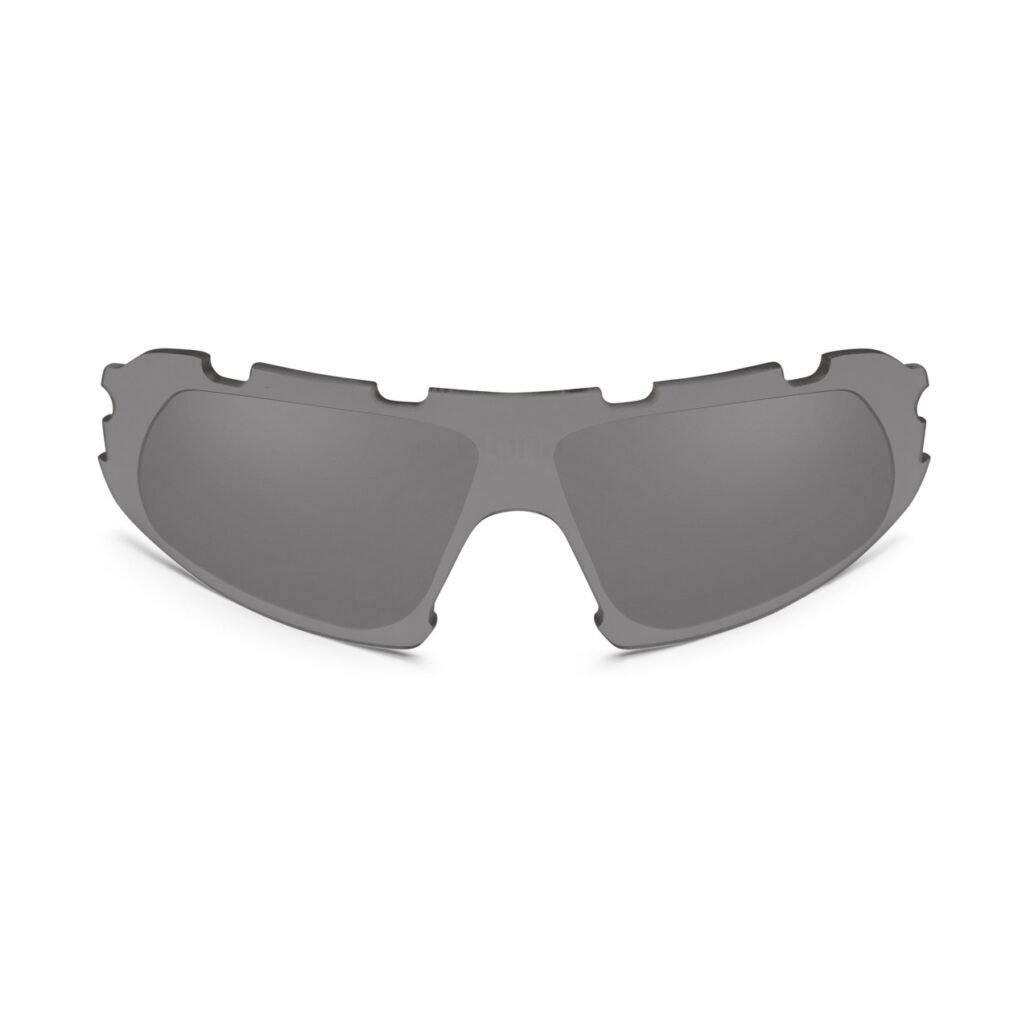
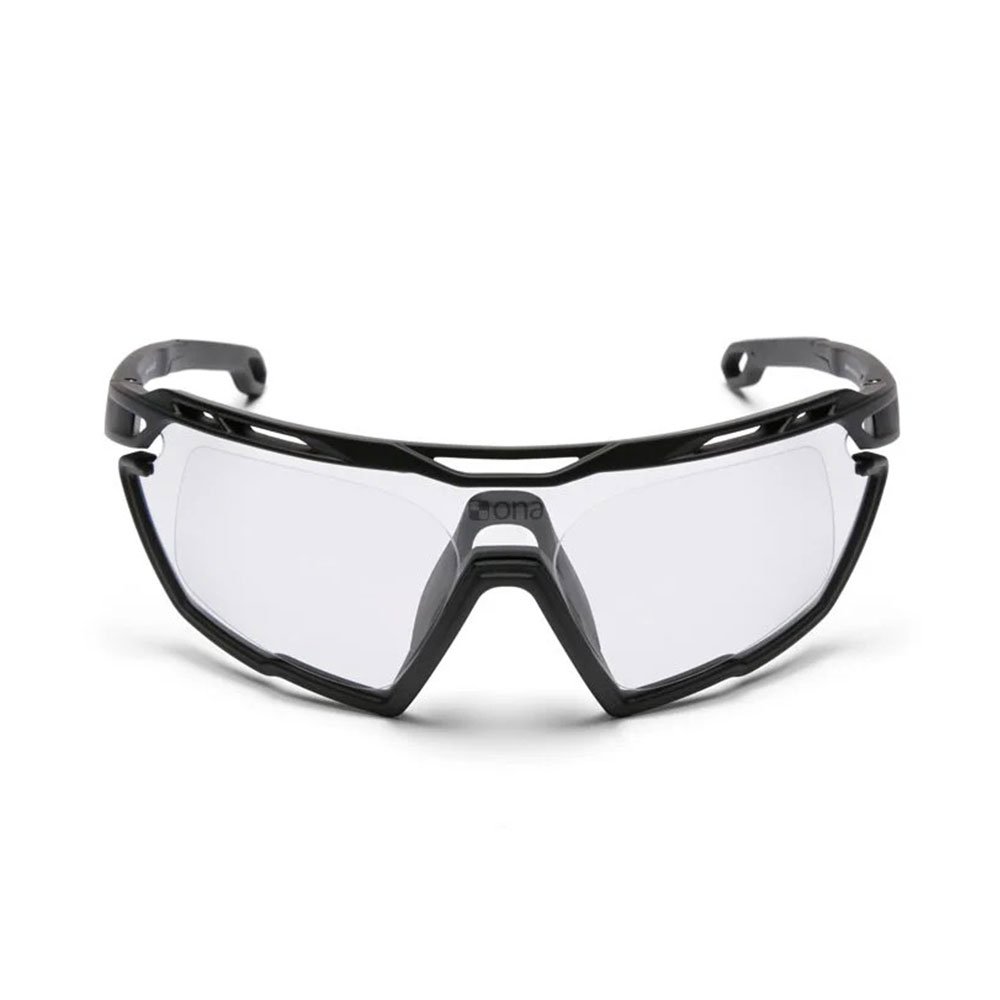
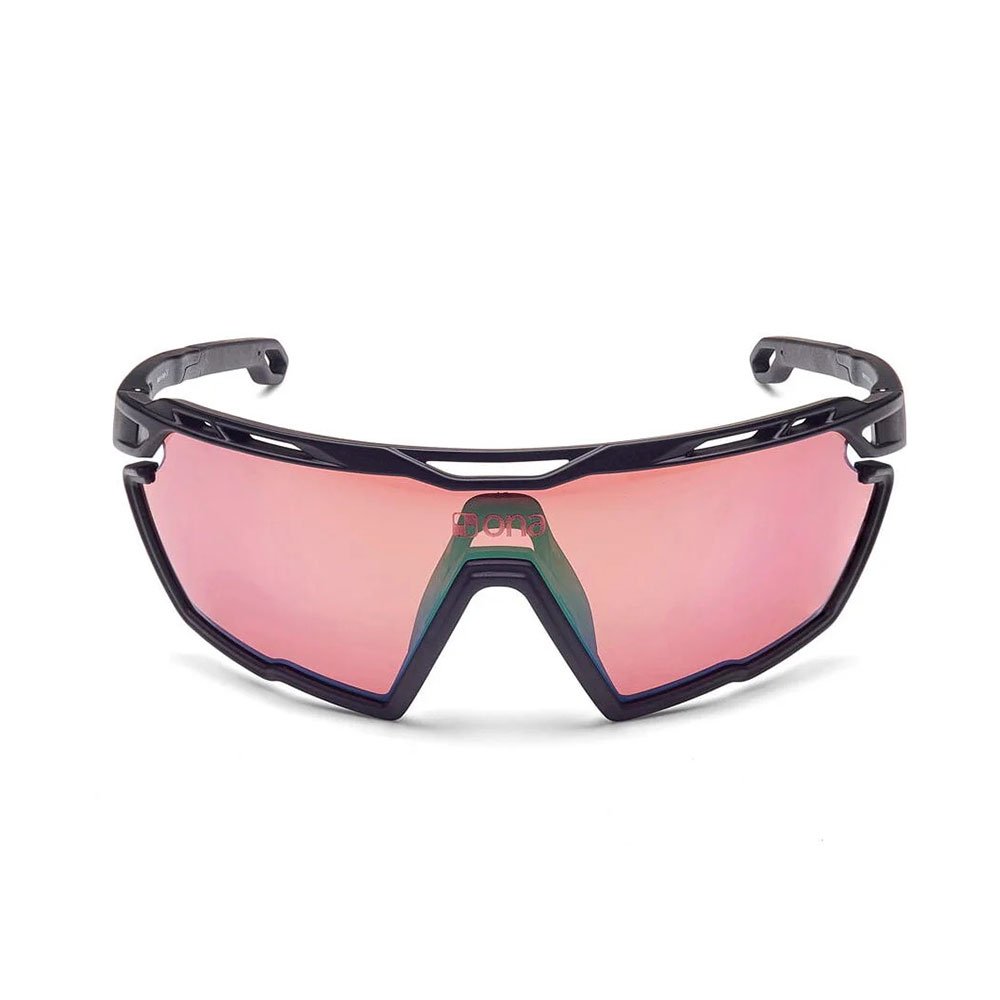
- Ona VCP21. A wraparound curved-lens design with a Grilamid frame, soft Megol nose pads and adjustable temple tips, and an interchangeable bumper and nosepiece. It is supplied with two lenses: pink with a petrol mirror finish (filter category 2) and clear. Ona states that VCP21 provides superior mechanical construction resistance per US MIL-PRF-31013 clause 3.5.1.1 and ANSI Z87.1-2020, complies with EU PPE Regulation 2016/425 and meets EN ISO 12312-1:2013.
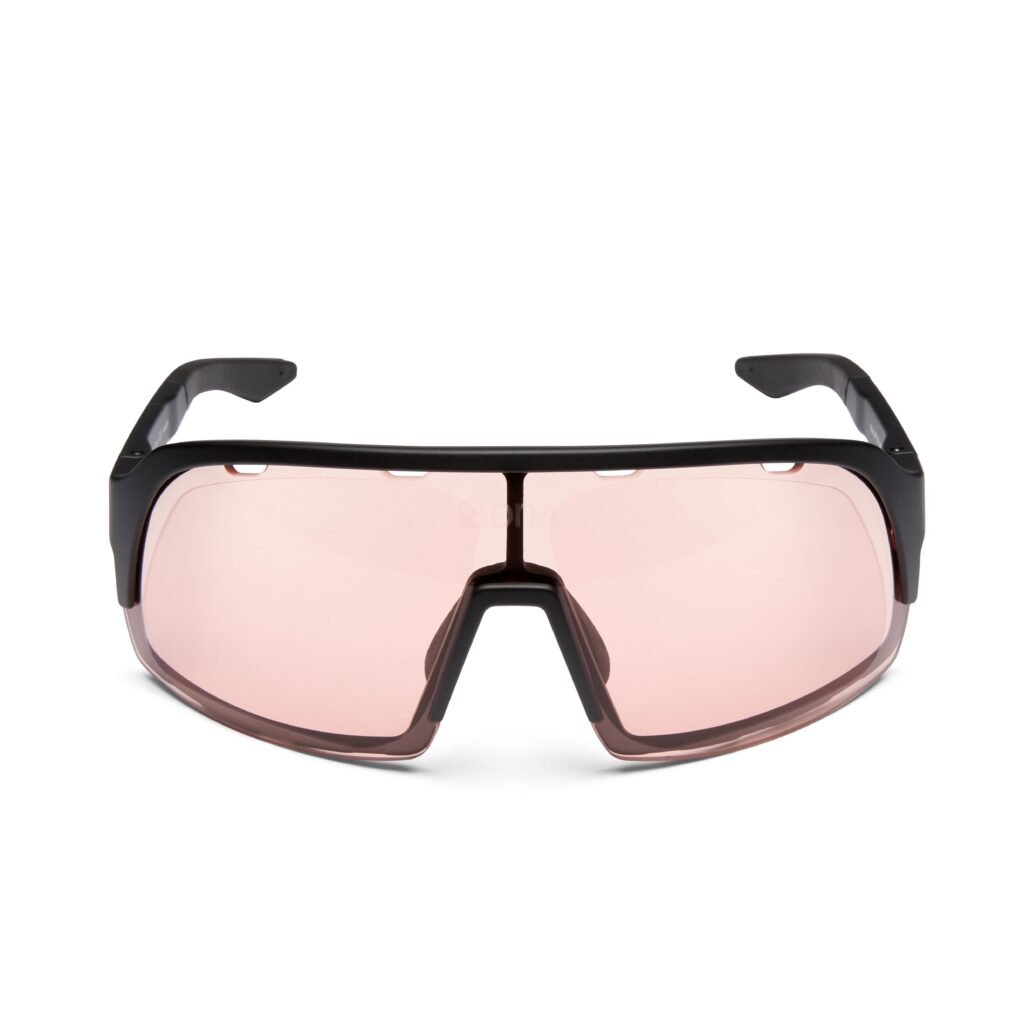
- Ona AELOX (PK and PH). A shield-style design in Grilamid TR90 with Megol rubber contact points. Ona states compliance with ANSI Z87.1-2020 and EN ISO 12312-1:2013, and notes clearly that AELOX is not designed for industrial use or ballistic protection. The AELOX PH uses a photochromic lens that moves between filter category 0 and category 3.
- Ona RX. Ona integrates single-vision or progressive prescriptions directly into the shield lens rather than using an insert. Ona states that VCP21 RX and AELOX RX are not designed for industrial or ballistic protection use, so prescription players should treat the plano VCP21’s ballistic claim as not applying to the RX version.
In practice, VCP21 is the choice for players who want eyewear tested to the military fragment specification. AELOX offers ANSI Z87.1-tested protection in a lighter shield silhouette, with a photochromic option for changing light across a long afternoon of chukkas.
“Polo is our world, whether it is eyewear, gloves, whites or a saddle made to order. Everything we make starts with what a player actually needs on the field.” – Alejandra Falkinhoff, CEO and founder, Ona Polo
Impact standards are the only honest language for comparing protective eyewear. ANSI Z87.1 and EN 166, now EN ISO 16321, set occupational baselines of around 1 J for spectacles. MIL-PRF-31013 raises the bar several-fold against small, fast fragments. EN ISO 12312-1 confirms the quality of a sunglass lens rather than its impact protection. None of them was written for polo, and none reproduces a full-strength ball, which is precisely why the markings, documents and wording behind a claim deserve a careful look. Choose eyewear whose certifications are stated precisely, verify what applies to your configuration, and wear it with a properly fitted helmet from the first stick-and-ball session of the season.
Frequently Asked Questions
What is the difference between Z87 and Z87+?
Z87 means eyewear meets ANSI/ISEA Z87.1 as a non-impact-rated protector. Z87+ means it has also passed the standard’s high-velocity test (a 6.35 mm steel ball at 150 ft/s for spectacles) and high-mass test (a 500 g pointed projectile dropped 127 cm). For any activity with flying debris, look for the plus sign.
Is EN 166 still valid in 2026?
EN 166:2001 can no longer be used for new certifications in the EU or UK. Since November 2025, EN ISO 16321-1 has taken its place for new certificates. Products already certified to EN 166 may still be sold until their certificates expire, up to five years from issue, so EN 166 markings will remain common for some time.
What does “F” mean on EN 166 eyewear?
“F” indicates low-energy impact resistance: the eyewear withstood a 6 mm, 0.86 g steel ball at 45 m/s, about 0.9 J and broadly similar to the Z87+ spectacle test. Higher grades are B (120 m/s) and A (190 m/s), usually found on goggles and faceshields.
What is MIL-PRF-31013?
MIL-PRF-31013 is a US Department of Defense performance specification for ballistic protective spectacles. Its ballistic clause requires spectacles to stop a 0.15-calibre, 5.8-grain fragment-simulating projectile at 640–660 ft/s without penetration, around 7 J or roughly six to seven times the energy of the Z87+ spectacle test.
Does meets MIL-PRF-31013 mean the eyewear is APEL-approved?
No. APEL listing means the US Army has tested and validated the product against its full military requirements. “Meets MIL-PRF-31013” means the manufacturer states it passed the specification’s ballistic test. Both can be legitimate, but only products on the current PEO Soldier APEL are APEL-approved.
Is there a safety standard specifically for polo eyewear?
No polo-specific eyewear standard exists. Polo eyewear brands rely on occupational standards (ANSI Z87.1, EN 166 / EN ISO 16321), the sunglass standard EN ISO 12312-1 or the military specification MIL-PRF-31013. None of these reproduces a direct strike from a polo ball.
Do prescription sports glasses carry the same impact rating as the plano version?
Not automatically. Adding a prescription changes lens thickness and behaviour, so ratings must be tested and stated for the prescription configuration. Under ANSI Z87.1, impact-rated prescription eyewear is marked Z87-2+. Always check what the manufacturer states for the RX version specifically.
Is eye protection mandatory in polo?
It depends on the governing body. The USPA makes eye protection mandatory for players under 18 and strongly encourages it for everyone. The HPA’s rules have historically recommended goggles, and a 2025 study co-authored with its Safety Committee called for compulsory eye protection. Check the current rulebook for your season.