
For most golfers, the best all-round lens is a non-polarised, contrast-enhancing tint in the rose, copper, brown or amber family, in filter category 2 for typical daylight. Step up to category 3 for hard sun, and down to category 0–1 or a photochromic lens for dawn, dusk and heavy cloud. Polarisation is a genuine benefit against glare off water and wet turf, but it is the one feature on which golfers and eyewear specialists openly disagree, because it can mute the surface sheen many players use to read a green.
Anyone who has ridden out onto a polo ground on a bright afternoon knows that the light is never quite the same from one chukka to the next. Golf asks the same question of your eyes over four hours rather than forty minutes: a hazy first tee, a glaring midday approach over water, a flat grey light on the back nine as the weather comes in off the sea. The lens you choose will not swing the club for you, but it does decide how clearly you see the ball against the sky, how much you squint on the tee, and how much information reaches you when you crouch behind a putt.
This guide explains how lens tint, filter category, polarisation and lens design work, where the evidence is firm and where it is a matter of preference, and how to match a lens to the course in front of you.
How lens tint works: Selective filtering and contrast
A tinted lens does two separate jobs. It reduces the overall amount of light reaching the eye (the job of the filter category, covered below), and it changes the balance of colours that get through. The second job is where golf-specific lenses earn their keep.
Why warm tints add contrast
Blue light scatters easily in the atmosphere, which is why a hazy sky looks washed out and why distant detail softens on a bright day. Lenses in the brown, amber, copper and rose families absorb a proportion of that blue light. On a golf course, sports-eyewear specialists describe the effect as enhancing the greens and the white ball while muting the blue of the sky, which makes a ball easier to follow in flight and turf texture easier to read.
Rose and red-based tints work on a similar principle but shift the balance further towards reds and yellows. Golf-specific lens systems push this idea further. Oakley describes its PRIZM Golf lens as tuned to boost the contrast between the different shades of green on a course, so that fairway, fringe and rough separate more clearly; SportRx opticians describe it as a rose-based lens with a VLT of around 30%, which places it in category 2. RIA Eyewear describes its golf lens as a copper-rose tint that suppresses excess green light while boosting red and yellow. The language differs from brand to brand, but the approach is the same: selective filtering to separate the colours a golfer actually needs to distinguish.
“On the polo ground we chose a high-contrast pink lens because the ball has to be picked out against grass and sky in a fraction of a second. Golfers ask the same thing of their eyes, only with more time to think about it. Contrast, not darkness, is what helps you see.” – Alejandra Falkinhoff, CEO and founder, Ona Polo
Why grey is not a contrast lens
Grey lenses reduce brightness evenly across the spectrum. Colours look accurate, just darker, which is why grey is the classic choice for driving and for very bright, open conditions. The trade-off is that grey only dulls light; it does not add contrast. On a golf course that means a grey lens is restful in hard sun but does little to lift the ball against a pale sky or to sharpen the grain of a green.
Green, yellow and blue-mirror lenses
- Green (and green-grey) sits between grey and brown: fairly true colour with a gentle contrast lift. Many golfers find it restful over a long round.
- Yellow and orange brighten the view and sharpen edges in low, flat or hazy light, which is why shooters and cyclists wear them at dawn and dusk. They distort colour noticeably and are uncomfortable in strong sun.
- Blue or violet mirror coatings are usually applied over a warm base tint. The mirror reduces the light reaching the eye in bright conditions; the base tint underneath does the contrast work. Treat a mirror as a brightness and comfort feature, not a colour in its own right.
Lens tint comparison for golf
| Tint | Light conditions | Contrast effect | Best for on the course |
| Rose / pink | Overcast, hazy, variable, low-to-medium light | Strong lift of reds and yellows; separates shades of green; ball stands out | Parkland and links rounds in changeable light; reading turf on grey days |
| Copper / brown | Variable to bright | Filters blue; boosts depth and definition; slightly warm cast | The most versatile all-round golf tint; tracking the ball against a hazy sky |
| Amber | Low-to-medium light, haze | High contrast, noticeably warm | Early and late rounds; flat light under cloud |
| Grey | Bright, full sun | Neutral; reduces glare evenly; no contrast gain | Desert and resort courses in hard sun; golfers who dislike colour shifts |
| Green / G-15 | Bright to moderate | True colour with mild contrast | All-day comfort in steady sun |
| Yellow / orange | Low light, dawn, dusk, fog | Very high contrast; significant colour distortion | First tee-time in winter; practice at dusk |
| Blue / violet mirror (warm base) | Bright sun | Mirror cuts brightness; base tint supplies contrast | Bright, reflective conditions, coastal courses, pale bunkers |
| Clear | Very low light | None; protection only | Night ranges, simulator bays, debris protection |
Beginner tip: if you are buying one lens for a mixed diet of weekend golf, start with a rose, copper or brown tint in category 2. It will cover more of the rounds most people actually play than a dark grey lens will.


Visible light transmission and filter categories 0–4
Visible Light Transmission (VLT) is the percentage of visible light a lens lets through. The European and international standard for sunglasses, EN ISO 12312-1, groups lenses into five filter categories by luminous transmittance. The College of Optometrists publishes the ranges below, and they are the most reliable shorthand for choosing darkness.
Filter categories and golf use
| Category | Description | VLT (luminous transmittance) | Typical golf use |
| 0 | Clear or very light tint | Over 80% to 100% | Night ranges, simulators, very dark mornings; debris protection |
| 1 | Light tint | Over 43% to 80% | Dawn and dusk rounds, heavy cloud, winter golf in northern Europe |
| 2 | Medium tint | Over 18% to 43% | The default for most rounds: overcast to bright, variable light |
| 3 | Dark tint | Over 8% to 18% | Strong sun: desert, Mediterranean, Florida, Arizona and resort golf |
| 4 | Very dark tint | Over 3% to 8% | Extreme brightness only; rarely needed for golf; not for driving |
“The category number is the most honest thing on a pair of sunglasses. Before anyone talks about colour, I would always ask what light they play in most. For most rounds that answer points to category 2.” – Alejandra Falkinhoff, CEO and founder, Ona Polo
Two driving rules from the same standard matter to anyone who drives home from the club in their sunglasses. Filters suitable for road use must be in categories 0 to 3, which rules category 4 out for driving. And lenses with a luminous transmittance below 75% are not suitable for road use in twilight or at night, which covers every category 2, 3 and 4 lens and many category 1 lenses. If your last nine finishes in the gloaming, take the tinted pair off before you get behind the wheel.
Darkness is not UV protection
It is a common misconception that a darker lens protects the eye better. It does not. UV blocking comes from the lens material and its treatment, not from the depth of tint; a light lens can block all UV, and a very dark lens can block very little. Golf Digest makes the same point: the darkness of the lens is irrelevant, and what matters is blocking 100 per cent of UV rays. Look for “100% UV protection” or “UV400” on the label first, then choose tint and category for performance.
This matters because golf keeps you outdoors through the middle of the day, when UV exposure is highest, and the National Eye Institute lists ultraviolet radiation from sunlight as a risk factor for cataracts.
Matching category to the round
- Bright links in July, or a desert course: category 3, ideally in a warm tint so you do not lose contrast.
- A typical English parkland Saturday with sun and cloud: category 2 in rose or copper.
- An October dawn tee-time or a squally day on the coast: category 1, or a photochromic lens that can drop towards category 0.
- Practice under floodlights or in a simulator bay: category 0.
Polarisation: How it works and why golfers disagree about it
The physics of glare
Light reflecting from a smooth horizontal surface such as water, a wet fairway or a car bonnet tends to become polarised horizontally. At one particular angle, known as Brewster’s angle, the reflected light is almost completely polarised; for water that angle is about 53 degrees from the perpendicular. That horizontally polarised reflection is what we experience as glare.
A polarised lens contains a filter that blocks horizontally oriented light while letting vertically oriented light through. The American Academy of Ophthalmology compares it to a miniblind: only the light coming through the slats gets in. The result is that surface glare collapses, and the view looks calmer and often more saturated.
The case for polarised lenses on the course
- Water hazards and coastal holes. Polarisation is at its most useful where there is a lot of reflective water in your sightline.
- Wet fairways and early-morning dew. A sheen of water on turf reflects strongly, especially when you are walking into a low sun.
- Glare sensitivity and long days. Players who squint through tee shots, or who are especially light-sensitive, often find polarisation more comfortable across 18 holes.
- One pair for everything. Golfers who want a single pair for golf, driving and time on the water may reasonably accept a small trade-off on the greens.
The American Academy of Ophthalmology lists golf among the activities where polarised lenses help by reducing glare on fairways, and adds a practical caveat: if they make putting harder, take them off when you reach the green.
The case against polarised lenses for green reading
Reading a green is partly a matter of reading reflections. The slight sheen on grass lying towards you versus away from you, the shine on a slope catching the light, and the way the surface shades across a tier all carry information. Because a polarised lens is specifically designed to remove reflected light, it can remove some of that information too.
This is why a large part of the golf-eyewear industry deliberately avoids polarisation in its dedicated golf lenses. RIA Eyewear states that its golf lenses are intentionally non-polarised because polarisation can remove visual information golfers use to judge depth, contour and subtle changes in the green. Sports-eyewear retailers such as SportRx and Sport Eyes make the same point: polarised lenses can make surfaces look flatter and greens harder to read, and SportRx opticians generally recommend non-polarised lenses for golf for exactly this reason. Ona’s own golf eyewear page reflects the same view.
Where the evidence actually stands
It is worth being precise. The argument against polarised lenses for green reading is widely held by golf-eyewear designers and opticians, but it rests largely on optical reasoning and players’ experience rather than on published controlled studies of putting performance. The American Academy of Ophthalmology notes that some golfers find polarised lenses make greens hard to read, but that studies have not all agreed on the issue. What polarisation reliably does is remove a category of reflected light, and for a golfer that category happens to include some useful cues. Some manufacturers, notably Maui Jim, market polarised lenses specifically for golf. Reasonable, experienced players land on both sides.
“Polarisation is a wonderful tool on the water, but it removes reflected light, and on a green that reflection is information. We think golfers deserve an honest explanation of the trade-off rather than a blanket promise.” – Alejandra Falkinhoff, CEO and founder, Ona Polo
A balanced recommendation:
- If green reading is the part of your game you most want to protect, choose a non-polarised contrast lens.
- If glare is what bothers you most, or you play mostly on water-heavy or coastal courses, a polarised lens is a defensible choice; consider lifting it onto your cap on the green.
- Polarised lenses can make some digital screens harder to see, which is worth knowing if you check a GPS unit, cart display or phone during the round.
Photochromic lenses, mirrors and coatings
Photochromic lenses
Photochromic lenses darken in response to ultraviolet light and fade again when it drops. For golf this is attractive because a round spans hours of changing light, and you cannot swap lenses between shots. The trade-offs are that transitions are not instant, and performance varies with temperature: the current edition of EN ISO 12312-1 introduced optional information on how photochromic lenses behave at 5 °C and 35 °C, precisely because behaviour differs between cold and hot conditions. Photochromic lenses are usually described by two categories, one for the faded state and one for the darkened state.
Mirror coatings
A mirror reflects part of the incoming light before it enters the lens, lowering the light reaching the eye and adding comfort in bright conditions. Treat the category, not the colour of the mirror, as the guide to darkness.
Anti-reflective backsides and hydrophobic coatings
- Anti-reflective (AR) coating on the inside surface reduces the reflections of sunlight from behind you bouncing off the back of the lens into your eye.
- Hydrophobic and oleophobic coatings shed rain, sweat and fingerprints, which is useful on a wet links or a humid afternoon.
Lens shape, curvature and the address position
Base curve and field of view
Base curve describes how strongly a lens is curved. A 6-base curve is the common standard for sunglasses and gives a natural view; an 8-base curve creates a wraparound shape with more peripheral coverage and a more secure fit, but it is harder to make distortion-free, particularly with a prescription. For golf, a moderate wrap is usually the sweet spot: enough coverage to cut side light and wind, without the peripheral distortion that becomes noticeable when you turn your head over the ball.
Why the bottom of the frame matters
At address you look down and slightly across the lens, not straight through its centre. A heavy lower rim can sit exactly where the ball is, and a lens that is too shallow can leave you looking underneath it. This is why half-frame and rimless designs dominate golf eyewear: they keep the lower field clear at address and through impact. Before buying, take your stance with the frame on and check that you see the ball through the lens, not past it or through the rim.
“A frame has to disappear when you are working. In polo that means staying seated at a gallop; on the course it means staying out of your sightline when you look down at the ball. If you notice your eyewear at address, it is the wrong eyewear.” – Alejandra Falkinhoff, CEO and founder, Ona Polo
Impact resistance
Golf is not a high-velocity sport for the eyes in the way polo is, but stray balls, snapped tees and flying sand do happen. Polycarbonate and similar sport lens materials are far more impact-resistant than glass or standard CR-39 plastic. Eyewear certified to a recognised impact standard such as ANSI Z87.1 gives you a margin of safety that a fashion frame does not.
Reading the course: Practical scenarios
Parkland courses
Tree-lined holes move you constantly between sun and shade. A category 2 rose or copper lens, or a photochromic lens, handles those transitions best. Avoid very dark grey lenses here: stepping into the shade of a stand of oaks with a category 3 grey lens can leave you struggling to find the ball in the rough.
Links and coastal golf
Links golf brings wide skies, fast-changing weather and, on many holes, bright water in the background. Contrast is at a premium in the grey, flat light that often rolls in off the sea, which favours rose and amber tints in category 1–2. On bright days, glare off the water is where a polarised lens earns its place, and where the green-reading trade-off is most worth considering.
Desert and resort courses
Hard sun, pale sand and very bright skies call for category 3. Grey or green keeps colours natural; brown or copper keeps more contrast. A mirror coating adds comfort. Water features on resort layouts make polarisation more tempting here than anywhere else.
Early and late rounds
At dawn and dusk the problem is too little light, not too much. A category 1 amber, yellow or light rose lens sharpens edges and makes the ball easier to find. Anything darker than category 2 is usually counter-productive.
Tracking the ball in flight
The hardest moment for the eye is a white ball against a pale or hazy sky. Warm tints that mute blue light make the ball stand out; a neutral grey does not. If you regularly lose sight of your drive, a change of tint is likely to help more than a change of darkness.
Glare off bunkers and water
Bright sand reflects diffuse light that polarisation only partly controls; a darker category or a mirror helps more here. Water produces the strongly polarised glare that a polarised lens removes most effectively.
Reading greens
Crouch behind the putt and, if you wear a polarised lens, try reading the line with and without it. Many golfers find the sheen on the grass, which tells them about grain and slope, easier to see without polarisation. A non-polarised contrast lens is the safest choice if the greens are where you want every scrap of information.
Prescription golf eyewear
Golf asks a lot of a prescription. You need sharp distance vision for the flag, clear focus on a ball five or six feet away at address, and occasionally near vision for a scorecard or GPS.
Progressives and the ball
Progressive (varifocal) lenses place the reading zone at the bottom of the lens. That reading zone is designed to focus at around one to two feet, while the ball at address sits roughly five to six feet away, so looking down through it can leave the ball slightly out of focus. The peripheral zones of a progressive lens are also softer, which some golfers notice as the head turns during the swing. For this reason, sports opticians commonly recommend single-vision distance lenses for golf, with the reading power omitted or placed in a small, low segment for the scorecard.
Practical advice
- Discuss golf specifically with your optometrist or optician; bring the frame you intend to use.
- For wraparound frames, ask whether the prescription is made for the lens curve, since higher curves are harder to correct without distortion.
- Check your address position with the finished glasses before your first competitive round.
“We integrate the prescription into the shield itself, but the most important conversation still happens with your optician. Tell them you play golf, show them your stance, and decide together whether single vision or progressive suits your game.” – Alejandra Falkinhoff, CEO and founder, Ona Polo
Are sunglasses allowed under the rules of golf?
The Rules of Golf, jointly issued by The R&A and the USGA, do not name or prohibit sunglasses. Rule 4.3 allows a player to use equipment to help their play during a round, except equipment that artificially eliminates or reduces the need for a skill or judgement essential to the challenge of the game. Ordinary sunglasses, tinted or polarised, are worn routinely in professional golf and fall within that general allowance.
Devices are a different matter. Distance-measuring devices, electronic green maps and alignment aids are covered by specific Rule 4.3 provisions and local rules, and the R&A’s clarifications on green-reading materials prohibit magnification of putting-green information other than a player’s normal prescription glasses or lenses. If your eyewear ever included magnifying or measuring functions, check with the committee before play.
From the polo ground to the first tee
Many polo players and equestrians also play golf, and a good deal of what they already know about eyewear transfers directly. In polo, the lens has to cope with changing light across chukkas, keep the ball visible against grass and sky at speed, and stay seated at a gallop. On the golf course, the speed is lower but the demands are familiar: contrast against turf and sky, light that changes across a round, and a frame that stays put through the swing.
“So many of our polo players spend their mornings on the golf course and their afternoons at the club. The questions they ask about eyewear are the same in both places: will I see the ball clearly, will the frame stay put, and will my eyes be comfortable at the end of the day.” – Alejandra Falkinhoff, CEO and founder, Ona Polo
The differences are worth noting too. In polo, impact protection is the first requirement; eye protection rules are set by bodies such as the Hurlingham Polo Association, the USPA and the Asociación Argentina de Polo, and players should always check the current rulebook of the association under which they play. In golf, the lens is chosen primarily for vision and comfort, though a certified impact-resistant lens remains a sensible default. And where polo-specific eyewear generally favours non-polarised lenses for spatial awareness at speed, golfers have more room for a personal choice about polarisation.
Ona eyewear on the golf course
Ona designs its eyewear for polo first, and its golf eyewear page presents the same frames for golfers. It helps to be clear about what each model is, using only what Ona publishes.
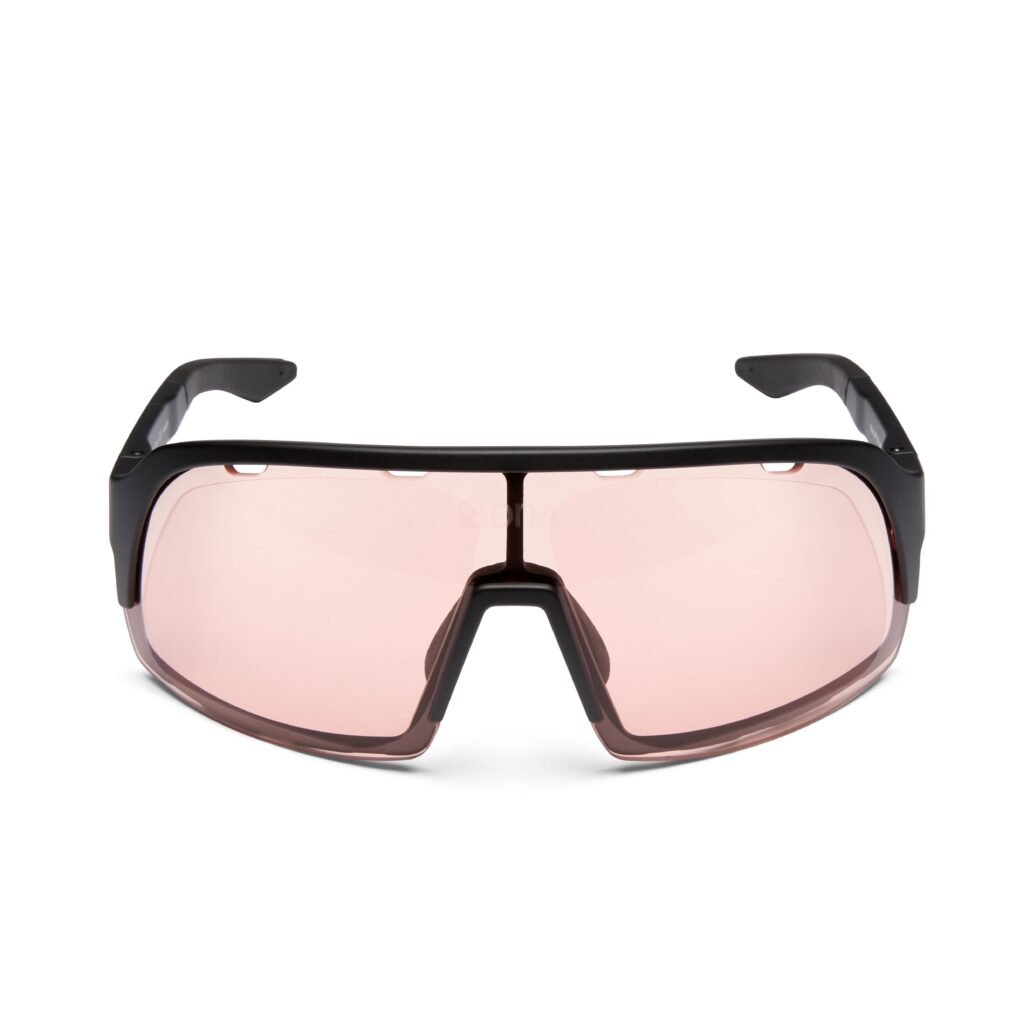
- AELOX PK is fitted with a High-Contrast Pink lens in filter category 2, which Ona describes as amplifying depth perception and definition and as especially effective in overcast or low-light settings. It uses a Base 6 lens curve, a Grilamid TR90 frame and soft Megol nosepads and temple tips, and is certified to ANSI Z87.1-2020 and EN ISO 12312-1. Ona notes that AELOX is not designed for industrial or ballistic protection. In golf terms, it sits squarely in the rose/pink, category 2 bracket described above.
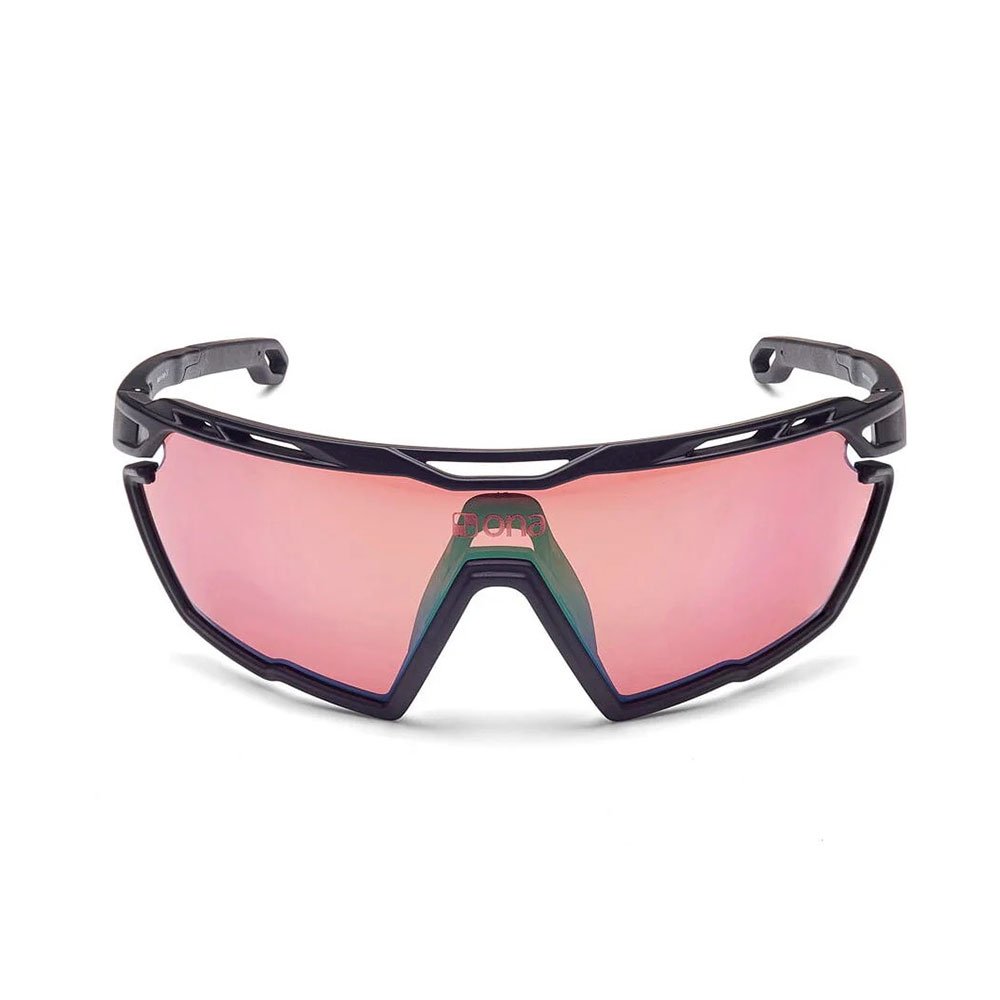
- VCP21 is Ona’s flagship frame, with a Base 7 wraparound lens curve and mechanical resistance per the US military ballistic eye-protection standard MIL-PRF-31013, alongside ANSI Z87.1-2020 and EN ISO 12312-1. It is supplied with two lenses: a pink lens with a petrol mirror finish for medium and variable light, and a clear lens for low light.
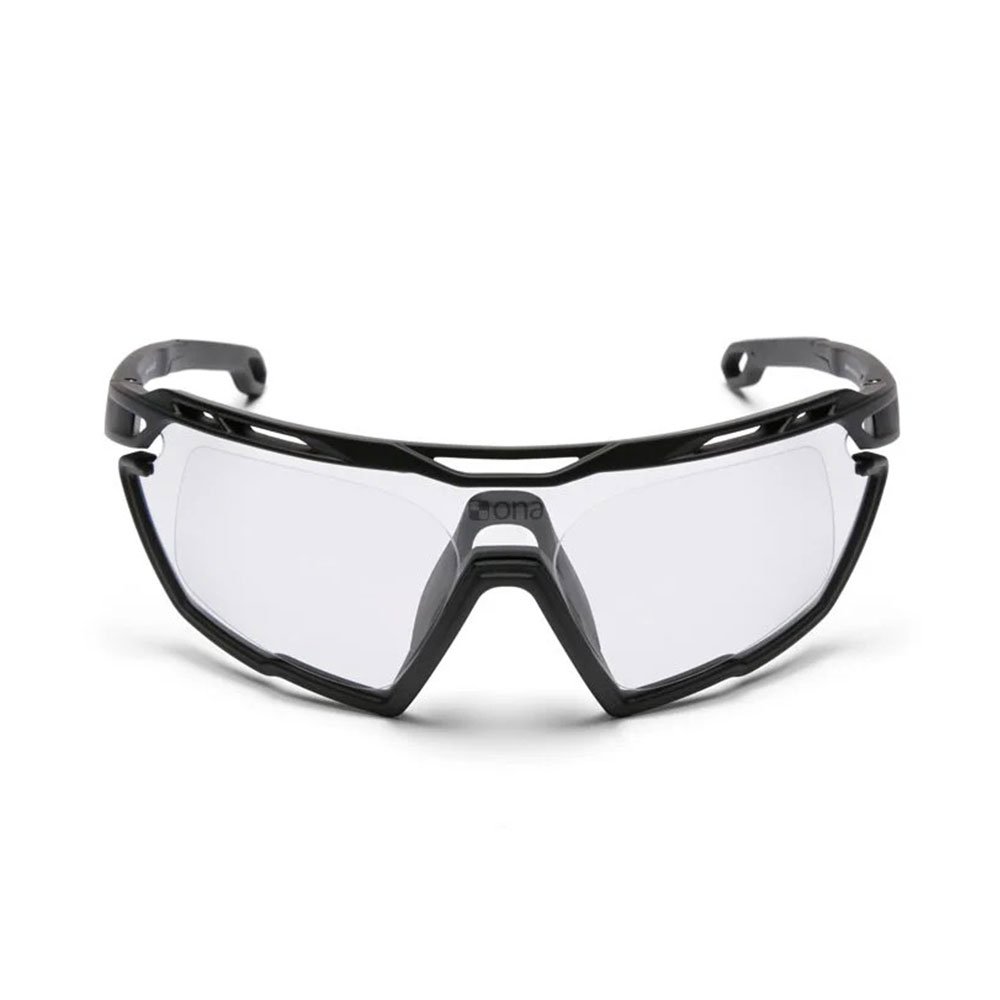
- AELOX PH uses a photochromic lens that Ona states transitions from category 0 to category 3, for rounds where the light cannot be predicted.
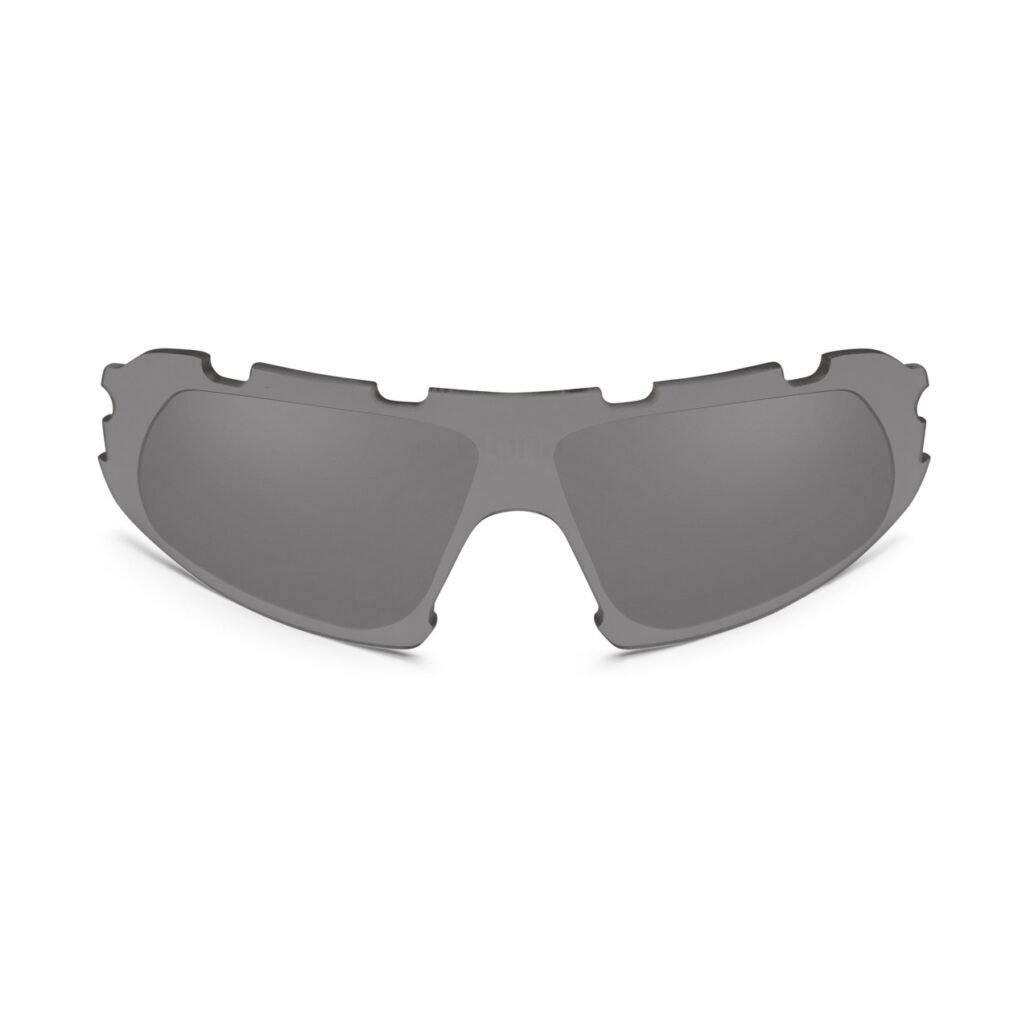
- Prescription options are available through Ona RX for the VCP21 and AELOX frames, in single-vision and progressive prescriptions, with the prescription integrated into the shield lens rather than fitted as an insert. Spare prescription lenses are also sold separately. Given the advice above on progressives, golfers should discuss single-vision versus progressive with their optician before ordering.
Ona’s product pages do not list polarisation as a feature of these lenses, so golfers who specifically want a polarised lens should look elsewhere; those who want a non-polarised, contrast-led lens will find that approach in the high-contrast pink options.
Frequently asked questions
What is the best lens colour for golf?
The best lens colour for golf is usually a warm, contrast-enhancing tint such as rose, copper, brown or amber. These tints filter blue light, which mutes the sky and makes the white ball and the texture of the turf stand out. Grey keeps colours accurate but adds no contrast, so it suits very bright sun rather than general golf.
Are polarised sunglasses good for golf?
Polarised sunglasses are good for cutting glare off water and wet fairways, but many golfers and golf-eyewear makers avoid them for putting. Polarisation removes reflected light, and some of that reflected light is the sheen golfers use to read grain and slope on a green. A common compromise is to wear polarized lenses from tee to green and lift them off to putt.
What VLT or filter category is best for golf?
Filter category 2, with a visible light transmission of over 18% to 43%, is the best default for most golf. Category 3 (over 8% to 18%) suits strong sun on desert, resort or Mediterranean courses, while category 1 (over 43% to 80%) suits dawn, dusk and heavy cloud. Category 4 is almost never needed for golf and is not suitable for driving.
Is a rose or pink lens good for golf?
A rose or pink lens is one of the most effective tints for golf in overcast, hazy or changeable light. It boosts reds and yellows, separates the different shades of green on the course, and lifts the ball against grass and sky. In very strong sun a darker category or a mirror coating is more comfortable.
Do darker lenses give more UV protection?
No, darker lenses do not give more UV protection. UV protection depends on the lens material and treatment, not the depth of tint, so a light lens can block all UV while a dark one may not. Always check for 100% UV protection or a UV400 rating before choosing a tint.
Are sunglasses allowed under the Rules of Golf?
Sunglasses are allowed under the Rules of Golf. Rule 4.3 lets players use equipment to help their play unless it artificially removes the need for an essential skill or judgement, and ordinary tinted or polarised sunglasses are worn widely in professional golf. Devices such as distance-measuring aids are governed by separate provisions.
Can I play golf in progressive lenses?
You can play golf in progressive lenses, but many golfers find them awkward at address. The reading zone at the bottom of a progressive lens focuses at around one to two feet, while the ball sits roughly five to six feet away, so it can look slightly blurred when you look down. Sports opticians often recommend single-vision distance lenses for golf.
Are photochromic lenses good for golf?
Photochromic lenses are a good choice for golf when the light changes during a round, because they darken in bright sun and lighten in shade or cloud. They do not switch instantly, and their behaviour varies with temperature, so they suit players who value one-lens versatility over precise control of darkness.
Choosing a golf lens comes down to three decisions taken in the right order. First, make sure the lens blocks 100% of UV, because that protects your eyes regardless of tint. Second, choose the filter category for the light you play in most often, with category 2 as the sensible default. Third, choose the tint for contrast, favouring rose, copper, brown or amber for most courses and grey for hard sun. Polarisation sits alongside these as a considered choice rather than an automatic upgrade: excellent against water and wet-surface glare, but a feature many golfers prefer to leave off when the round is decided on the greens.
For riders who already think carefully about the light on a polo ground, the logic will feel familiar. Match the lens to the conditions, keep the frame out of your sightline, and let the ball stand out.