
Polo is one of the oldest and most misunderstood team sports in the world. To the newcomer it can look like organised chaos: eight riders on horses galloping at speeds of up to 35 mph, a small white ball, and long-handled mallets swinging at speed. In reality, polo is a game of precise rules, defined positions, elegant geometry and deep safety logic. Once you understand the line of the ball, the four positions and a handful of tactical ideas, a match transforms from a blur into a readable, thrilling contest.
This guide explains how polo is actually played, the rules as governed by the sport’s three principal authorities, the structure of a match, the roles of each player, the shots, the tactics, and how a complete beginner takes their first steps toward a first chukka. It is written to be accurate for real players while remaining accessible to anyone watching their first game.
“Every player I know remembers their first chukka, not their first fall. Start in the arena, trust the pony, and let the rest come.” – Alejandra Falkinhoff, CEO, Ona Polo
Who governs polo? HPA, USPA and FIP
Three bodies set the rules that matter for English-speaking players.
The Hurlingham Polo Association (HPA) is the governing body for polo in the United Kingdom, Ireland and many Commonwealth countries. Founded in 1875, it wrote the first formal English rules of the game and publishes the modern rules in its annual “Blue Book.” The HPA marked its 150th anniversary at The Polo Awards in May 2025.
The United States Polo Association (USPA), founded in 1890, governs the sport in the US and is the largest polo organisation in North America. It publishes an annual rulebook and maintains separate Outdoor, Arena and International rule sets.
The Federation of International Polo (FIP), founded in 1982 and based in Montevideo, Uruguay, is the international federation recognised by the International Olympic Committee, with 86 national associations as members. Crucially, FIP does not impose a wholly separate rulebook: it recognises and endorses the rules of the AAP (Argentina), HPA and USPA, working with them to maintain a consistent set of International Rules for high-goal international play.
The practical takeaway: the core playing rules, line of the ball, right of way, fouls, penalties, are essentially the same worldwide. Differences between the UK and US are mostly in terminology, tournament conditions and administrative detail rather than in the fundamental physics of the game.
Recent rule changes (2025–2026)
Rule-makers have spent the last two seasons refining one area in particular: blocking, also called impeding the primary.
In 2025 the USPA’s blocking rule (Rule 26A, Improper Blocking) drew debate but was judged to have worked well over the season. It prevents an offensive player from setting a “pick” — blocking a defender who is trying to mark the teammate with a play on the ball. After watching the American experiment, the HPA introduced its own version for the 2025 English season as Part 1, Rule 32: Impeding the Primary. Under the HPA rule, after a break in play no member of the team taking the hit may ride off or impede the primary opponent attempting to make the play on the hitter, and the primary opponent must make themselves identifiable to the umpires by raising their stick before the ball is in play.
For 2026, the USPA Board of Governors approved a further set of revisions in September 2025. The arena rule revisions took effect on 1 October 2025 and the outdoor rule revisions and tournament conditions on 1 January 2026, strengthening player eligibility, enhancing horse welfare protections, improving fair-play procedures and updating instant replay guidelines.
How a polo match is structured
What is a chukka?
A chukka (spelled chukker in American usage) is a period of play in a polo match. Each chukka lasts seven minutes of actual playing time, after which a bell is rung; play then continues for up to a further 30 seconds until the ball goes out of play, a goal is scored or a foul is called, at which point a second bell ends the chukka. In the final chukka, play ends on the first bell if the scores are not level.
The number of chukkas depends on the level of the game. In UK grass polo, low-goal matches are commonly four chukkas, medium-goal five, and high-goal six. International and many club matches use six; some professional tournaments run to eight. Arena polo is typically four chukkas.
Changing ends, half-time and divot stomping
In outdoor polo, teams change ends every time a goal is scored, an old convention that neutralises any advantage from wind, sun or the slope of the ground. In arena polo, ends change at the end of each chukka instead. There is a short interval of roughly three minutes between chukkas, and a longer half-time break.
Half-time is when spectators are invited onto the field for divot stomping, treading back the clods of turf thrown up by the ponies’ hooves. It serves a genuine purpose, keeping the surface safe for horses in the second half, and a social one, and it is one of polo’s most charming traditions. After the match, the trophy presentation brings players, sponsors and spectators together on the field.
Pony changes
Because a chukka is a sustained sprint, horses are changed frequently. A pony may not play more than two chukkas in a match, and never two consecutive chukkas. Players therefore need multiple mounts for a single game, which is why polo is as much about the string of horses as the person in the saddle.
The polo field and goals
An outdoor grass polo field is the largest field in organised sport: 300 yards long by 160 yards wide when boarded (bounded by low boards, roughly 10–12 inches high, that keep the ball in play), or up to 200 yards wide when unboarded. That is roughly the area of nine American football fields. The goalposts stand 8 yards apart at each end; they are lightweight and collapsible for safety, and a goal counts no matter how high the ball passes between them.
The field is marked with a centre line and penalty lines at 30, 40 and 60 yards from each back line, the distances that give the numbered penalties their names.
Arena polo is played on a much smaller enclosed surface, around 300 by 150 feet, of compacted sand or dirt, with high solid walls that keep the ball in play and allow it to be played off the boards. Arena goals are narrower, and because the ball rebounds off the walls, the game is faster, tighter and more physical.
Arena polo vs grass (outdoor) polo
| Feature | Grass / Outdoor polo | Arena polo |
| Players per team | 4 | 3 |
| Surface | Grass | Sand / dirt, enclosed |
| Field size | 300 × 160 yd boarded; up to 200 yd wide unboarded | Approx. 300 × 150 ft |
| Ball | Hard plastic or wood, approx. 3–3.5 in | Larger air-filled leather ball, approx. 4.5 in |
| Chukkas | Usually 4–6 (up to 8) | Usually 4 |
| Change of ends | After every goal | After each chukka |
| Scoring | All goals worth 1 point | Two-point goal possible from behind the 25-yard line |
| Character | Fast, expansive, long hitting | Tight, physical, wall rebounds |
Arena polo is widely regarded as the most accessible entry route into the sport: it is cheaper, requires fewer horses, is played year-round (especially in wet UK winters), and the enclosed space forces beginners to learn the line of the ball and right of way quickly.
The four positions in polo
A polo team has four players, each wearing a numbered shirt (1 to 4) that corresponds to a role. Positions are fluid, any player may go anywhere, but each number carries defined offensive and defensive responsibilities.
Number 1 is the most attacking, forward player: the goal-scorer. A good Number 1 hits accurately rather than powerfully, rides fast ponies, and stays ahead of play to convert passes and finish moves. Defensively, the Number 1 marks the opposing Number 4 (the Back).
Number 2 is also primarily an attacker, but usually the stronger of the two forwards, comparable to a wing or inside forward in other team sports. The Number 2 works tirelessly, feeding off the Number 1 and pressing the play in both attack and defence. This player marks the opposing Number 3, so is often one of the team’s best-mounted players.
Number 3 is the pivot, the tactical linchpin, playmaker and, traditionally, the highest-rated and most experienced player on the team. Often called the “quarterback” of polo, the Number 3 turns defence into attack, hits long, accurate passes up to the forwards, and must combine hitting power with strategic vision. The Number 3 marks the opposing Number 2.
Number 4, the Back, is the primary defender. The Back’s job is to protect the goal, clear the ball out of danger with powerful backhands, and neutralise the opposing Number 1. A strong Back is the difference between a team that concedes preventable goals and one that absorbs pressure.
“The Number 3 is where a team is won or lost. A great pivot makes three ordinary players look brilliant, and that is why, when we watch high-goal polo, we are really watching the Number 3 think.” – Alejandra Falkinhoff, CEO, Ona Polo
The man-marking (opposite-number) convention
Polo defence is organised around a neat symmetry: each player marks a specific opponent. The Number 1 marks the opposing Back (4); the Number 2 marks the opposing 3; the Number 3 marks the opposing 2; and the Back (4) marks the opposing 1. This “opposite-number” system means that when you lose the ball, you already know who to pick up — the essence of “playing the man, not the ball.”
Position responsibilities at a glance
| Position | Primary role | Marks (opponent) | Typical calibre |
| No. 1 | Attacking forward / goal-scorer | Opposing No. 4 (Back) | Accurate finisher, fast ponies |
| No. 2 | Second forward / high work-rate | Opposing No. 3 | One of the team’s stronger players |
| No. 3 | Pivot / playmaker / captain | Opposing No. 2 | Usually the best, highest-rated player |
| No. 4 (Back) | Primary defender | Opposing No. 1 | Strong, reliable, powerful backhand |
The handicap system
Every registered player is assigned a handicap, a rating of overall ability expressed in “goals.” It runs from −2 (a complete beginner) to 10 (world-class). Counter-intuitively for those who know golf, in polo a higher number is better.
A handicap is not a measure of how many goals a player scores. It reflects the whole package: horsemanship, hitting, knowledge of the game, tactical sense, team play, quality of horses and sportsmanship. National associations issue and revise handicaps once or twice a year.
A 10-goal handicap is exceptionally rare. Following the 2025 Argentine Association of Polo handicap revision there were only a handful of 10-goal players in the world, reflecting Argentina’s near-total dominance of the top rating. About two-thirds of all handicapped players are rated 2 goals or below, and handicaps of 5 and above generally denote full-time professionals. A brand-new player typically starts at −2 or −1 and progresses upward as skills develop.
Team handicaps and goal tournaments
A team handicap is simply the sum of the four players’ individual handicaps. A team of players rated 2, 2, 3 and 3 is a “10-goal team.” Tournaments are organised into brackets by team handicap:
- Low-goal: roughly 0–8 goals, the domain of amateurs and beginners.
- Medium-goal: roughly 8–15 goals.
- High-goal: roughly 18–22 goals, professional-level polo, including the British Gold Cup and Queen’s Cup, and the US and Argentine Opens.
In a handicap tournament, the lower-rated team is awarded the difference in goals as a head start. If a 12-goal team plays a 10-goal team, the 10-goal team begins with a 2-goal advantage. In “open” or “flat” tournaments, no such advantage is given.
The single most important rule: the line of the ball and right of way
If you learn only one rule in polo, learn this one, because it underpins safety and most fouls.
The line of the ball (LOB) is the imaginary line along which the ball has travelled or is travelling after being struck. It extends forward and backward from the ball. Each time the ball is hit in a new direction, a new line is created.
The right of way (ROW) belongs to the player following the ball most closely along that line, broadly, the player on, or at the smallest angle to, the line. No opponent may cross this line or enter the right of way if doing so creates the slightest risk of collision. The right of way is not the same thing as the line of the ball, and it does not simply depend on who last hit the ball; it is defined by each player’s position and angle relative to the line.
The best mental model, used at British clubs, is a motorway: the ball lays down a lane, and you may not cut across the traffic. A player with the right of way can only be legitimately dispossessed by being ridden off or hooked, not by someone cutting in front of them. Crossing the line of the ball dangerously is the single most common foul in the game.
“If you learn nothing else in your first season, learn the line. Everything else in polo, the tactics, the elegance, the speed, is only possible because the line keeps eight riders and eight horses safe at forty miles an hour.” – Alejandra Falkinhoff, CEO, Ona Polo
Because everyone must play the ball on the offside (right-hand side) as a default and cannot cross the line, left-handed play was banned in the 1930s for safety: two players approaching the ball must pass right hand to right hand, and universal right-handedness keeps mallets on the safe, outer side.
Fouls and penalties
When an umpire sees a foul, the whistle stops play and the fouled team is awarded a penalty. Penalties are numbered, and the number reflects the location and severity of the offence, the more dangerous the foul or the closer to goal, the more severe the sanction. The following reflects the standard HPA/USPA structure.
| Penalty | Award | Notes |
| Penalty 1 | Automatic goal to the fouled team | For a dangerous or deliberate foul near goal to prevent a certain goal; play resumes with a Penalty 5b and change of ends |
| Penalty 2 | Free hit from 30 yards, undefended | Captain’s choice of spot; defenders behind the back line and outside the posts |
| Penalty 3 | Free hit from 40 yards, undefended | Defenders behind the back line and outside the posts |
| Penalty 4 | Free hit from 60 yards, defended | Defenders must be at least 30 yards from the ball |
| Penalty 5a | Free hit from the spot of the foul | At least 4 yards from the boards; defenders 30 yards away |
| Penalty 5b | Free hit from the centre of the field | Defenders at least 30 yards away |
| Penalty 6 (Safety) | Free hit from 60 yards | Awarded when a defender hits the ball over their own back line |
Play is also restarted in two non-penalty ways. A knock-in is awarded to the defending team when the attacking side hits the ball over the back line without scoring: the defenders hit in from where the ball crossed the line. A throw-in (or bowl-in) restarts play from a neutral situation, the umpire bowls the ball down the middle of a line-up of players, each facing their opposite number, and the players contest it. The game also opens this way. Note that polo has no corners: a ball put behind by a defender results in the 60-yard hit, not a corner.
Common beginner fouls are crossing the line of the ball, entering the right of way at an unsafe speed or distance, “riding to meet” the ball (two players converging from opposite directions), and dangerous or high hooking. Most are safety violations, not deliberate cheating.
Umpiring
An outdoor match is officiated by two mounted umpires who ride among the players. When they disagree, they consult the third man (referee), who sits at the sideline and has the final say. Goal judges stand behind each goal and wave a flag to signal or disallow a goal. At higher levels, an Instant Replay Official may review challenged calls; the USPA’s upgraded system captures footage from four camera angles and allows each team to challenge one call per game.
The four basic shots, plus the essential variations
Polo is played entirely right-handed, and shots are named by the side of the pony and the direction of the swing. The two sides are the offside (the horse’s right) and the nearside (the horse’s left). This gives four fundamental shots:
- Offside forehand: hitting the ball forward on the right. This is the first and most natural shot a beginner learns.
- Offside backhand: hitting the ball backward on the right, the defender’s staple for clearing and reversing play.
- Nearside forehand: hitting forward on the left, reaching across the horse. One of the harder basic shots.
- Nearside backhand: hitting backward on the left. The most awkward of the four for beginners because it demands a full twist while balancing.
Nearside shots are difficult because the player must reach or twist across the horse’s neck while keeping the reins in the left hand and avoiding the pony, but they are essential, since they let a right-handed player legitimately play a ball on the left.
Beyond the four basics come the tactical variations, defined by the angle relative to the horse:
- Neck shot: the ball is struck under the horse’s neck, angling it across the front of the pony, offside or nearside.
- Tail shot: a backhand angled under and behind the horse’s tail, sending the ball back and across.
- Under-the-neck shot, a cut shot played beneath the neck to redirect the ball, useful for changing the angle of attack.
- The “millimetre” shot, the delicate tap used to control and position the ball at close quarters when a full swing is impossible; a mark of an experienced, ball-controlling player.
Grip, swing plane and common errors
The mallet is held with the thumb running down the handle and a “V” formed by the hand on top, with a sling looped over the thumb so the mallet is not dropped. Power comes not from the arm but from the swing plane, a full, straight arc that stays parallel to the line of the ball, and from timing, with the body forward and the heel down.
The most common beginner errors are hitting with a bent elbow, which robs the shot of both power and accuracy; starting the swing on the wrong plane, a frequent cause of an intended offside forehand turning into an accidental neck shot; and trying to hit hard instead of clean. A useful principle from coaches: the faster the horse is moving, the shorter the swing should be.
“Beginners want to hit the ball hard. The players who progress fastest are the ones who accept, early on, that a clean thirty-yard pass beats a wild sixty-yard swing every single time.” – Alejandra Falkinhoff, CEO, Ona Polo
Riding-off, hooking and bumping
These are polo’s legal contact skills, the tools for dispossessing an opponent who has the right of way.
Riding-off is pushing an opponent off the line with your horse: riding alongside, making shoulder-to-shoulder contact between the two ponies, and nudging the opponent away from the ball. It must be done at a safe, shallow angle with the horses roughly level; a dangerous angle, a collision, or riding-off two-against-one (a “sandwich”) is a foul.
Bumping is a more forceful version of the ride-off, akin to a body-check in ice hockey, and is legal only when the angle and speed are safe for both horses.
Hooking is using your mallet to block an opponent’s mallet during their swing, spoiling the shot. It is tightly regulated for safety:
- You may only hook when the opponent is in the act of hitting, or is attempting to hook you.
- The entire mallet head must be below the level of the opponent’s shoulder, hooking above shoulder height (a “high hook”) is a foul.
- You may only hook from the same side as the ball, or directly behind the opponent. Reaching across, over, under or around the pony, across its legs, belly, back or tail, is a foul hook, because it endangers the horse.
Basic team tactics
Polo is often described as a game of angles and openings, and the tactics flow from three ideas: keep the ball moving into space, maintain team shape, and win the line.
Passing forward vs backing
The forwards (1 and 2) look to move the ball forward toward goal; the Back (4) and often the 3 use backhands to reverse the play, clearing danger and switching the direction of attack in one stroke. A well-timed backhand from the Back can turn a defensive scramble into a counter-attack.
Hitting to space and opening up the field
Rather than hitting straight down the pitch, where a defender is waiting, good players hit into space, often toward the right side or the open flank, so a teammate can run onto it. This “opens up the field,” using its enormous width to stretch the opposition and create angles.
The Number 3 as pivot
The team’s structure revolves around the 3. This player reads the game, links defence and attack, and delivers the long, accurate passes that put the forwards in on goal. If the 3 controls the tempo, the team controls the match.
Defensive backing, spacing and marking
Teams keep spacing, roughly equal distances between the “train” of players, so that if one player misses, another is positioned to recover the ball. The Back stays deepest, as the safety net; the forwards stay high, ready to pounce. Bunching up kills the angles that make attacks work. In defence, discipline means marking your opposite number tightly rather than all chasing the ball.
Turning defence into attack
Because ends change on every goal and the ball can travel the length of the field in a couple of hits, momentum swings fast. The best teams transition instantly, the moment a Back clears, the forwards are already turning to run onto the ball.
“Polo is a game of angles, not of chasing. The moment a beginner stops riding at the ball and starts riding to where the ball is going to be, they have understood the sport.” – Alejandra Falkinhoff, CEO, Ona Polo
Polo pony fundamentals
The horses are, by long tradition, called “ponies,” but the name is misleading: they are full-sized horses, typically 15 to 16 hands. The word survives from a long-abolished 19th-century height limit; the animals themselves are athletes bred for speed, stamina and the ability to stop, turn and accelerate on a sixpence.
The dominant type is the Argentine Polo Pony (Polo Argentino), a breed recognised in 1984 that crosses imported Thoroughbreds with the hardy native Criollo, the gaucho’s cow horse, often crossed back to the Thoroughbred again. The result marries Thoroughbred speed with Criollo agility, stamina and temperament. In the UK and US, many ponies come off the racetrack as retrained off-the-track Thoroughbreds; American breeders also favour the Thoroughbred × Quarter Horse cross for its rapid stop-and-turn.
Two grooming practices are safety-critical, not cosmetic: the mane is “hogged” (roached), clipped right off, so it cannot tangle in the reins or mallet, and the tail is braided and taped up so it cannot catch a stick. A pony wearing a full mane is often a young, inexperienced horse, a signal to play considerately around it. The legs are protected with wraps or boots on all four legs.
Because a pony plays a maximum of two non-consecutive chukkas, every player needs several mounts. A six-chukka high-goal player may bring a string of six or more horses. This is why players say the pony is 60–70% of the game: a brilliant player on a poor horse will lose to a good player on a great one. The mount matters as much as the rider.
“In polo the horse is your teammate, not your equipment. Care for the mount, the fit of the saddle, the condition of the legs, the rest between chukkas, and the mount will carry your game.” – Alejandra Falkinhoff, CEO, Ona Polo
Player attire and turnout
Polo turnout is both functional and traditional. Each item earns its place:
- White polo trousers (“whites”): durable, flexible trousers with knee reinforcement for grip, the standard for matches; a practical, breathable choice for long hours in the saddle. Practice trousers serve the same purpose for training and stick-and-ball.
- Team shirt with number: a collared, breathable jersey in team colours bearing the player’s position number, so officials and spectators can identify who is who.
- Gloves: worn for a secure grip on the mallet and reins, especially vital in the wet, and to prevent blisters and friction burns.
- Eyewear: sports sunglasses shield the eyes from sun, wind, dust and flying divots without impairing vision.
- Elbow pads: slim protective pads guarding the elbows from mallet and ball impacts during close play.
- Helmet, usually with a faceguard: mandatory protective headgear, guarding against falls, mallets and the ball.
- Knee guards: padded leather guards protecting the knees during ride-offs and from stray mallets and balls.
- Boots: knee-high riding boots giving leg protection and a defined heel to prevent the foot slipping through the stirrup.
“Turnout in polo is never decoration. Gloves that hold their grip in the rain, whites that still move with you in the sixth chukka, eyewear that keeps the dust out of your eyes, these are performance decisions long before they are aesthetic ones.” – Alejandra Falkinhoff, CEO, Ona Polo
Ona Polo produces polo riding gloves for players, white polo playing pants and practice pants, sports sunglasses, polo elbow pads, playing shirts and apparel, and saddles. Helmets, knee guards, boots, mallets and balls are described here for education only and must not be linked to or implied as Ona Polo products.
How a beginner actually gets started
The encouraging truth is that you do not need to be an experienced rider to begin. Most polo schools teach riding and polo together, on quiet, well-trained school ponies, because the excitement of the ball helps beginners relax into the saddle.
A typical progression looks like this:
1. The wooden horse. Almost every beginner starts on a stationary wooden or barrel horse in a hitting cage. Here you learn the grip, the four swings and your balance without the complication of a moving animal. Time on the wooden horse pays dividends later.
2. Stick-and-ball. Next you practise hitting a stationary and then a rolling ball on a real pony at walk and trot — sessions focused on control before power.
3. Riding and position work. You build confidence steering one-handed, stopping, and turning at increasing speed.
4. Slow or instructional chukkas. You join small-sided, coached games — often in the arena, which many schools use as the ideal entry route because the enclosed space, rebounding ball and constant changes of direction teach the line of the ball and right of way fast.
5. Your first proper chukka. When you and your coach agree you can ride safely and hit reliably, you play.
Prerequisites are modest: basic balance and the ability to control a horse at a canter help, but many players arrive with no riding experience at all. For your first lesson, jeans or jodhpurs and a boot with a heel are usually enough; schools provide helmets, mallets and ponies.
Costs and timeline. As a realistic guide, beginner lessons run from roughly US$100–$300 per hour in most countries, Argentina is typically the most affordable place to learn; the US, UK and UAE the most expensive. Once you progress to playing, expect around US$80–$250 per chukka including horse hire. Group lessons and club taster days or beginner clinics are cheaper ways in. With regular lessons, many beginners are playing slow, coached chukkas within a few months, though becoming genuinely match-fit and earning a first handicap takes a season or more of committed practice.
Beginner tips worth remembering
- Book time on the wooden horse before you book time on a pony. Every hour there saves three on the field.
- Learn the line of the ball before you learn to hit hard: umpires forgive a miss, never a dangerous cross.
- Start in the arena if you can. Three players, short distances and walls will teach you positioning faster than any lesson on grass.
- Ride with a heel down and your weight forward; almost every hitting fault traces back to a balance fault.
- Watch the Number 3 in any match you attend. Following one player rather than the ball is the fastest way to learn how polo actually works.
Basic etiquette and spectator conventions
Polo carries a code of conduct rooted in sportsmanship: players accept umpires’ decisions without protest and show respect to opponents, horses and officials. For spectators, the two conventions worth knowing are divot stomping at half-time, get out on the field, tread in the turf, and socialise, and the trophy presentation after the match. Dress at Sunday matches tends to be smart but comfortable, and wedges beat stilettos on grass if you plan to stomp divots.
Polo rewards understanding. What looks like eight riders chasing a ball is in fact a fast, disciplined contest built on a single safety principle, the line of the ball, and organised around four clear positions, a fair handicap system, and a tactical logic of angles, spacing and space. For the beginner, the path is more welcoming than the sport’s exclusive reputation suggests: a wooden horse, a mallet, patient coaching and a quiet pony are all it takes to start, and the arena offers an accessible, year-round entry point. Learn the line, respect the horse, play the man not the ball, and the rest follows.
Whether you are learning how to play polo, decoding the rules for your first match, or preparing for your first chukka, mastering the fundamentals (positions, the line of the ball, penalties, shots and tactics) is the foundation of everything that follows. As your game develops, the right player equipment supports your progress: well-fitting polo riding gloves, comfortable white polo playing pants, protective polo elbow pads and quality sports sunglasses for polo all help you focus on the field. Explore Ona Polo’s range of polo equipment and apparel for players, and take your next step into the sport of kings.
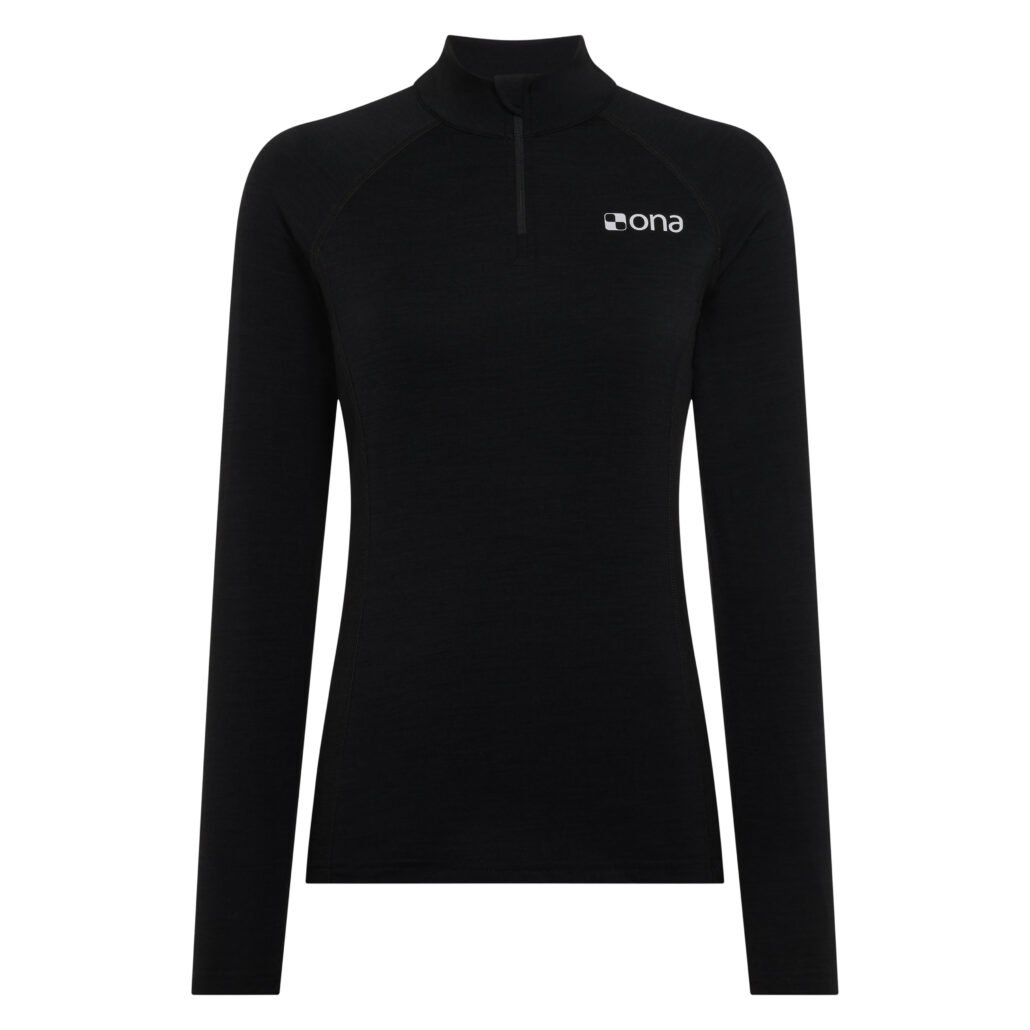

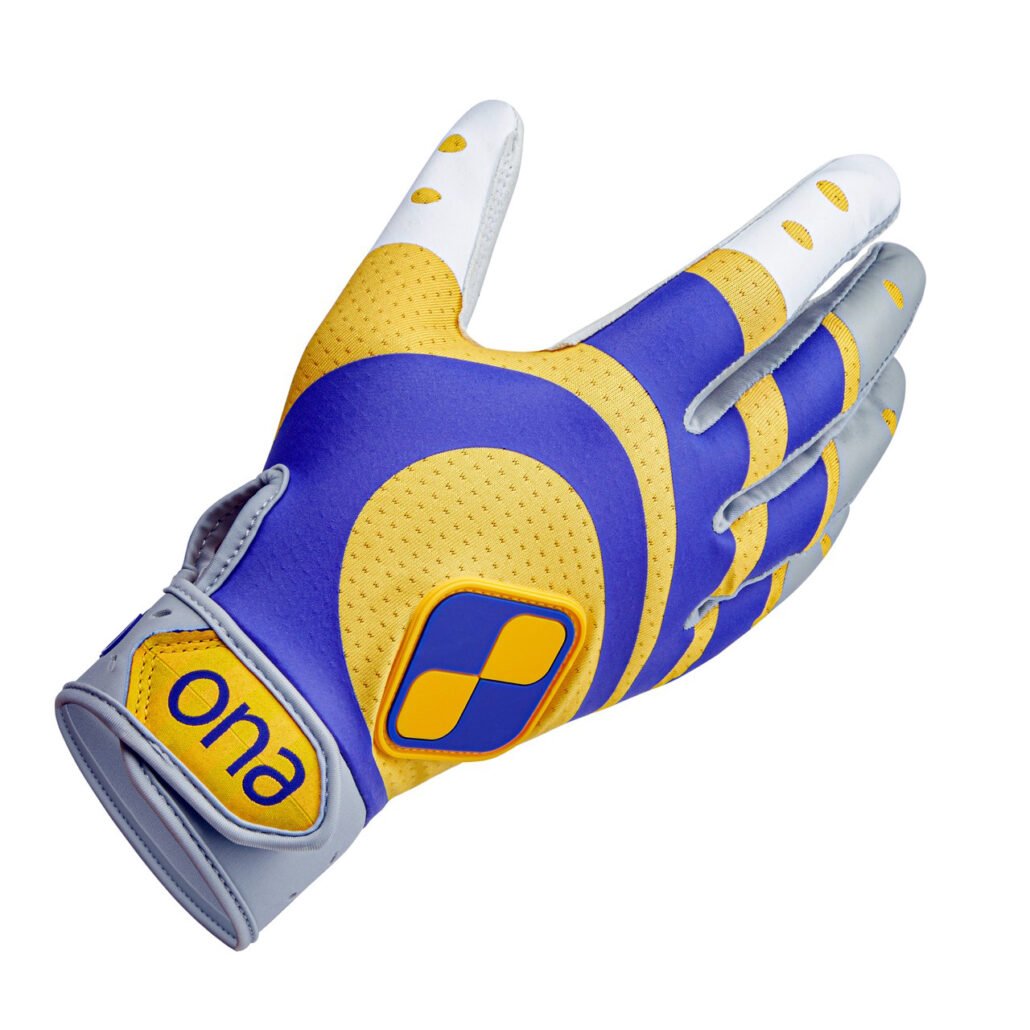
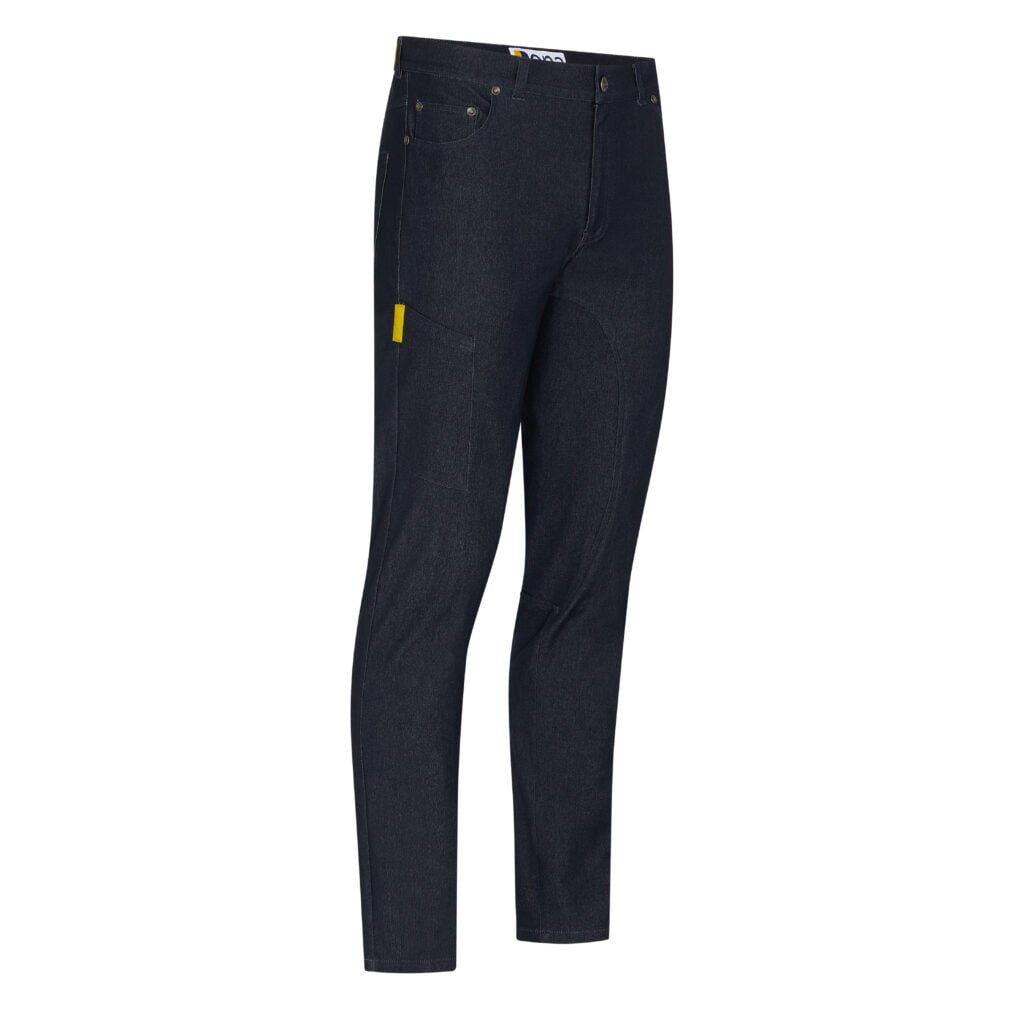
Juxta Practise Pants Blue
£290.00 Original price was: £290.00.£145.01Current price is: £145.01.

Frequently asked questions
What is a chukka in polo?
A chukka (spelled “chukker” in the US) is a period of play lasting seven minutes of actual playing time, followed by up to 30 more seconds until the ball goes out of play or the bell rings. A match usually has four to six chukkas outdoors, up to eight at the top level, and four in the arena.
How many players are on a polo team?
Four players in outdoor grass polo, playing positions 1, 2, 3 and 4 (the Back), and three players in arena polo.
What is the line of the ball in polo?
The line of the ball is the imaginary path the ball travels along after it is struck. The player following that line most closely has the right of way, and opponents may not cross the line if it risks a collision. It is the sport’s foundational safety rule.
Why is polo played only right-handed?
Left-handed play was banned in the 1930s for safety. Because all players hit on the same side and pass right hand to right hand, universal right-handedness keeps mallets on the safe, outer side and prevents head-on collisions on the line of the ball.
What does a polo handicap mean?
A handicap rates a player’s overall ability from −2 (beginner) to 10 (world-class). It measures skill, horsemanship and knowledge, not goals scored. Only a handful of players hold a 10-goal handicap worldwide, and about two-thirds of all players are rated 2 or below.
Are polo ponies actually ponies?
No. They are full-sized horses, usually 15 to 16 hands. “Pony” is a historical term from an old height limit that no longer applies. Most are Thoroughbred crosses, especially the Argentine Polo Pony.
How much does it cost to start playing polo?
Beginner lessons typically cost around US$100–$300 per hour, and playing a chukka with a hired horse around US$80–$250. Taster days and group lessons are cheaper ways to begin.
What equipment does a beginner need to play polo?
To play you need a helmet, a mallet, suitable boots and a horse, most schools provide these at first. Players also wear white trousers, a numbered team shirt, gloves, knee guards, and often elbow pads and sunglasses.