
On the polo field, elegance and function are never in opposition, and few details capture that better than a well-chosen belt. Worn with crisp white trousers, it is at once a finishing touch and a working necessity, keeping the whites secure through the vigorous movement of a chukka: the lean out of the saddle to strike the ball, the sharp turns, the constant shifting of weight through a match. A belt that fits correctly holds everything in place and is forgotten the moment play begins. One that does not becomes a small but persistent distraction.
Yet belt sizing is one of the most misunderstood measurements in a rider’s wardrobe. The single most common mistake is simple: buying a belt in the same number as your trousers. Belt size and waist size are not the same, and confusing the two leaves you either straining at the final hole or with a long, floppy tail of leather trailing from the buckle.
This guide sets the record straight. It explains exactly how belt sizing works, how to measure yours accurately with nothing more than a belt you already own, and how to read the conversion charts that follow, in inches, centimetres and European sizes alike. It also considers what a belt needs to do specifically when worn with polo whites in the saddle. One note of transparency before we begin: Ona Polo does not stock belts, but as a maker of polo trousers we know precisely how a belt should work with them, and this guide is written to help you pair the two perfectly.
Why belt size is not the same as waist size
The foundational rule of belt sizing is this: your belt size is generally two inches larger than your trouser waist size. A man who wears 34-inch trousers takes, as a rule, a 36-inch belt.
The reason is geometry. A belt does not sit against your bare waist, it passes through the loops of your trousers, so it must travel around the waistband, over any shirt tucked beneath it, and back to the buckle. That added circumference accounts for the difference. Sizing a belt to your bare waist measurement, or to your trouser number without adjustment, produces a belt that fits too tightly and runs out of holes.
Sources differ slightly on the exact allowance, some suggest one inch, most recommend two, and the right figure depends a little on how you dress and where you wear your trousers. For a belt worn over polo whites, where the waistband and a tucked shirt add bulk, the two-inch convention is the reliable starting point.
A useful distinction to keep in mind: trouser waist size is the labelled size of your whites; your natural waist measurement is the distance around your body where the belt sits; and your belt size is a separate figure derived from either of these. Confusing them is the root of nearly every ill-fitting belt.
“The two-inch rule catches almost everyone out, and it’s pure geometry — the belt doesn’t hug your body, it travels around the waistband and a tucked shirt before it reaches the buckle. As a trouser maker I see it constantly: a player orders a belt in their trouser number and wonders why it strains at the last hole. Size the belt to its job, not to the label on your whites.” – Alejandra Falkinhoff, CEO, Ona Polo
How to measure your belt size
There are two dependable methods. The first, using a belt you already own, is the most accurate and requires no guesswork.
Method 1: Measure an existing belt (most accurate)
Take a belt that currently fits you well and lay it flat. Rather than measuring the whole strap from end to end, measure only from the fold of the buckle, the point where the leather bends around the metal, to the hole you actually use. That distance, in inches, is your belt size.
This is the step most people get wrong. Measuring the entire belt, including the buckle and the excess tail, gives a figure several inches too large. Only the buckle-fold-to-worn-hole distance reflects your true size.
Method 2: Measure your body and convert
If you have no belt to hand, wrap a soft tape measure around your waist exactly where the belt will sit, over the trousers and shirt you intend to wear. Keep the tape level and comfortably snug, not tight. Then add two inches to that measurement to arrive at your belt size. If the result is an odd number, round up to the next even size, since belts are almost always made in even increments.
Aim for the middle hole
Most belts have five holes, and the ideal fit places you on the centre one. This is not a cosmetic preference: it leaves room to adjust in both directions, inward after a large lunch or a heavy training block, outward over time, and signals that the belt is genuinely the right size rather than fastened at its limit. When your measurement lands you on the middle hole, you have chosen well.
The Polo belt size chart
The chart below converts trouser waist size to belt size using the standard two-inch rule, alongside letter sizes and centimetre equivalents. Use it as a reliable general guide, and always check the specific measurements published for any belt you buy, as makers vary.
| Waist / trouser (in) | Belt size (in) | Belt size (cm) | Letter size |
| 28 | 30 | 76 | XS |
| 30 | 32 | 81 | S |
| 32 | 34 | 86 | S / M |
| 34 | 36 | 91 | M |
| 36 | 38 | 97 | L |
| 38 | 40 | 102 | L / XL |
| 40 | 42 | 107 | XL |
| 42 | 44 | 112 | XXL |
| 44 | 46 | 117 | XXL |
European and international conversions
European belts are typically sized in centimetres, in increments of five. The table below aligns the common EU sizes with their inch and letter equivalents, useful when buying across markets.
| EU size (cm) | Belt size (in) | Letter size |
| 80 | 31–32 | S |
| 85 | 33–34 | S / M |
| 90 | 35–36 | M |
| 95 | 37–38 | L |
| 100 | 39–40 | L / XL |
| 105 | 41–42 | XL |
| 110 | 43–44 | XXL |
Note that European conversions are approximate: a 90 cm belt corresponds most closely to a 35–36 inch size. When a measurement falls between two sizes, round up to preserve the middle-hole fit.
Men’s and women’s belt sizing
The two-inch principle applies to both men’s and women’s belts, but conventions differ in the details. Women’s belts are more often sold in letter sizes (S, M, L) than in numbered increments, and women’s trousers use their own sizing systems that do not map directly onto an inch waist. For that reason, the most reliable approach for women’s belts is to measure the body at the point the belt will sit and add the standard allowance, rather than converting from a dress or trouser size.
Women’s belts are also frequently worn at different heights, higher at the natural waist or lower on the hip, which changes the circumference being fitted. Measuring at the intended position, over the garment in question, removes the uncertainty. As with every category, the measurement matters more than the label.
The belt that works with Polo Whites
A belt worn for riding has demands a dress belt does not, and understanding them helps you choose well even though the sizing rules stay the same.
Comfort in the saddle
Mounted, a rider spends much of the game leaning forward and rotating at the waist. A belt that sits comfortably standing can dig in uncomfortably in that posture. This is another reason to favour the middle-hole fit rather than a belt fastened tight: a little give makes all the difference when folded forward over the pommel. A supple leather or a belt with a degree of flex moves with the body rather than resisting it.
A low-profile buckle
For riding, a slim, low-profile buckle is preferable to a large, ornate one. It sits flat, does not catch on the reins or the pommel, and avoids pressing into the abdomen when the rider leans over the pony’s neck. Simplicity here is both practical and, in keeping with the understated elegance of polo attire, a matter of good taste.
Width and belt loops
Belt width should match the loops of your trousers. Most polo whites and breeches are made for a standard belt of around 1.25 to 1.5 inches; a belt too wide will not pass through the loops, while one too narrow looks insubstantial and slides. Checking the loop width of your whites before buying a belt saves a frustrating return.
“This is where I can speak with real authority, because it’s our side of the partnership. We cut our whites for a standard belt of around 1.25 to 1.5 inches and proportion the loops accordingly, so before you buy any belt, check that its width will actually pass through your trouser loops. A belt and a pair of whites have to perform as one — we design the trouser half to make that easy.” – Alejandra Falkinhoff, CEO, Ona Polo
Material: leather or stretch
Traditional full-grain leather is the classic choice, prized for durability and the way it ages, developing a patina unique to its wearer. It stretches slightly with use, which is why a leather belt is best bought snug, it will ease to fit. Woven or elasticated belts, by contrast, offer built-in stretch and unrestricted movement, which some players prefer for the freedom they allow in the saddle; they do not relax over time in the same way, so are bought true to size. Both have their place; the choice is one of personal preference and the character you want your kit to convey.
Whichever belt you choose, it earns its keep by working seamlessly with your trousers. Ona Polo’s polo trousers and whites are cut with properly proportioned belt loops and a waistband designed to be worn with a belt through a full match, so that the two perform as one, secure, comfortable and correct.
Recognising a quality belt
Since a good belt should last many seasons, it is worth knowing how to judge one. The single most important marker is the leather itself.
- Full-grain leather is the highest grade, using the whole hide with its natural grain intact. It is the most durable and ages the most beautifully, developing character with wear.
- Genuine or bonded leather sits lower down the scale: “genuine leather” is often a lesser layer, while bonded leather is reconstituted scraps and tends to crack and peel in time. The reassuring-sounding name belies the lower quality.
- Stitching and edges reveal the maker’s care: look for tight, even stitching along the length and cleanly finished, sealed edges rather than raw or roughly cut ones.
- The buckle should feel solid and be secured firmly, ideally so it can be replaced. Solid brass or steel outlasts cheap plated alloys.
Signs a belt is the wrong size
- You fasten it on the very first or very last hole, with no room to adjust.
- The tail after the buckle is either too long and floppy, or too short to sit in the keeper loop.
- The buckle sits off-centre when the belt is fastened at a comfortable tension.
- You run out of holes entirely, the clearest sign the belt size is wrong for your waist.
Caring for a leather belt
A quality leather belt rewards a little maintenance with years of service. Wipe it clean with a soft, slightly damp cloth and allow it to dry naturally, away from direct heat that can dry and crack the leather. Condition it occasionally with a suitable leather product to keep it supple and to nourish the grain. Store it either rolled or hung rather than sharply folded, which preserves its shape and prevents creasing. Rotating between two belts, rather than wearing one every day, allows the leather to rest and extends the life of both.
A belt is a small item that quietly does important work, and sizing it correctly is far simpler once the core principle is clear: your belt is not the same size as your trousers, but generally two inches larger. Measure an existing belt from buckle fold to worn hole, or measure your waist and add the allowance, aim to land on the middle hole, and round up whenever you fall between sizes. Do that, and the belt will hold your whites securely through every chukka without a moment’s thought.
Beyond the numbers, choose a belt suited to the saddle, supple, with a low-profile buckle and a width matched to your trouser loops, and made of leather good enough to last. Paired with well-cut whites, the right belt completes the picture: understated, functional and entirely in keeping with the elegance the sport is known for.
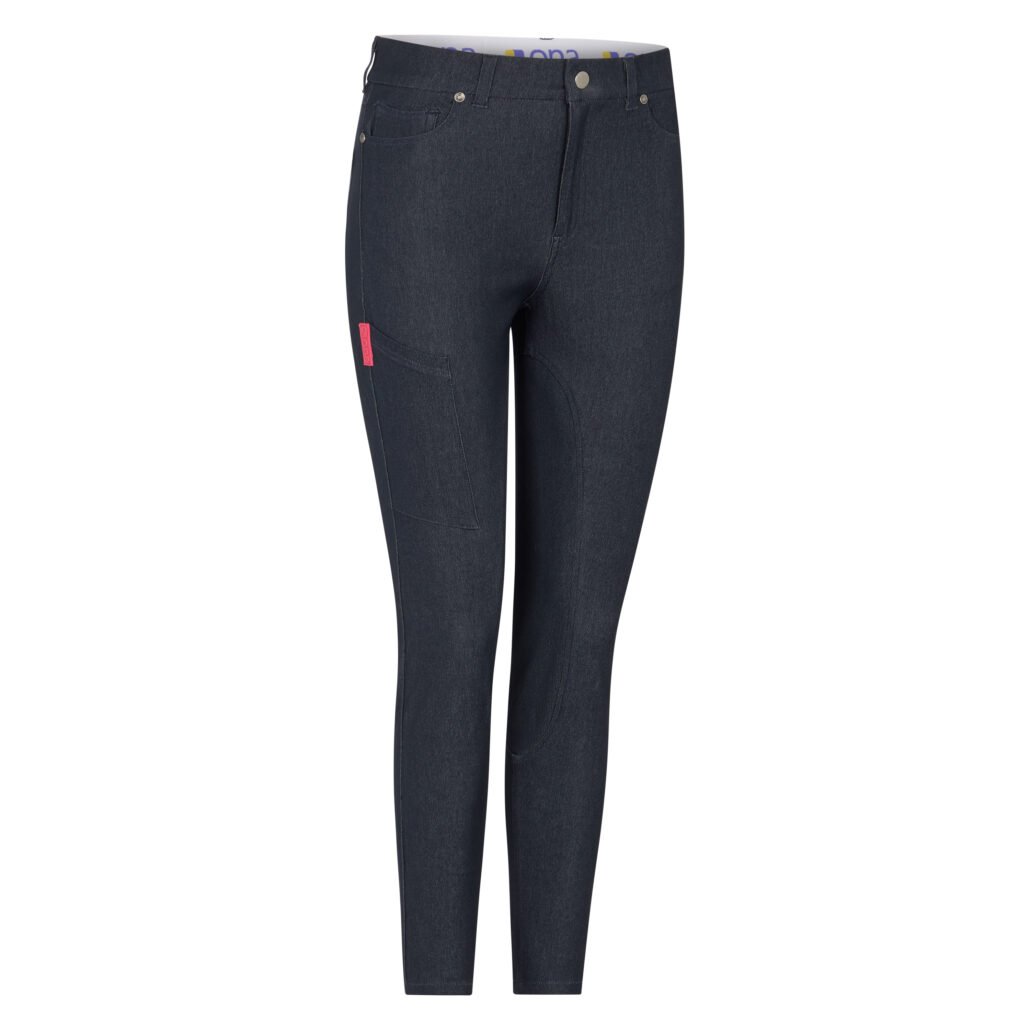
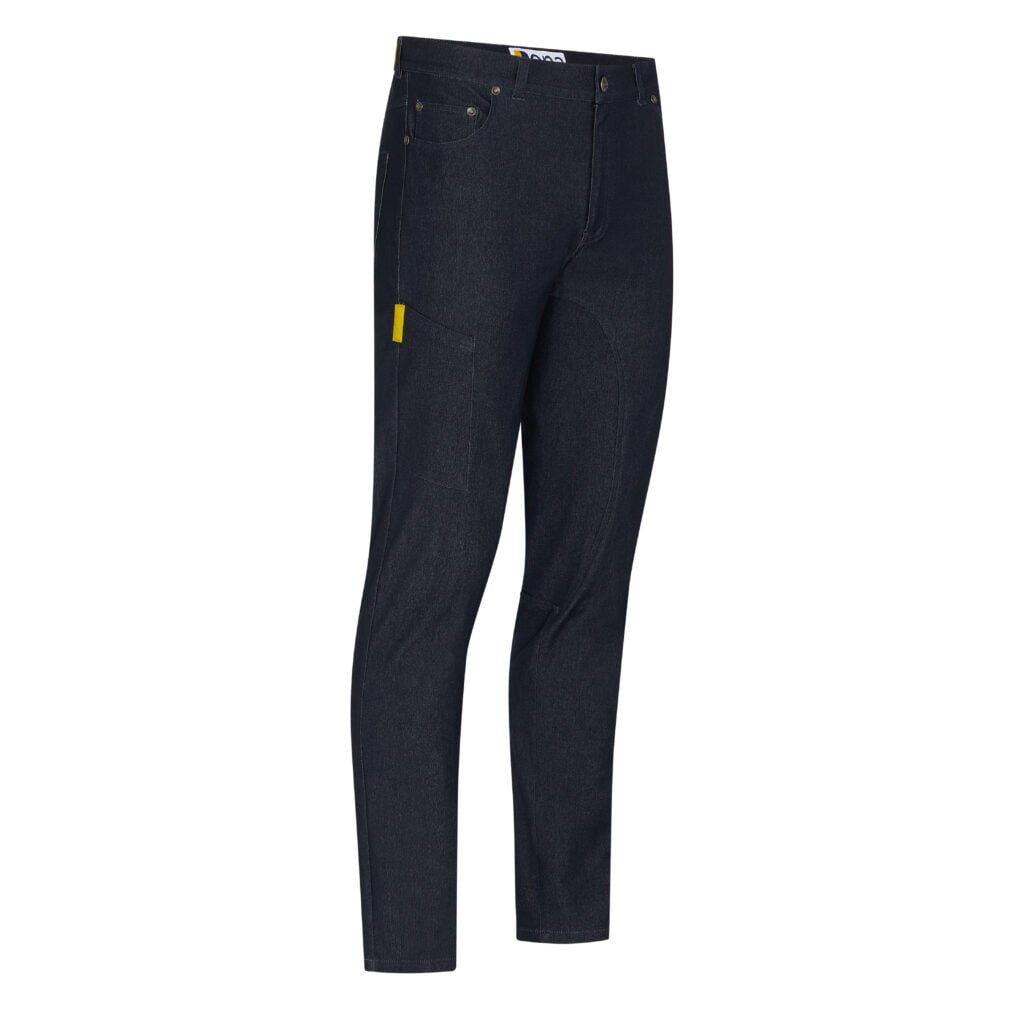
Juxta Practise Pants Blue
£290.00 Original price was: £290.00.£145.01Current price is: £145.01.
Frequently asked questions
What size belt should I buy if my waist is 32 inches?
As a general rule, choose a belt two inches larger than your trouser waist, so a 32-inch waist takes a 34-inch belt. This allows the belt to pass around the waistband and any tucked shirt and still fasten comfortably on the middle hole.
Is belt size the same as pant size?
No. Belt size is typically one to two inches larger than your trouser waist size, with two inches the most widely used convention. Buying a belt in the same number as your trousers usually results in a belt that fits too tightly and runs out of holes.
How do I measure my belt size without a tape measure?
Use a belt that already fits you well. Measure from the fold of the buckle to the hole you normally use, not the entire strap. That distance in inches is your belt size. It is the most accurate method and needs no tape measure around the body.
What should I do if I’m between belt sizes?
Round up to the next size, which is almost always the next even number, since belts are made in even increments. Sizing up preserves the ideal middle-hole fit and leaves room to adjust in both directions, whereas sizing down risks running out of holes.
How should a belt fit when worn with polo whites for riding?
It should fasten comfortably on the middle hole, leaving room to move when you lean forward in the saddle. Favour a supple leather or a belt with some flex, and a slim, low-profile buckle that will not catch on the reins or press into you when folded over the pony’s neck.
Should a riding belt be leather or elastic?
Both work well. Full-grain leather is durable, classic and ages beautifully, stretching slightly so it is bought snug. Woven or elasticated belts offer built-in give and freedom of movement in the saddle, and are bought true to size. The choice comes down to personal preference and the look you prefer.
Do men’s and women’s belts use different sizing?
The two-inch rule applies to both, but women’s belts are more often sold in letter sizes and women’s trousers use different systems that do not convert directly to an inch waist. The most reliable method for women’s belts is to measure the body where the belt will sit and add the standard allowance.