
Few pieces of equestrian equipment carry as much tradition, regulation and hidden technical complexity as the polo trouser. On the surface it looks simple – a pair of white pants. In reality, choosing the right pair involves understanding governing-body dress codes, fabric technology that has evolved from Indian jodhpurs to Swiss-engineered softshells, fit considerations unique to mounted sport, and care routines that keep competition whites pristine through an entire season of grass stains, saddle contact and sun exposure.
This guide provides a structured, decision-ready framework for every level of player – from a first-time buyer preparing for polo lessons to a high-goal competitor outfitting for a tournament circuit. By the end, you will understand exactly what to buy, why, and how to make it last.
1. What are polo whites?
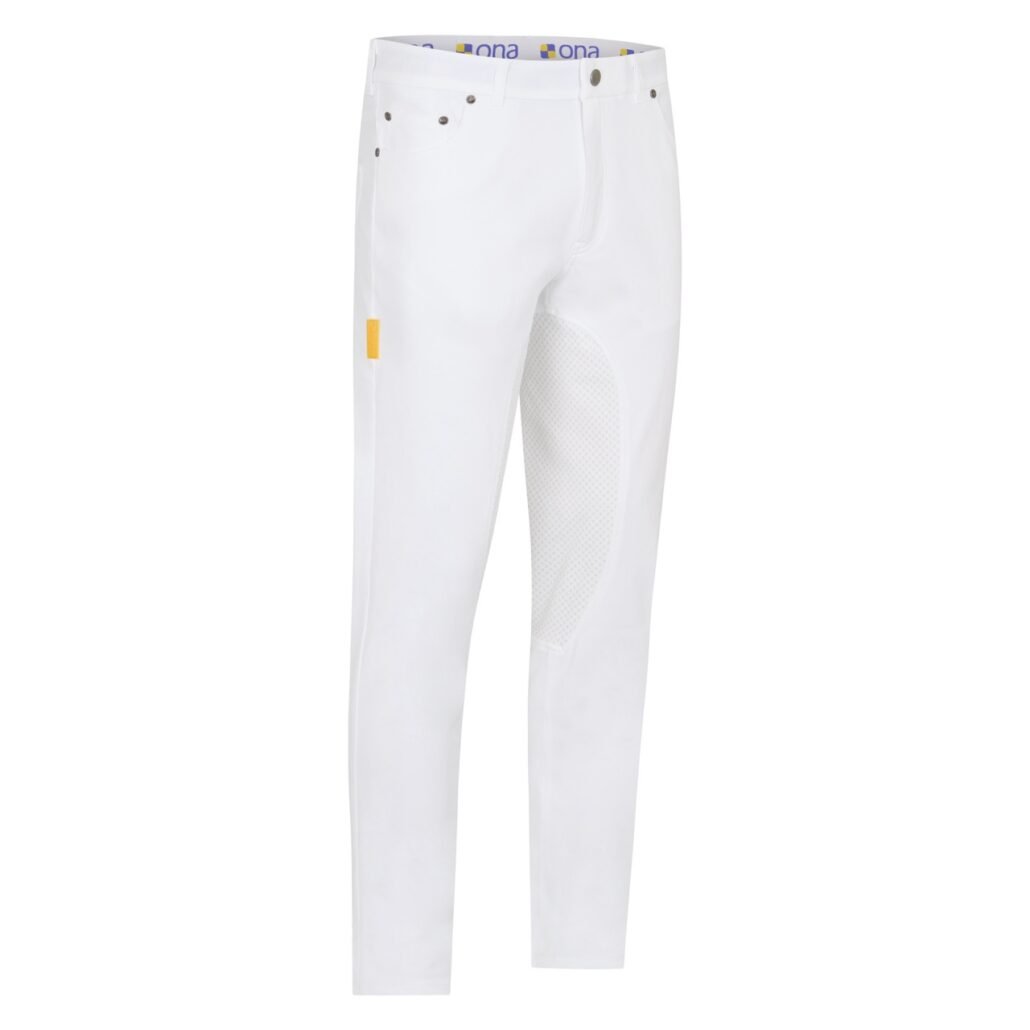
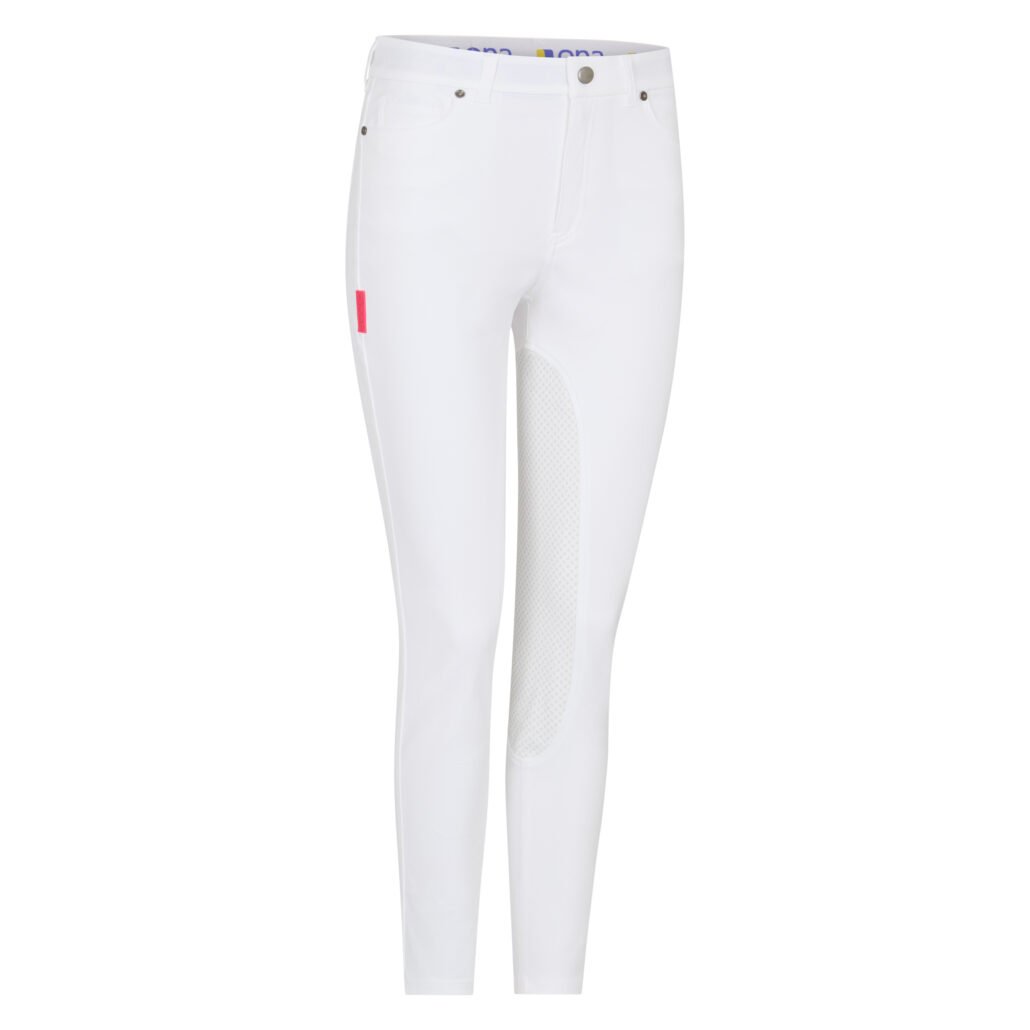
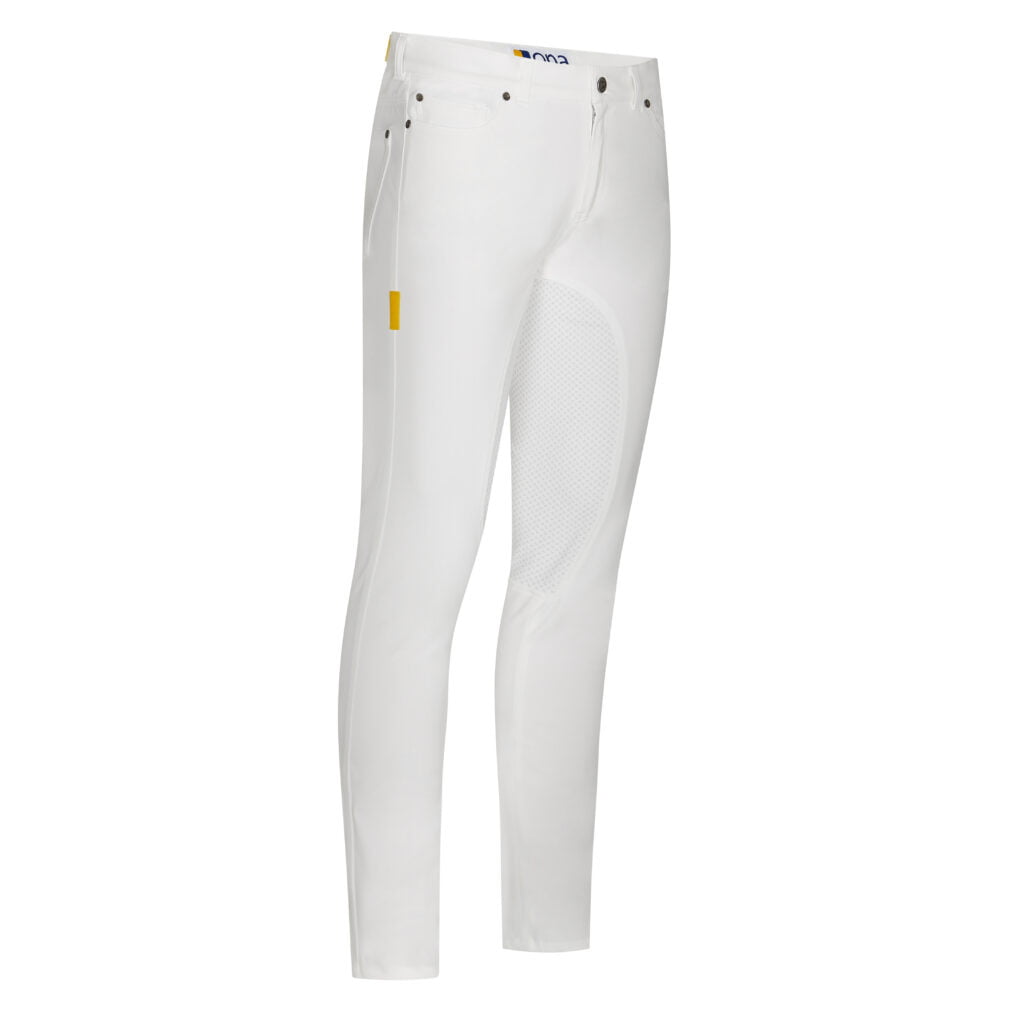
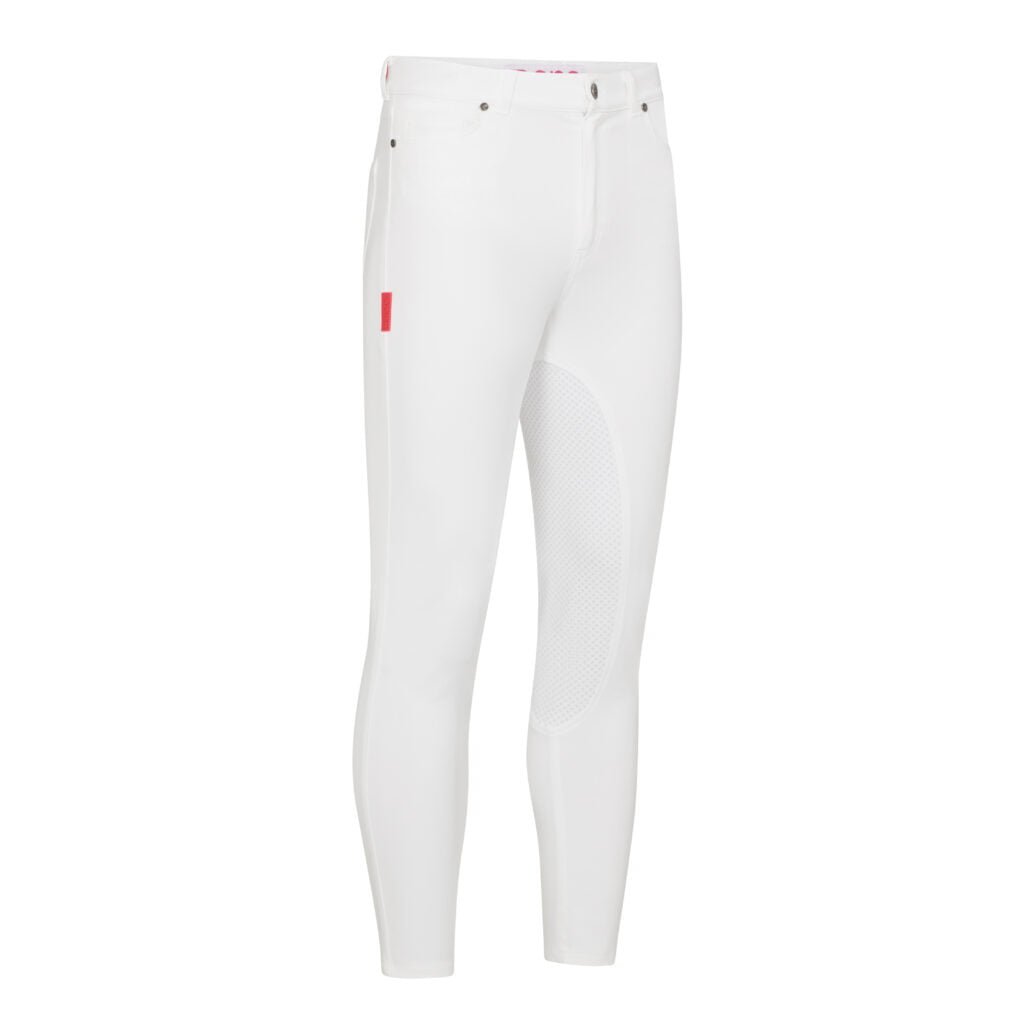
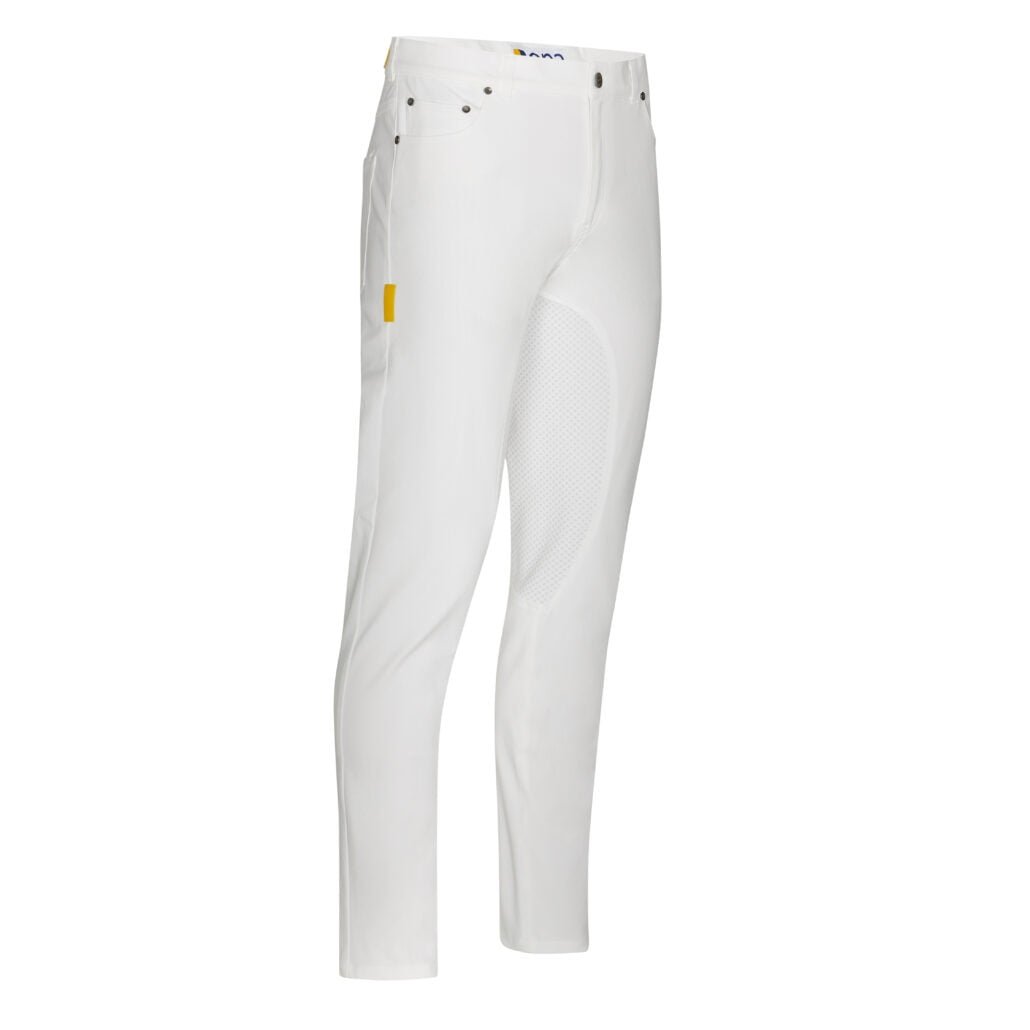
Polo whites are the white, tapered-calf trousers worn by polo players in match play. Required by the Hurlingham Polo Association (HPA) and the United States Polo Association (USPA) for tournament events, they are cut differently from dressage breeches – full-length to fit inside knee-high polo boots – and nowadays built from durable stretch fabrics (cotton denim or technical Schoeller® softshell) with reinforced inner-leg panels for saddle grip, although some players still wear the classic Levi’s 501 and Wrangler’s white jeans.
The tradition dates to British cavalry officers who brought polo from the Indian subcontinent in the mid-nineteenth century. White linen was adopted for the intense subcontinental heat, and the convention endured as polo spread to Argentina, the United States and continental Europe. Today, white remains mandatory for sanctioned competition – a visual cue that separates the sport’s formal traditions from casual equestrian pursuits.
2. A short history – From Jodhpur to Schoeller®
The modern polo trouser descends directly from the jodhpur – the flared-hip, tapered-calf riding trouser brought to England by Sir Pratap Singh of Jodhpur when his polo team attended Queen Victoria’s Diamond Jubilee celebrations in 1897. The British polo-playing community adopted the garment rapidly, adapting it to the existing conventions of English riding breeches.
Over the following century, the flared silhouette straightened, the fabric shifted from linen and cotton drill to stretch denim (the “polo jeans” era), and in recent decades advanced to bi-elastic technical softshells developed by specialist mills such as Schoeller Textil AG in Switzerland. Today’s premium polo trousers bear little resemblance to their Victorian ancestors in construction – but they retain the same essential purpose: a close-fitting, full-length garment that sits inside tall polo boots and allows maximum freedom of movement in the saddle.
3. Polo pants vs breeches vs jodhpurs vs riding tights
One of the most common questions from newcomers is whether polo pants are the same as riding breeches. They are not. The following comparison clarifies the taxonomy.
| Garment | Length | Closure | Worn With | Grip System | Disciplines |
| Polo pants / whites | Full length to ankle, tapered calf | Zip fly + button, belt loops | Knee-high polo boots (pant inside boot) | Abductor inner-thigh panels (Silicone printing, GripIt® or fabric) | Polo only |
| Breeches | Historically ended just below the knee, nowadays full tapered leg | Front zip + button | Tall boots worn over the breeches | Knee patch or full-seat (silicone, leather, synthetic suede) | Dressage, show jumping, eventing |
| Jodhpurs | Full length, originally flared hip then tapered | Front zip + button | Short paddock boots, sometimes half-chaps | Reinforced inner knee | Casual riding, some western |
| Riding tights | Full length, ankle-cuffed | Pull-on elastic waist | Tall boots or half-chaps | Silicone knee/full-seat | Schooling, hacking |
The critical distinction is that polo uses inner thigh grip panels rather than the knee patches or full-seat silicone typical of dressage and show jumping – and for good reason. Polo is an extremely dynamic sport where players are frequently standing in the stirrups rather than sitting in contact with the seat of the saddle. The grip needs to be precisely where the leg meets the panels of the saddle, giving the player a firm, secure connection through constant movement, weight shifts and changes of pace.
4. The dress code: HPA, USPA and FIP rules in one place
Understanding when white is mandatory – and when it is not – is essential for any player.
Hurlingham Polo Association (HPA)
The HPA Rules of Polo state that polo boots, protective kneepads, and white jeans or breeches must always be worn during match play. This applies to all formal matches and tournaments sanctioned by the HPA across the United Kingdom, Ireland and Commonwealth nations. The rule does not extend to stick-and-ball sessions, practice chukkers or club coaching.
United States Polo Association (USPA)
The 2024 USPA Outdoor Rules, Rule 4.d, state that in any USPA Event, players shall wear white pants or breeches. The USPA Spectator Guide softens this to “customary,” but for sanctioned events the rulebook wording is binding. Helmets must be NOCSAE-approved.
Federation of International Polo (FIP)
International tournaments adopt FIP rules, produced in cooperation with the HPA, USPA and Asociación Argentina de Polo (AAP). The white-trouser convention applies to all sanctioned international matches.
Practice, club chukkas and informal play
Coloured practice pants – typically navy or black – are the norm for daily training, stick-and-ball sessions, and informal club chukkas. Some clubs require whites and team shirts for any fixture designated a “match,” however casual.
Snow polo, beach polo and arena polo
Variations of polo exist across formats – snow, beach and arena – each with their own character and environment. Regardless of format, whites are always worn. The all-white tradition is a constant across sanctioned polo worldwide.
Practical implication for buyers: anyone planning to enter any HPA, USPA or FIP-sanctioned tournament needs at least one pair of technical whites. Anyone who plays regularly should own 2–3 pairs of practice pants in dark colours plus 1–2 pairs of whites kept clean for match days.
5. Competition whites vs practice pants – Which do you need?
This is the first purchasing decision every player faces, and it is worth understanding the logic clearly.
Competition whites are built in white and engineered for tournament play. Ona’s competition and practice pants use Schoeller® softshell fabric throughout – a technical fabric that is the benchmark for performance textiles worldwide. Any serious athlete who skis, sails or climbs will almost certainly own a Schoeller® garment, whether they know it or not. In polo, it delivers the stretch, recovery and durability the sport demands.
Practice pants follow identical construction in navy or black. The rationale is purely practical – daily training, stick-and-ball sessions and chukkas expose white fabric to grass stains, mud and horse sweat. Dark colours mask these marks and extend the garment’s visual lifespan between washes.
Not all polo pants on the market are made equal. Many brands offer cotton and synthetic blends in varying percentages at lower price points – and while a blend is not inherently inferior, fabric quality varies enormously. Poorly constructed blends lack yarn quality and the knit integrity that gives a technical fabric its memory. The result is a garment that loses its shape after a few washes, becoming baggy and shapeless at exactly the points where fit and grip matter most. In polo, a pant that has lost its structure has lost its function.
“My practical advice is to have at least two pairs of whites in rotation for tournament play – it allows one to be washed and rested properly between matches. And at least one pair of practice pants for yard work and stick and ball. Your whites will thank you for it.” – Alejandra Falkinhoff
6. Materials and fabrics: The technical depth that matters
Cotton and stretch denim
The most widely available polo pant fabric and the most accessible in terms of price. Higher cotton content means a rougher, stiffer hand against the skin – with sustained wear this can lead to chafing, particularly at the inner leg. Cotton with little synthetic content stretches easily and loses shape, and once shape is lost it rarely recovers. On the stain removal question – which matters enormously for whites – higher cotton content responds well to bleach, making marks easier to remove. Higher synthetic blends cannot take bleach; only a small amount of whitener can be used if absolutely necessary, making stain removal considerably harder. For occasional players or those just starting out, a cotton or cotton-blend pant is a reasonable entry point. For anyone playing regularly, the limitations become apparent quickly.
Synthetic and performance blends
The broader market offers a wide range of nylon, polyester, elastane and cotton blend combinations, many of which claim four-way stretch, moisture wicking and durability. The quality of these properties varies enormously depending on the quality of the yarns and the construction of the fabric itself. A well-made blend can perform well; a poorly made one will lose its shape and structure after a few washes, becoming baggy at exactly the points where fit and grip matter most. The advice is to research thoroughly, read reviews and where possible talk to more experienced players who wear different brands – there is no substitute for first-hand feedback on how a fabric performs over a full season.
Schoeller® bi-elastic softshell
The benchmark technical fabric for polo trousers. Four-way stretch allows unrestricted movement in every direction the sport demands. The fabric is windproof, breathable and moisture-managing, with a smooth outer face and soft inner face against the skin. Most importantly it is shape-retentive – it recovers its fit after sustained stretching in the saddle in a way that cotton and many blends simply cannot. For a player spending long hours at the yard and competing regularly, the difference in comfort, performance and longevity is significant.
Schoeller® GripIt® technology – exclusive to Ona
GripIt® is a transparent non-slip coating applied to the inner thigh abductor panels, exclusive to Ona polo trousers. Its purpose is precise: to maintain close contact with the saddle panels, giving the player a secure, stable base from which to swing the mallet and move with confidence. Unlike the full-seat silicone grip used in dressage breeches, GripIt® targets only the abductor zone – because polo players are rarely fully seated. The grip is where the leg meets the saddle, not the seat.
Silicone printed grip panels Many brands use silicone printing on the inner thigh panel as their grip solution. Printing weight and coverage varies considerably across the market – lighter printing gives a more subtle connection with the saddle while heavier printing delivers a more adhesive, locked-in feel. Neither is right or wrong – it comes down entirely to personal preference and how the individual player likes to feel in the saddle. It is worth examining the grip weight and coverage before buying.
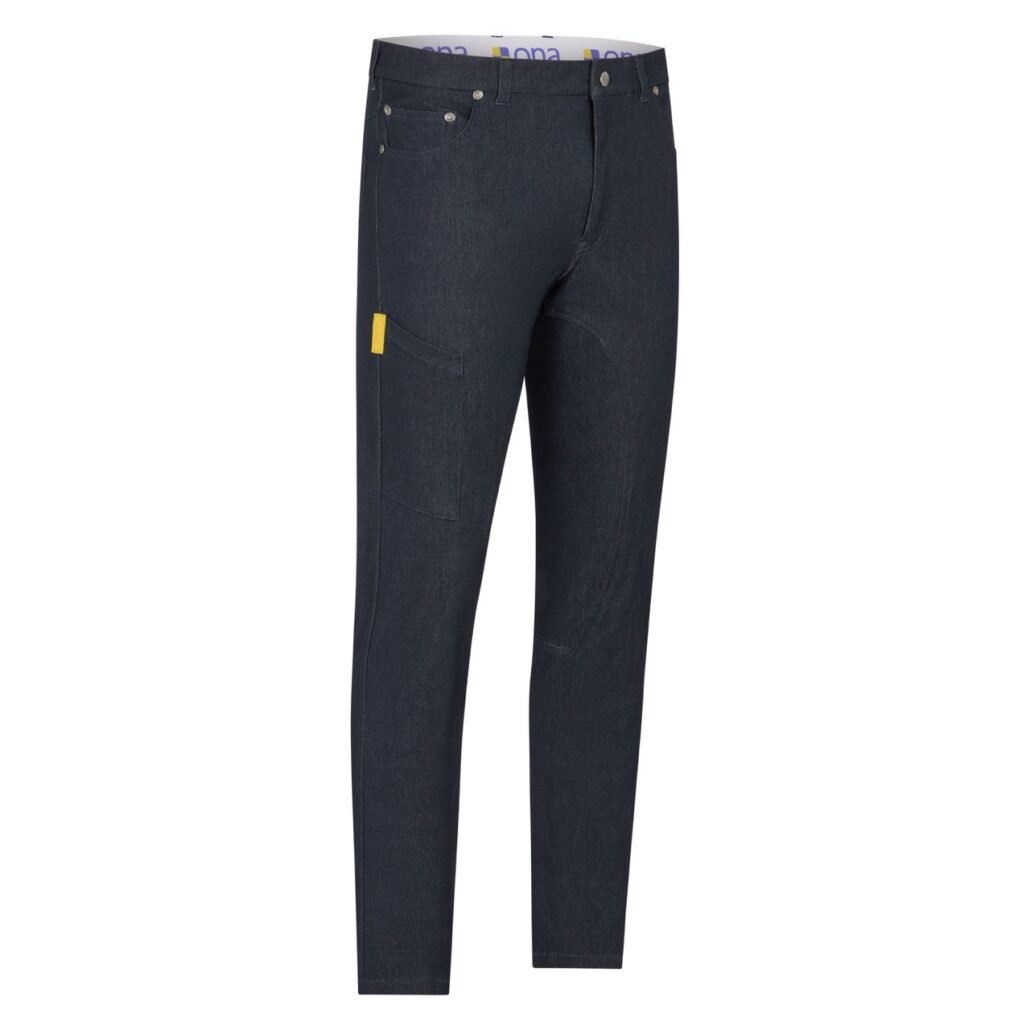
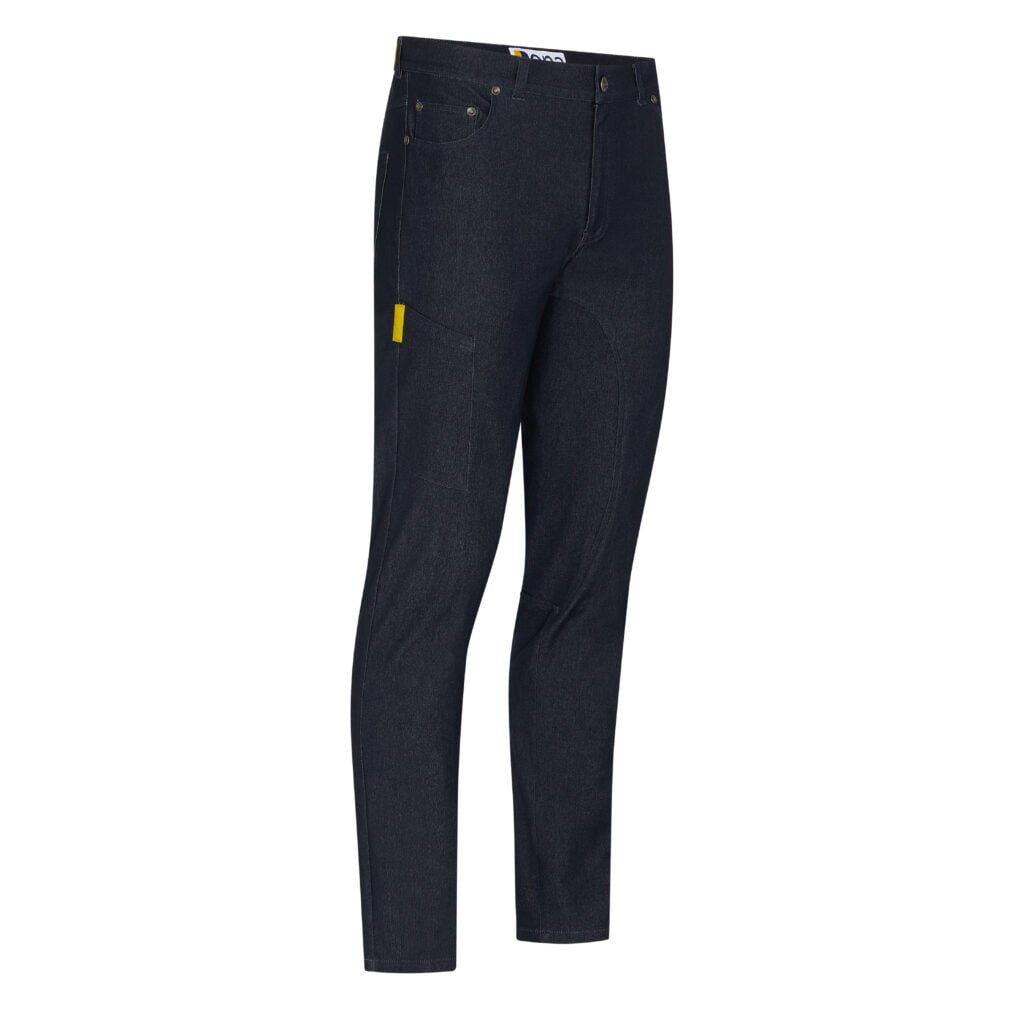
Double reinforced abductor panels – an Ona innovation Ona applies a double panel construction to the inner thigh abductor zone of its practice pants – a detail that has a direct and significant impact on longevity. Practice pants take considerably more wear than competition whites. A player may compete once a week but they are at the yard daily – stick and ball sessions, training chukkas, yard work. The inner thigh panel absorbs the most friction of any part of the garment. Double panel construction dramatically extends the life of the trouser at exactly the point where single layer construction fails first. Other brands rely on silicone printing alone, which does not offer the same durability. Players who spend serious time in the saddle will notice the difference over a full season.
Reinforced panels
Practice pants typically feature double-reinforced abductor panels because they absorb daily wear. Competition whites may use GripIt® coating rather than extra fabric layers to keep the profile sleek and the weight light. Both approaches serve the same purpose: protecting the inner-leg contact zone from saddle abrasion.
“Fabric is where the real difference between a polo trouser and a pair of white jeans lies – and not all fabrics are equal, even within the same category. I have seen players buy what looked like a well-made blend only to find it shapeless and baggy within a season. The yarn quality, the knit construction, the way the fabric recovers after hours in the saddle – these are not details you can see on a hanger or a product page. They reveal themselves over time. That is why at Ona we have never compromised on fabric. A trouser that loses its structure loses its function – and in polo, function is everything.” – Alejandra Falkinhoff
Juxta Practise Pants Blue
£290.00 Original price was: £290.00.£145.01Current price is: £145.01.
7. Fit and cut: Slim, skinny and athletic silhouettes
A polo trouser must perform in two positions: standing on the ground, where it should look clean and polished, and seated in the saddle, where it must allow full range of motion without bunching or pulling. Everything in the cut serves one of those two demands.
Tapered calf – the non-negotiable
Polo boots are knee-high and zip up the front. The trouser must taper at the calf to slide cleanly into the boot without excess fabric bunching inside. Excess material creates pressure points, rubs against the shin and looks untidy. Every polo-specific trouser should have a tapered calf. If it does not, it is not designed for polo.
Rise – men vs women
Men’s polo trousers are mid-rise. It sits at the natural waist, provides a clean line when the shirt is tucked in and stays in place through the full range of movement the sport demands. No man playing polo wants a hipster or high-rise waist.
For women the picture is different. The majority prefer a high waist – it keeps the shirt securely tucked, sits comfortably through intense physical play and avoids any unwanted exposure. Some women prefer mid-rise and both are available, but high waist is the clear preference across the board.
Waistband evolution
The polo trouser waistband has evolved considerably. The drawstring waist – inspired by the jog jean and popularised across the market – became widely adopted for the adjustability and relaxed fit it offered. Adolfo Cambiaso wears them, which tells you everything about their credentials.
At Ona we took a different direction. We chose an interior elasticated waistband – the same comfort and mobility, without the strings. It is a design philosophy choice as much as a functional one. We wanted a trouser that performs at the highest level while looking clean, elegant and polished on and off the field.
Fit options
Slim, skinny and athletic fits in polo trousers are style choices borrowed from the denim industry rather than functional distinctions. A small percentage of players prefer the closer line of a skinny fit; others prefer the cleaner athletic cut through the quad and glute. Neither affects performance – that is the fabric and grip panel’s job.
The five-pocket detail
Ona’s polo trousers retain the five-pocket construction – a knowing nod to the Levi’s 501 that has always sat at the heart of the polo aesthetic. As the sport moves toward technical fabrics and away from denim, we chose to keep that detail. It connects where polo has come from with where it is going.
A note on innovation
Ona was the first brand to introduce technical fabrics and grip abductor panels to polo trousers. What is now increasingly adopted across the market began here. That matters not as a point of pride but as a guarantee of expertise – when Ona makes a design decision, it comes from years of development, player feedback and genuine understanding of what the sport demands.
8. Sizing – How to measure yourself
Every brand works from its own pattern and block, which means sizing can vary considerably even within the same nominal size. A waist 30 in one brand may fit very differently to a waist 30 in another – particularly across the women’s range where cut and proportion vary most. Never assume your usual trouser size will translate directly.
Ona polo trousers are sized by waist measurement in inches – women’s from 24 to 36 in two-inch increments, men’s from 28 to 42. All styles are cut to a 32 inch length. If you are tall, check your inseam against that length before buying – it is the measurement that matters most for fit in the leg. For the waist, measure around your natural waistline keeping the tape snug but not tight. Hip measurement is also worth taking as polo trousers are cut to fit through the seat and thigh – a waist that fits but pulls across the hip is the most common fit issue, particularly in women’s styles.
The most important advice for a first time buyer is simple: try before you buy where possible. Visit a specialist polo retailer or tack shop, try different brands and sizes and take the time to find what works for your body. Women in particular will want to see how the trouser sits and moves – a size chart tells you very little about how a garment actually looks and feels on.
If you are buying online, read reviews on the brand’s own site, Trustpilot or Google, and where possible ask other players who wear the brand. First hand experience from someone who plays regularly in a particular trouser is worth more than any size guide.Polo-specific sizing advice
9. Beginner vs tournament player – What to buy first
For anyone just starting out, the advice is simple: keep the budget in check and start with one pair of whites that satisfies the match day dress code. A good quality cotton elastane jean or jodhpur in white is perfectly acceptable at beginner and club level – there is no need to invest in technical fabric at this stage. If polo takes hold and the passion grows, the wardrobe will follow naturally.
Practice pants are not essential for a newcomer. Any white jodhpur or riding tight will serve perfectly well at the yard and in training. The story of how Ona’s practice pants came to exist is telling – players who had fallen in love with the performance of Ona whites started asking for a practice version because they were tired of riding in blue jeans. That demand came from players, not from us. It is the best endorsement we could ask for.
For regular players who spend serious time at the yard – training daily, competing weekly – more than one pair of each becomes genuinely necessary. Whites rotate through the competition season; practice pants absorb the daily wear of barn work, stick and ball and training chukkas. At professional level, a player may spend more time in practice pants than in anything else they own.
“The equipment follows the passion. Start simply, find your game, and invest as the sport demands it.” – Alejandra Falkinhoff
10. How much should polo pants cost? Price tiers explained
| Tier | Price Range | Fabric | Best For |
| Entry-level denim | £50–£100 | Stretch cotton denim, 3–5% elastane | Newcomers, club players and SUPA (Schools and University Polo Association) players starting out |
| Mid-range technical | £105–£200 | Cotton/polyamide/elastane blend, silicone print or reinforced abductor panel | Regular club players stepping up from denim |
| Premium softshell | £290–£320 | Schoeller® bi-elastic softshell, GripIt® panels | Any player who values performance, comfort and longevity above all else |
The price difference between tiers reflects real differences in stretch recovery, moisture management, abductor grip and durability. A premium softshell trouser that is properly cared for will retain its technical properties season after season. The white may not remain pristine forever – that is the nature of any white garment in heavy use – but the fabric performance, the grip and the fit will endure. In the long run, buying well once costs less than replacing cheaper trousers repeatedly.
11. Care and maintenance: Keeping whites white
White polo trousers face four enemies: grass, mud, sweat and saddle leather oil transfer. The single most important rule is to act quickly – soak the garment as soon as possible after play. The longer a stain sits, the harder it becomes to shift.
General care for Schoeller® softshell whites
Machine wash at 30°C on a gentle cycle with a very mild detergent. Never use chlorine bleach – a small amount of mild whitener only if absolutely necessary. Do not tumble dry – air dry only. The technical fabric dries quickly thanks to its moisture management properties, so this is rarely an inconvenience. Always wash whites separately – white is an unforgiving colour and needs to be treated as such.
Stain treatment
For grass stains, hydrogen peroxide – a mild oxygenating agent safe for wounds – applied directly to the stain before washing can be effective. For sweat staining, a solution of bicarbonate of soda and white vinegar can help, but do not overuse as repeated application can affect the fabric over time. For blood, dabbing gently with a cotton pad and hydrogen peroxide may help though results are not guaranteed.
Saddle leather oil transfer onto white technical fabric is one of the most stubborn stains a polo player will encounter. If home treatment fails, a specialist dry cleaner with experience in technical sportswear is the most reliable option.
A final note
White is one of the most demanding colours to maintain. It rewards careful, consistent attention – and a pair of whites that is well looked after will serve you far longer than one that isn’t.
12. A note on climate and layering
Polo is played year round across every climate imaginable – from the Argentine summer to the British winter, from Dubai to St Moritz. Players wear the same whites regardless of where in the world they are playing or what the weather is doing. The technical properties of a well-made polo trouser – windproof, moisture-managing, shape-retentive – make it genuinely versatile across conditions.
The one layering consideration worth noting is underwear. Many players – particularly men – wear compression shorts beneath their whites. Beyond personal comfort, compression underwear supports the inner thigh and abductor area, working in conjunction with the grip panel to maintain a stable, secure position in the saddle. Seamless styles are preferable under close-fitting technical fabric – seams against skin during intense physical activity are a source of chafing that is entirely avoidable.
13. The polo trouser market today
The most significant design advancement in polo trousers happened when technical fabrics and grip abductor panels were introduced to the sport – and that originated with Ona. What followed was adoption across the market as other brands recognised what technical fabric construction delivered for the player. Since then, changes have been incremental. The elasticated and drawstring waistband variations are the most visible evolution, but in terms of fundamental design the category has remained relatively stable. More brands are now available across a wider range of price points, which gives players more choice – but innovation in the true sense has been limited. The foundation that Ona built remains the reference point.
“What makes me proud is not that others followed – it is that every polo player in the world now has access to trousers that are genuinely comfortable and designed for the sport, at different price points from different brands. Before technical polo trousers existed, your options were a pair of Wranglers or a pair of Levi’s 501s. That has changed completely – and that change has benefited every player who has ever pulled on a pair of whites.” – Alejandra Falkinhoff
14. Navigating the Ona range: A buyer’s map
Men’s range
Juxta Polo Whites: Softshell polo whites with a relaxed fit and tapered legs. Designed for full unrestricted mobility and enhanced close contact with the saddle. The five-pocket construction nods to the classic denim aesthetic while performing as technical sportswear.
Kleis Polo Pants: Mid-rise, skinny fit with the same five-pocket detailing. Crafted from softshell for supreme stretch and shape retention. For players who prefer a closer, more tapered line through the leg.
Benjamin Lux Polo Pants: Mid-rise, close fit with an integrated elasticated waistband. Inspired by the Juxta but enhanced for greater comfort and flexibility – the waistband adapts effortlessly to movement, eliminating restriction through the swing. Tapered legs for a clean boot fit.
Women’s range
Alexia Polo Pants: High-waist sculpted silhouette in softshell with GripIt® abductor panels. Close fit, tapered calf, designed for precision fit and performance in the saddle.
Hazel Lux Polo Pants: Named after Ona ambassador and renowned women’s player Hazel Jackson. High-waist softshell with an innovative elasticated waistband that adjusts intuitively to movement – expanding gently when bending forward or sideways without restriction. Tapers to slim calves for a streamlined silhouette.
Constans Practice Pants: Women’s practice-specific cut in black. Relaxed yet slim fit based on the five-pocket construction, adapted for polo. Double abductor panels for extended durability. Four-way stretch, breathable, windproof and soft next to skin.
All models are available in white for competition and navy or black for practice, with the same fabric, fit and features. A player can train in the identical fit they compete in – no adjustment between practice and match day.
Choosing the right polo trousers is a more considered decision than it might first appear. Fabric, fit, grip construction and care all play a role – and none of them can be separated from the individual player making the choice. After 25 years designing and manufacturing polo equipment, the one thing I have learned above all else is that the best polo trouser is the one that gives you complete freedom of movement, keeps you secure in the saddle and lets you focus entirely on the game. Everything else is detail. – Alejandra Falkinhoff, founder of Ona
Juxta Practise Pants Blue
£290.00 Original price was: £290.00.£145.01Current price is: £145.01.
Frequently asked questions
Why do polo players wear white pants?
White is a polo tradition with roots in the British cavalry officers who brought the sport from the Indian subcontinent to Europe in the nineteenth century. It became codified into the rules over time and remains mandatory for sanctioned tournament play worldwide under the HPA (Hurlingham Polo Association), USPA (United States Polo Association) and AAP (Asociación Argentina de Polo) regulations.
What do polo players wear?
Standard match day attire includes a team jersey with the player’s number on the back, white polo trousers, knee-high polo boots, protective kneepads, a certified polo helmet, and polo gloves. Eyewear is compulsory and elbow pads, while not always mandatory, are strongly recommended – they are one of those pieces of kit whose value becomes immediately apparent the first time you need them.
What is the dress code for polo?
For sanctioned tournament play the requirement is whites, polo boots, kneepads, a certified polo helmet and team jersey. Specific regulatory requirements vary between governing bodies – always check the rules of the relevant association before competing. Practice sessions are less formal and dark-coloured practice pants are the norm.
What are polo pants called?
They are variously called “polo whites,” “polo jeans,” “polo trousers” or simply “whites.” The terms are used interchangeably across the polo community.
Are polo whites just white jeans?
Historically many players wore white denim jeans – and as we covered earlier in this guide, a good pair of white jeans is still a perfectly acceptable starting point for a newcomer. Today’s premium polo whites are purpose-engineered trousers built from technical fabric with grip abductor panels, tapered calves for polo boots and four-way stretch for unrestricted movement in the saddle. They look like jeans but perform as technical sportswear.
Do you have to wear white to play polo?
For formal matches and tournaments sanctioned by the HPA, USPA, AAP or FIP – yes. For practice, club chukkas and lessons – no. Dark-coloured practice pants are standard for daily training.
Why do polo trousers have grip panels?
Polo is an extremely dynamic sport where players spend much of their time standing in the stirrups rather than seated. The grip panels are positioned on the inner thigh – where the leg meets the saddle panels – to give the player a firm, secure connection through constant movement, weight shifts and changes of pace.
What is the difference between competition whites and practice pants?
The construction is identical – same fabric, same fit, same features. The only difference is colour. Whites are kept for match days; practice pants in navy or black absorb the daily wear of yard work, stick and ball and training chukkas, protecting your whites for competition.
Can I wear jodhpurs to play polo?
Yes, particularly at beginner and club level. Provided they are white, jodhpurs are a perfectly acceptable and practical choice when starting out. As your game develops you will naturally gravitate toward purpose-made polo trousers.
What do female polo players wear?
The same core attire as male players: team jersey, white polo trousers, polo boots, kneepads, a certified polo helmet and gloves. Women’s polo pants are available in gender-specific cuts – typically high-waist silhouettes designed for a precise and comfortable fit in the saddle.