
Watch a chukka of high-goal polo for the first time and your eye follows the ball, the mallet, the players leaning from their saddles. Watch a second time, and something else comes into focus: the horse. The sudden stop from a flat gallop, the pivot on the hindquarters, the fearless shoulder-to-shoulder ride-off – these are the movements that win matches, and they belong to the pony. It is often said that the mount accounts for somewhere between 60 and 75 percent of a player’s performance. Few other sports place so much of the outcome in the hooves of an animal.
And yet the “polo pony” is one of the most misleadingly named athletes in equestrian sport. It is not, despite the name, a pony at all. It is not a single breed. And its calm, responsive brilliance on the field is the product of years of patient schooling rather than instinct. This guide walks through everything a player or enthusiast should understand about these remarkable horses – where they come from, what makes them exceptional, how they are trained and cared for, and the specialised tack that allows horse and rider to move as one.
Why are they called “Ponies” if they’re full-sized horses?
It is the first question almost everyone asks, and the answer is a small piece of living history. When British officers formalised the modern game in nineteenth-century India, they rode the genuinely small horses of the region – the Manipuri ponies of the original Indian game stood only around 13.2 hands. As the sport spread and speed became prized, early rules capped mounts at 14 hands, and later at 14.2 hands (58 inches) in the 1890s. That height ceiling was abolished in 1919, after the First World War, and horses grew steadily taller thereafter. The word “pony,” however, never left.
Today’s polo ponies are full-sized horses, typically standing between 15 and 16 hands (a hand equals four inches, measured at the withers) and weighing roughly 900 to 1,100 pounds. A height of around 15.1 hands is often considered the sweet spot: tall enough to hold its ground in a ride-off, compact enough to turn on itself. There is an old adage in the polo world that the perfect mount “rides like an 18-hand horse but plays like a 14-hand one.” The term “pony” now refers purely to that agile, handy type – not to size.
Is the polo pony a breed?
Strictly speaking, no. A polo pony is defined by what it can do rather than by a stud book – it is a type, an athlete, assembled from whichever bloodlines produce the right combination of speed, balance and temperament. That said, one country has come closer than any other to fixing the type into a genuine breed.
The Argentine polo pony
The dominant bloodline in the modern game is the Argentine Polo Pony, or Polo Argentino. It descends from crosses of imported Thoroughbred stallions with the tough native Criollo – the gaucho’s cow horse, hardy, level-headed and surefooted – often crossed back to the Thoroughbred a second time. The result is a horse distinctly Thoroughbred in appearance but shorter-strided and more manoeuvrable, marrying Thoroughbred speed with Criollo stamina and calm. The breed was formally recognised in 1984, when the Argentine Association of Polo Pony Breeders established its studbook, and it operates on an unforgiving principle: only horses with proven results on the field are bred from. Argentina’s decades of performance-based selection are the reason it remains the undisputed heartland of polo pony breeding.
Other bloodlines around the world
Beyond Argentina, the sport draws on several sources. The Thoroughbred – prized for its speed and cardiovascular capacity – is the engine of the game everywhere, and off-the-track racehorses are commonly retrained for polo. In the United States, Thoroughbred crosses with Quarter Horse blood add explosive acceleration and powerful stops, while in Australia the Australian Stock Horse dominates. What unites them all is not ancestry but aptitude: high-goal polo is played almost entirely on Thoroughbreds or Thoroughbred crosses, because only that blood delivers the speed and stamina the game demands over long gallops.
What makes a great polo pony?
The ideal polo pony is an athlete of contradictions. It must be explosively fast yet able to stop hard from a gallop without breaking down; brave enough to charge into contact yet calm enough to stand quietly amid swinging mallets. Breeders and trainers look for a consistent set of qualities:
- Speed and acceleration – the ability to reach a sprint from a standstill and to change gear instantly.
- Agility and “handiness” – quick, balanced turns and rollbacks, aided by short coupling and a broad chest.
- Powerful, sound hindquarters – the source of both acceleration and those dramatic sliding stops.
- Stamina and recovery – the capacity to work at full intensity and recover quickly between efforts.
- Courage and “heart” – the willingness to meet an opponent in a ride-off and follow the play.
- Temperament and trainability – intelligence, obedience and instant responsiveness to leg, weight and rein.
Of all these, temperament is the hardest to find and the hardest to instil. Trainers will tell you that fast, beautifully conformed horses routinely wash out of the sport simply because they cannot stay composed in the chaos of a match. A great polo pony is not merely quick – it has a mind for the game.
How are polo ponies trained?
A finished polo pony is called a “made” pony, and making one takes years. Young horses are first backed – taught to accept saddle and rider – from around two or three years old. Polo-specific schooling then runs anywhere from six months to two years, and a horse rarely reaches its high-goal peak before six or seven, often playing well into its late teens.
The foundational skill is neck-reining: steering the horse one-handed, off gentle rein pressure against the neck, because the player’s other hand holds the mallet. A well-schooled polo pony becomes exquisitely light, responding to a shift of the rider’s weight and a lift of the reins rather than a pull. Trainers then patiently desensitise the horse to everything that would alarm an ordinary mount – swinging the mallet from the ground, rolling the ball around its hooves, “stick and balling” from the saddle, and schooling horses together so they learn to be bumped and ridden off without fear. Only when the horse is comfortable does it play slow, “green” chukkas.
The payoff is considerable. A player’s effectiveness – and even their handicap – can shift meaningfully depending on how well mounted they are. For a beginner, this is the single most important thing to understand: a calm, made pony will cover your mistakes and teach you the game, while a green or difficult horse will do the opposite.
Why do players need so many ponies? The “String”
Polo’s defining logistical fact is that no single horse can play an entire match. The exertion of a chukka is so intense that a pony must rest afterwards, so players keep a “string” of ponies and rotate them through the game. Historically a match ran eight chukkas, so a full string meant eight horses – one per period.
In modern high-goal polo, a player typically brings anywhere from six to a dozen ponies: one fresh mount per chukka plus spares, and sometimes different horses for different roles – a fast one for attacking play, a strong, steady one for defence. At club and lower-goal levels, players often “double,” playing one pony for two non-consecutive chukkas with a rest in between, so a shorter club match may require only two or three horses. A string of well-made high-goal ponies, together with the grooms, farriers and veterinary care that support them, represents one of the most significant investments in the sport.
How demanding is a chukka?
A chukka lasts roughly seven to seven and a half minutes, with a warning bell signalling the final thirty seconds. In that short window a pony may cover on the order of one to three miles, sprinting in bursts to around 35 miles per hour while stopping, turning and absorbing physical contact. It is an output that has been compared to a human sprinting a race in full kit – brief, total and repeated. Between chukkas the horses rest, which is precisely why the entire structure of the game is built around fresh, rotated mounts. Understanding this physical reality is the key to understanding everything else about how polo ponies are managed and cared for.
Care, conditioning and welfare
Behind every match is a barn operation run with the discipline of an elite sports team. Polo ponies are conditioned progressively for fitness and stamina, exercised in “sets” (one horse ridden while others are led alongside), fed balanced, forage-based diets, and monitored constantly for the tendon and leg strains that are the sport’s most common injuries. Good footing matters enormously; poor ground is one of the most frequently cited causes of injury, which is why conscientious yards take conditioning and surfaces seriously.
Grooms are the unsung heroes of the sport, often rising before dawn to prepare each horse. Two grooming practices are safety-critical rather than cosmetic: the mane is roached (hogged) so it cannot tangle in the reins, and the tail is braided and put up so it cannot catch the mallet or an opponent’s stick. The legs, meanwhile, are protected with fleece wraps or boots on every leg – the practice so bound up with the sport that the term “polo wrap” is named for it.
“There’s an hour of work before the game even begins – wrapping legs, putting up tails, checking every horse. The ponies come first, always.” – Alejandra Falkinhoff
The Tack: What a polo pony wears
Polo tack is purpose-built for a sport in which the rider must stand, twist and lean far out of the saddle to strike a ball at speed. Every piece is designed around freedom of movement and security.
The polo saddle
The polo saddle is a lightweight, flat-seated, close-contact English saddle. Compared with a general-purpose or dressage saddle, it strips away the bulky knee rolls that would block the player’s rotation through the swing, using long, nearly straight flaps, a reinforced tree and an additional overgirth over the top of the saddle for security. The whole design brief is to let a player stand in the stirrups, lean out to strike the ball on either side, and stay secure through the ride-offs and sudden turns of fast play. Argentine-style saddles are especially flat and minimalist; American-style ones are cut a little more generously. Because a saddle is often moved between several ponies in a string, its fit and light weight matter as much for the horses’ backs as for the rider
Bridle, bit and accessories
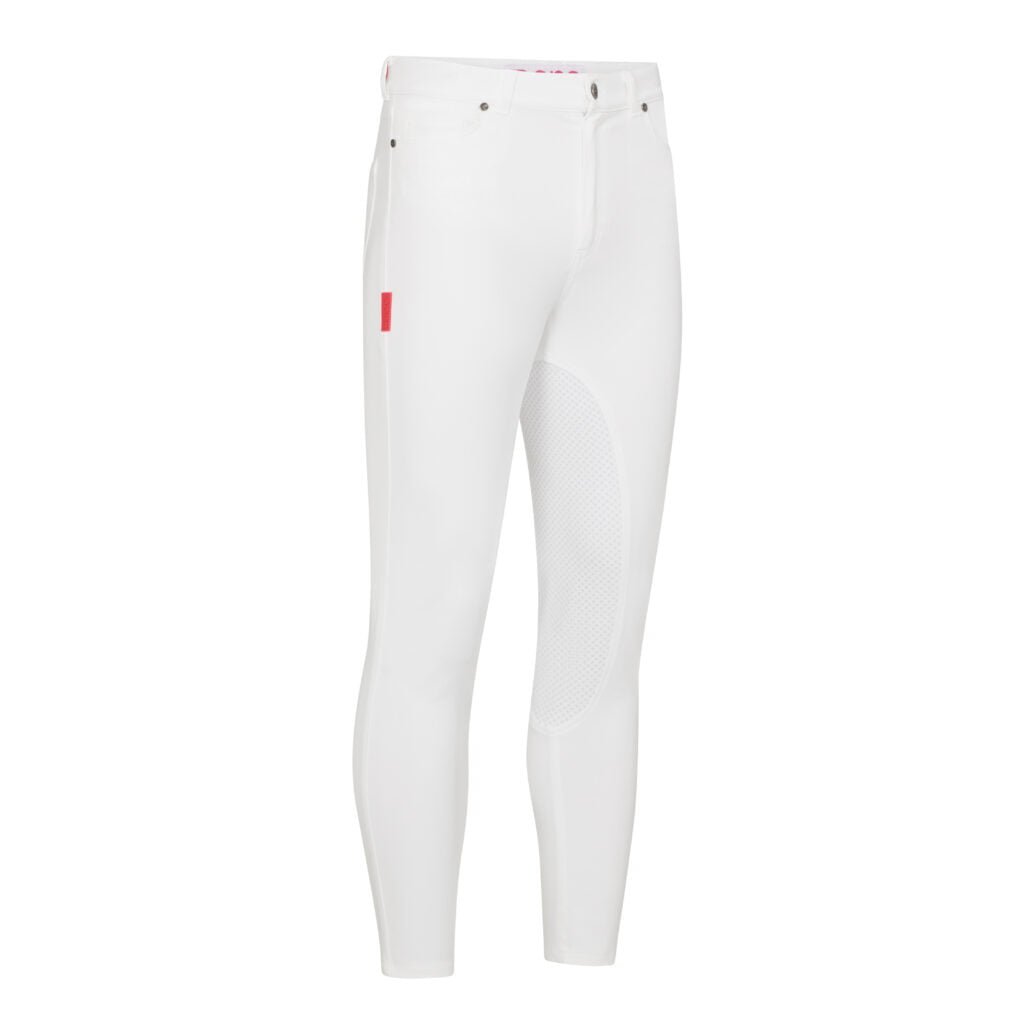
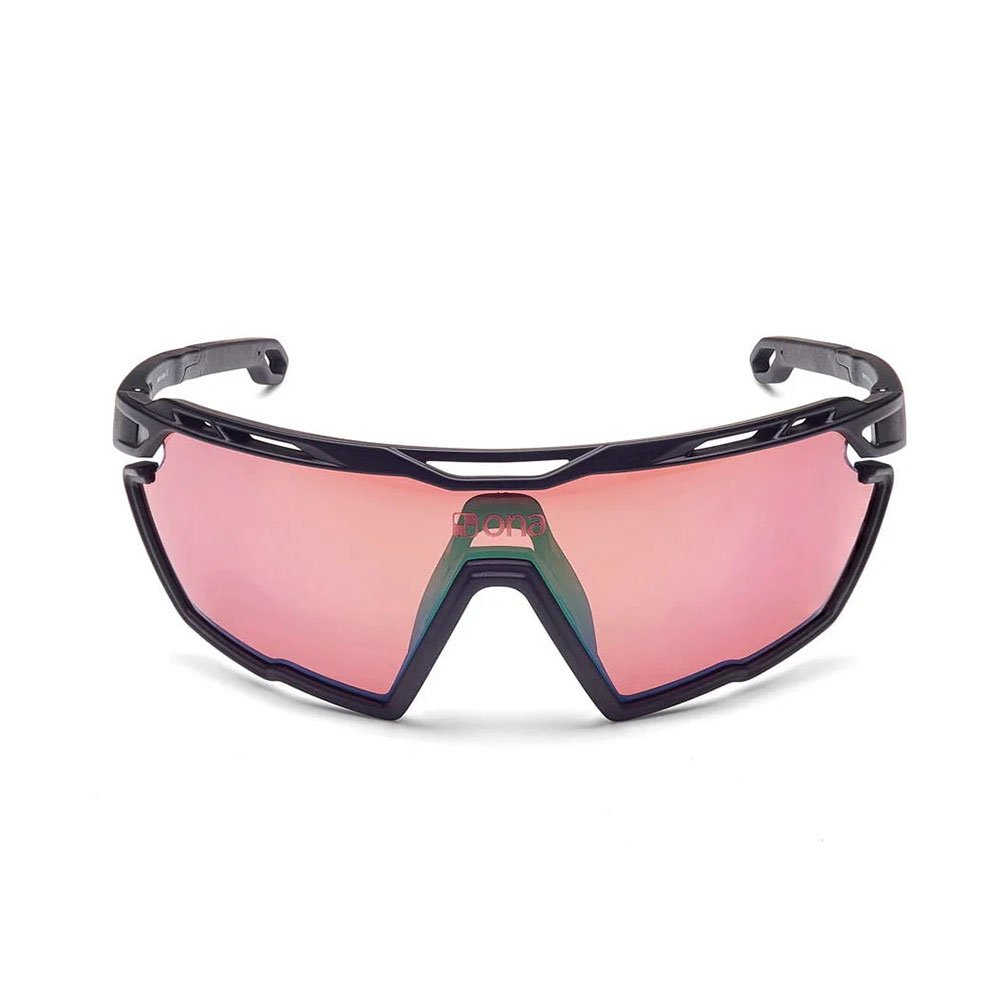
For control at speed, polo ponies are usually ridden in a gag, pelham or double bridle, almost always with a standing or running martingale and a breastplate to keep the saddle from sliding back. A note of honesty for readers assembling their kit: bridles, bits, martingales and mallets are the pony’s specialist gear and fall outside our range. Ona Polo focuses on the polo saddle and on the rider’s own equipment – the apparel, gloves, whites and trousers, shirts, eyewear and elbow protection that a player wears – rather than bridlework or mallets. Where a piece of equipment sits outside what we make, we would always rather point you to a trusted saddler than pretend otherwise.
The rules that protect the pony
The welfare of the horse sits at the centre of the sport’s regulations. In Britain the game is governed by the Hurlingham Polo Association (HPA), in the United States by the United States Polo Association (USPA), and in Argentina by the Asociación Argentina de Polo, with the Federation of International Polo (FIP) endorsing rules for international play. Across these bodies, certain protections are consistent: leg protection by boots or bandages is required, tack that obstructs a pony’s vision is banned, and any pony showing blood or going lame must be removed from play immediately. Governing bodies also run veterinary inspections and body-condition checks before tournaments, and umpires carry authority over a horse’s welfare during the game. It is a framework that reflects the sport’s central truth – that the pony is not equipment, but the greater part of the game itself.
The bond between player and pony
For all the athleticism and investment, what defines polo’s relationship with its horses is something closer to affection. The equine athletes earn their own honours – the Best Playing Pony award is presented after major tournaments, singling out the horse that shone brightest. The most celebrated polo pony in history, an Argentine mare named Cuartetera, was so treasured by his rider, Adolfo Cambiaso (H), that he cloned her and rode her clones to championship titles; she remains a reference point for what a great polo horse can be. When their playing days end, valued ponies often become broodmares or move into gentler second careers. Ask any experienced player about their best pony and you will hear not a description of a machine, but the memory of a partner.
A beginner’s guide to polo ponies
If you are new to the sport, two principles will serve you well.
First, the pony is the game. A well-schooled, made pony will carry you, forgive your errors and teach you more than any amount of instruction on a difficult horse. As the old saying goes, a good player on a bad horse isn’t such a good player, and a modest player on a good horse can look very good indeed.
Second, lease before you buy. Leasing lets you show up to a proven pony that is fit, ready and fully cared for, hand it back afterwards, and spend your energy learning the game rather than managing a horse. Most clubs teach beginners on reliable school ponies and run instructional chukkas. A green or bargain pony is almost always a false economy for a novice, because the very schooling that makes a pony safe is exactly what a beginner is not yet equipped to provide.
When the day comes that you are playing regularly, have a trainer to keep a horse in work, and understand your own riding, then ownership begins to make sense. Until then, ride the best made ponies you can, and pay attention to what they teach you.
A sport built on its horses
At Ona Polo, our respect for the polo pony informs everything we make – from made-to-order polo saddles engineered for freedom of movement to the refined apparel, gloves, eyewear and protection worn by the rider. Whether you are preparing for your first instructional chukkas or building a string of your own, understanding the horse beneath you is the foundation of the sport. Explore our rider equipment online, and get in touch to discuss a made-to-order saddle – handcrafted in Walsall, England, the historic home of English saddlery. Continue reading our journal for more expert guidance on equipment, technique and the equestrian life.



The polo pony is the quiet answer to almost every question the sport raises. Why is polo so thrilling to watch? Because of the horse’s speed and agility. Why does it take years to become competitive? Because it takes years to make a good pony and to learn to ride one. Why is polo regarded as a sport of craftsmanship and care? Because behind every player stands a string of extraordinary equine athletes, and a team of people devoted to their wellbeing. To understand the pony is to understand polo itself – not a game played on horseback, but a game played by horse and rider together, with the greater share of the credit belonging to the one with four legs.