
The Chukka where everything gets slippery
Every player remembers the one. Rain arrives on a British spring afternoon or a late-season Florida evening. By the third chukka the reins feel like wet soap, the mallet handle turns in your fingers on the near-side backhand, and your pony senses the loss of contact before you do. Or it’s the opposite: a crisp, dry winter stick-and-ball session where nothing is wet, yet your rein hand has gone so numb you can’t tell whether you are holding the reins or just resting your fist near them.
These are two different problems, and they need different solutions. Wet grip depends on materials and surface chemistry. Cold grip depends mostly on physiology, specifically what happens to fingers as they cool. Most advice on winter riding gloves treats the two as one, which is why so many riders end up in gloves that are warm but numb in feel, or waterproof but clammy.
This guide covers what actually keeps grip, drawing on glove makers’ specifications, tack experience, research into cold-hand dexterity, and the habits of players who ride through the whole season.
Why grip fails: Water, Sweat and Cold Fingers
Water on the surface
Grip between a glove and a rein, or between a glove and a mallet handle, comes from friction. A film of water between two smooth surfaces acts as a lubricant, and smooth leather is where this shows most. UK retailer Just Horse Riders is blunt about it in its rubber-reins guide: plain leather reins look smart and feel traditional, but they can slip when wet. Rubber and rubber-grip reins give up a little of that classic look for a far more secure hold in the rain and at speed.
The same applies to the glove. A smooth, untreated leather palm that feels superb on a dry day can become glassy once rain and sweat have soaked into it.
Sweat from the inside
Rain is the obvious problem. Sweat is the one that goes unnoticed. Polo is a demanding sport, and even on a cold day a hard chukka warms the hand. Inside a glove that doesn’t breathe, the moisture has nowhere to go. It collects on the skin, the hand moves inside the glove, and the glove, however grippy on the outside, moves on the rein. This is why Ona Polo builds its rain-specific gloves around breathable, wicking backs rather than sealed shells, and why the brand’s care advice starts with airing gloves after every chukka.
“When grip goes in the rain, most players blame the glove. In our experience it is usually three problems at once: water on the palm, sweat inside the glove and fingers that have lost their feel. Solve only one of them and the reins will still move in your hand. A good wet-weather glove has to deal with all three.” – Alejandra Falkinhoff, CEO and founder, Ona Polo
Cold fingers and lost feel
In the cold, grip fails for a different reason. As hands cool, the body cuts blood flow to the extremities, and fingers lose both dexterity and tactile sensitivity. Occupational physiology research is consistent on this point. A May 2025 study by Chapman and colleagues at the US Army Research Institute of Environmental Medicine, published in Physiological Reports, summarises earlier work: manual dexterity decrements are generally observed at finger skin temperatures between 12°C and 20°C, 15°C is typically regarded as the threshold for marked decrements, and hand temperature thresholds are typically around 22°C.
In the study’s own tests of 14 adults at 20°C, 10°C and 0°C, dexterity dropped off more steeply below finger skin temperatures of about 22.9°C, a threshold that rose to about 25.7°C after rewarming. Castellani and colleagues, writing in the Journal of Applied Physiology in 2018, note that dexterity is severely impaired as finger temperatures fall below 15°C, likely because of changes in joint mobility and nerve conduction velocity, alongside reduced tactile sensitivity.
For a rider, that means the fine, constant adjustments of the rein hand get coarser. You compensate by squeezing harder. A tense rein hand then travels up into the arm and, eventually, into the pony’s mouth. Much of what riders call “slipping” in winter is really lost feel.
The same research carries a warning. Insulated gloves keep fingers warm but can reduce manual dexterity by 50 to 80 per cent because of bulk and reduced tactile sensitivity. Those figures come from occupational tests of heavily insulated gloves, not riding gloves, but the principle holds: every millimetre of padding between palm and rein costs feel. Warmth has to be gained without it.
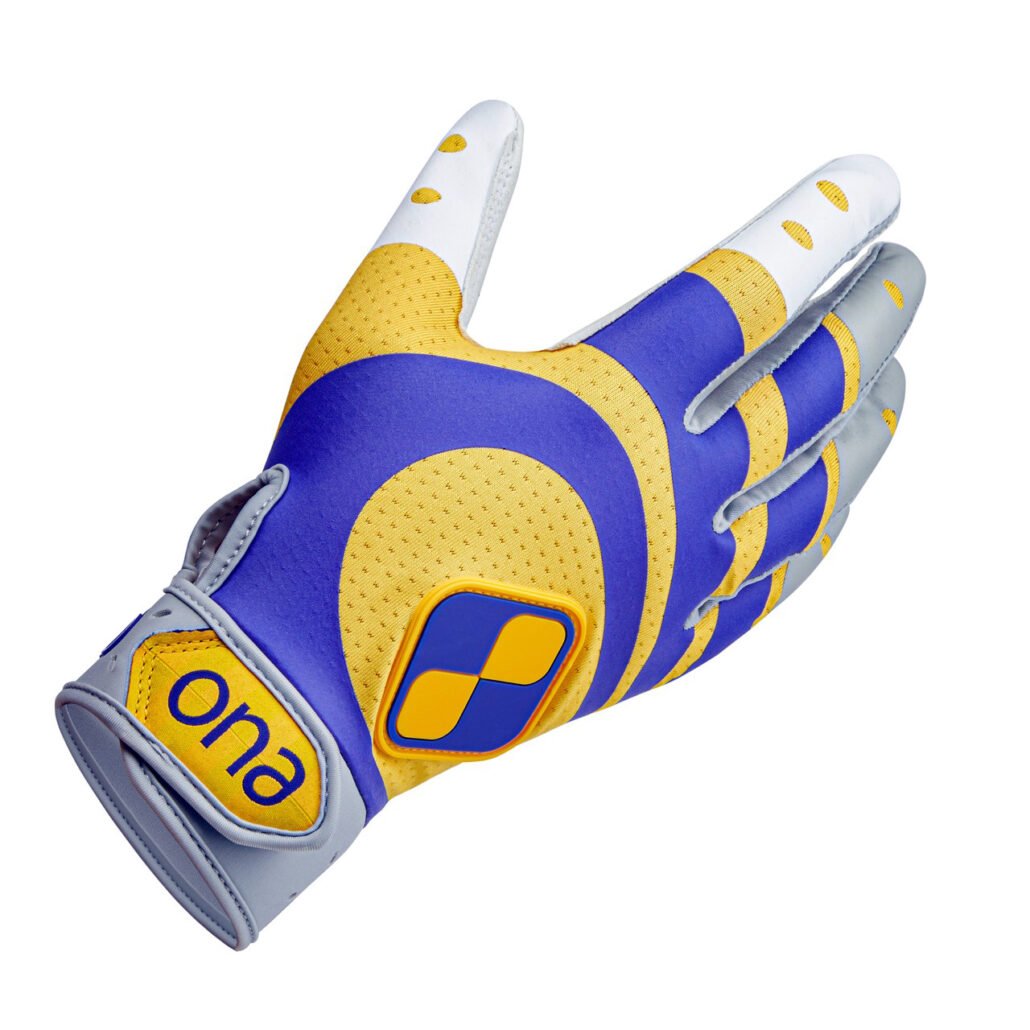


Glove palm materials: How they behave wet and dry
The palm, and especially the area across the fingers where the rein runs and the handle sits, is where the grip question gets settled. Here is how the main materials behave.
Natural leather: excellent feel, variable in the wet
Leather is still the reference for feel. Cabretta (hair-sheep leather), goatskin, deerskin and cowhide each have their devotees, and a fine leather glove moulds to the hand over time in a way synthetics don’t. Ona Polo’s own glove guide notes that its leather gloves mould to your hands over time, offering a custom-fit feel.
Leather’s weakness in the wet is untreated leather. Water loosens the hide’s natural oils and, when it dries badly, the leather stiffens and shrinks. The modern answer is not to give up leather but to treat it and add texture:
- Hydrophobic coatings. Ona’s All Weather V2, for example, is built from a peccary-embossed thin cabretta leather with a WR100X hydrophobic coating so that it repels water while keeping a soft, precise fit.
- Textured and embossed surfaces. Embossing and texturing give a wet surface more contact points and help prevent the glassy, lubricated feel of smooth leather. Ona’s Speed XT, Carbon Pro V2 and Power use textured technical leathers, which the brand describes as water-repellent and breathable. The Power and Carbon Pro V2 use its “atomic textured leather” with Gripster™ grip-enhancing technology.
When leather makes sense: dry to damp conditions, and players who prize feel above all else. Treated, textured leathers extend that range into light rain.
Synthetic suedes and microfibres: the wet-weather specialists
The biggest change in wet-weather gloves has been technical microfibre: synthetic suedes designed to mimic leather’s structure without its dislike of water. They stay soft, dry quickly and, crucially, keep friction when wet.
Ona’s rain glove, the All Weather Storm, is built in StormSuede™, which the brand describes as a microfibre with the structure and functionality of natural leather. It is light, tough, flexible and water-resistant, with wicking properties and a feather-light mesh along the back of the hand and fingers for breathability and quick-drying comfort. It is presented as an all-round glove for competition and practice in very wet conditions. The EcoGrip uses EcoSuede™, an eco-friendly microfibre that Ona says delivers grip particularly in wet conditions, with a phase-change-material (PCM) mesh back for temperature regulation and quick drying.
Other specialists across equestrian and golf work on the same principle. MacWet, for instance, uses a microfibre called Aquatec® in the palm and says its gloves are best known for their grip in wet conditions, while stating plainly that they are not waterproof. That distinction matters, and we come back to it below.
“Players often assume leather is always the premium choice. In the wet, it isn’t. A technical microfibre keeps holding when leather starts to glaze, which is exactly why we make a dedicated rain glove. Many of the players we work with keep a leather pair for dry days and switch the moment the forecast turns.” – Alejandra Falkinhoff, CEO and founder, Ona Polo
When synthetics make sense: genuine rain, soaked fields, humid summer polo, and players who want a glove that is dry again by the next chukka. Ona’s own FAQ points out that its synthetic models are built for harsher conditions and can last over multiple seasons, while leather gloves typically last a full season with proper maintenance.
Silicone-printed and “digital” palms
Many general riding gloves print silicone patterns onto a synthetic palm. Silicone adds tack, and many riders find it reliable in the rain. The trade-off is a slightly less continuous feel on the rein and a pattern that wears smooth where the rein runs. For a polo glove, which grips a mallet handle as well as reins, check that any print doesn’t create a ridge where the handle sits.
Pimple-palm knit gloves (“magic gloves”)
The humble stretch-knit glove with rubber dots on the palm has a long and honourable history on yards and in the hunting field. It is cheap, one-size, machine-washable, and grips well in the wet. Its main value for the polo player is as a liner. Retailers describe these gloves as ideal for layering under a bulkier glove when it is too cold for one pair, thanks to their lightweight fabric. On its own a knit offers little wind protection and no abrasion resistance from the mallet handle, so treat it as a yard glove or a warm layer rather than a match glove.
Quick comparison
| Palm type | Dry grip | Wet grip | Feel | Dries | Best use |
| Untreated smooth leather | Excellent | Poor to fair | Excellent | Slowly; can stiffen | Dry days, indoor schooling |
| Treated/textured technical leather | Excellent | Good | Excellent | Moderate | All-round, light rain |
| Technical microfibre suede | Very good | Very good | Very good | Quickly | Heavy rain, humidity |
| Silicone-printed synthetic | Good | Good | Good | Quickly | General riding, yard work |
| Pimple-palm knit | Fair | Good | Fair | Quickly | Liner, yard, very cold days |
This table summarises how the materials are generally described by manufacturers and tack specialists; it is not the result of a controlled test.
How Polo Gloves differ from general riding gloves
Two hands, two jobs
Polo’s rules decide the design. The Hurlingham Polo Association’s rules state that the right hand only is to be used to hold the stick, and the USPA’s spectator guide confirms that all players, left-handed or not, must carry the mallet in the right hand at all times for safety. (The USPA makes a narrow exception for left-handers registered before 1 January 1974.) So the right hand swings a mallet through hundreds of repetitions, and the left hand manages the reins, often both reins in one hand and with considerable force in a check or a turn.
A general riding glove is designed for two hands doing the same job. A polo glove has to handle a mallet handle, impact and vibration on one side and constant rein friction on the other. That’s why polo gloves have reinforced patches in key stress areas, closures designed around grip, and in some cases knuckle and finger protection against mallet and ball strikes.
One glove or two?
There is no rule on how many gloves a polo player wears. As Ona Polo’s sizing guide explains, some players glove only the right hand for grip on the mallet and protection in close play, while others wear a pair for extra rein grip and to protect both hands from rope burn and blisters. The guide adds that heat, heavy sweat and rain all push players towards a full pair for security of grip. Many polo gloves are therefore sold both singly (typically right hand) and as pairs.
Weather is a practical reason to add the second glove. A bare rein hand on wet leather reins is exactly the combination described above as the first to let go.
“On a dry day I understand players who glove only the mallet hand. But when it rains, the rein hand is doing the work that keeps you and your pony safe. That is the day to wear a pair.” – Alejandra Falkinhoff, CEO and founder, Ona Polo
Staying warm without losing rein feel
Why bulk costs grip
Recall the research: heavily insulated gloves can cut manual dexterity by 50 to 80 per cent. A fleece-lined, membrane-backed winter riding glove is excellent for hacking out or yard work in freezing weather. Even so, riders on the Horse & Hound forum describe popular 40-gram Thinsulate waterproof gloves as very warm but a bit bulky when handling a full set of reins and a whip. In polo, where you may be managing reins at speed with one hand, that bulk is felt at once.
Layering: the thin-liner approach
Many experienced riders favour a thin liner under a close-fitting technical glove. Silk, merino or a fine synthetic knit sits against the skin, adds warmth, and leaves the outer glove’s palm doing the gripping. Two conditions decide whether this works:
1. The outer glove must have room. A glove sized skin-tight for summer will be too tight with a liner inside.
2. The liner must be thin. Glove makers in other riding sports warn that a thick liner compresses inside the glove, restricts circulation and can leave the hands colder than no liner at all.
This is where fit and warmth meet. Compression reduces blood flow, and blood flow is what keeps fingers above the dexterity threshold. A glove that is too tight in winter is a cold glove, however good its insulation.
“In winter the instinct is to buy the thickest glove you can find. For polo it usually backfires: you lose the feel of the reins and start squeezing. I would much rather see a player in a well-fitted glove with a thin liner underneath and a properly warm jacket.” – Alejandra Falkinhoff, CEO and founder, Ona Polo
Warm the core, warm the hands
The research on cold hands has a practical lesson for riders: finger temperature follows the whole body’s heat balance, not just what is on the hand. Body heat storage, the cumulative change in the body’s heat content, predicts finger temperature and dexterity during cold exposure, as Brajkovic, Ducharme and Frim showed in the Journal of Applied Physiology in 2001. In a 2018 Journal of Applied Physiology study by Castellani et al., forearm heating in 0.5°C air increased hand and finger temperatures and finger strength, leading to improvements in manual dexterity; earlier work by Brajkovic and Ducharme (2003) warmed fingers using an electrically heated torso vest. In practical terms:
- Dress the core and forearms well. A warm base layer and a jacket with cuffs that meet the glove do more for the rein hand than an extra layer of glove insulation.
- Close the gap at the wrist. Cold air entering between sleeve and cuff is a well-known source of heat loss. A glove with a secure, adjustable wrist strap, or a longer cuff that tucks under the sleeve, seals it out. Ona’s gloves use a wide wrist strap with what the brand calls an inverse closure mechanism, designed for a secure closure and grip control.
- Warm the hands before you mount, not after. Since dexterity improves with rewarming, arrive at the pony lines with warm hands: gloves kept in an inside pocket, hands warmed during tacking up. Trying to recover numb fingers mid-chukka is much harder.
Windproof backs and pre-curved fingers
Two construction details matter in cold, dry weather. A wind-resistant back panel reduces heat loss from wind chill at a gallop. Pre-curved or anatomically patterned fingers mean the glove isn’t fighting your closed hand. Ona patterns its gloves in 3-D to follow the natural lines of the hand, which it says increases grip strength without the need to grip harder. For a cold hand that is already inclined to over-squeeze, that is a real advantage.
A note on dedicated winter gloves: technical polo gloves are designed first for grip, protection and breathability, not deep insulation. For the coldest winter days, the most reliable approach for match play remains a well-fitted polo glove with room for a thin liner, combined with serious attention to core warmth.
Wet-Weather specifics: Waterproof, Water-Repellent and Quick-Drying
Waterproof is not always better
It sounds counter-intuitive, but for active riding a fully waterproof glove is often not the best rain glove. Membranes such as Hipora®, a microporous polyurethane layer designed to block liquid water while letting water vapour escape, are excellent for keeping hands dry at low activity: hacking, yard work, spectating. During hard exercise they have two limitations:
1. Sweat build-up. The founder of glove maker Free The Powder reported more than 100 days of testing with a membrane glove on one hand and a non-membrane glove on the other, and found the membrane caused clammy hands most of the time from sweat build-up, while the non-membrane glove was almost always dry.
2. Water enters through the cuff anyway. The same designer noted that on rainy days both gloves ended up saturated, because a glove always has a large opening where the hand goes in.
In polo, with rain running down the sleeves and hands working hard, a glove that stays grippy when wet and dries quickly usually outperforms one that tries to stay dry and fails. That is the reasoning behind water-resistant, wicking microfibre with a mesh back, rather than a sealed membrane.
Water-repellent treatments
Hydrophobic finishes make water bead and run off rather than soak in, so the leather stays softer, lighter and grippier for longer. They reduce absorption but don’t seal the glove, and they are best understood as a way of keeping leather performing through a wet chukka, not as waterproofing.
Stiff, wet leather: what is actually happening
Leather that has soaked through and then dried stiff hasn’t simply “got wet.” When water floods the hide it loosens the natural oils. If heat then forces the water out quickly, the oils go with it and the fibres contract. The result is leather that is stiff, slightly shrunken and prone to cracking at the flex points, which on a glove means across the palm and fingers where grip lives.
Fit: The grip factor most players underestimate
Too tight in the cold, too loose in the wet
- Too tight: restricts circulation, cools the fingers faster and leaves no room for a liner.
- Too loose: the hand moves inside the glove, the glove bunches in the palm, and the rein or handle shifts even though the outer surface is gripping perfectly. Horse & Hound’s winter glove guidance makes the same point: gloves that are too loose let your hands slide around inside them, making it hard to grip the reins.
The target is a second-skin fit without pressure: no loose material at the fingertips, no wrinkles across the palm when you close your hand around a rein, and no tightness across the knuckles when you make a fist.
How to measure
Ona Polo’s sizing guide recommends measuring both the length and the circumference of your dominant hand, then reading each brand’s chart by the dimension it uses. Material changes the approach: leather stretches and moulds, so it can be bought close-fitting, while synthetics don’t stretch in the same way and should be bought to your measurement. Ona’s range runs from XS to XXL, and the brand notes that the Carbon Pro V2, with its carbon knuckle protection, leads most players to size up. If you plan to wear a liner in winter, try the glove on over the liner before you commit.
The rest of the contact: Reins, mallet grip and sling
A glove can’t make up for everything. The grip you feel is the glove and whatever it is holding.
Rein choice in wet weather
- Plain leather reins: traditional and supple, but the most likely to slip when wet.
- Laced or plaited leather: texture gives some grip even when wet, at the cost of more maintenance.
- Rubber-grip reins (pimpled or dimpled): developed for exactly this problem; the rubber keeps friction even when soaked.
- Web and continental reins: comfortable and flexible. Riders’ experience is mixed in heavy rain; one Horse & Rider tester noted that rubber woven into continental-style reins is less grippy in wet conditions than when dry.
Rein choice is a tack and pony question as much as a grip question, so discuss changes with your coach, groom or pony’s owner. If your pony goes in plain leather, that is one more reason to glove the rein hand when rain is forecast.
Mallet grip and sling
Most polo mallet handles are wrapped in cloth-backed rubber grip material, which a mallet maker describes as the most popular type of polo grip used around the world. A worn, glazed grip loses friction just as a worn glove palm does, so rewrapping a tired handle before the wet months is worthwhile.
The sling matters too. Coaching guidance is that the sling should sit around the base of the thumb, not on the thumb itself, and that the mallet should be held in the fingers rather than jammed into the palm. Gripping in the palm freezes the wrist. You should never wrap the strap around your whole hand, because of the danger of being pulled from the saddle if the mallet becomes tangled. In the wet, a correctly set sling carries some of the security, so the fingers can stay soft instead of clamping.
Protect the mallet as well. Wet fields can cause wooden heads to swell and split, and players commonly tape the head in wet conditions.
Practical Tips From the Pony Lines
1. Carry a second, dry pair. Ona Polo’s CEO Alejandra Falkinhoff recommends keeping at least two pairs in your bag, because sweat and humidity break down leather faster than most people realize and rotating between matches extends the life of both pairs. In rain, the dry pair also gives you a fresh start at the change of chukkas.
2. Match material to the forecast. Many players keep a supple leather glove for dry days and a weather-ready synthetic pair for wet chukkas. You don’t have to choose one glove for the whole year.
3. Warm up your hands before you mount. Keep gloves in an inside pocket and put them on warm.
4. Glove both hands when it’s wet. A single mallet-hand glove suits a dry day; rain is when the rein hand needs help too.
5. Hold softly and let the equipment work. A sling set correctly, a fresh handle grip and a glove designed to grip wet all mean you don’t need to over-squeeze. A relaxed hand stays warmer and keeps better feel.
6. Wipe, don’t wring. Between chukkas, blot a sodden glove rather than twisting it, and hang it to air.
Care and maintenance: Protecting the grip you paid for
After every chukka
Ona’s standing advice is simple: after every chukka, hang your gloves out to air and pull them back into shape. It takes seconds and has the biggest effect on glove life.
Washing
Ona gloves are hand-washable. The brand’s method: put the gloves on, wash gently in lukewarm water with a mild detergent or soap flakes, rinse thoroughly, squeeze out excess water from the fingers downwards, and gently pull them back into shape. Wash knit and pimple-palm liners according to their labels. Many are machine-washable on a cool cycle.
Drying: the rule that saves leather
Hang to dry away from direct sunlight or heat. For leather in particular, radiators, heaters, hair dryers and hot car dashboards cause permanent damage, driving out the oils and leaving the glove stiff and prone to cracking. Leather glove specialists advise blotting with a towel, opening the cuffs and drying at room temperature, which can take 24 to 48 hours. Putting the glove on briefly part-way through helps it keep the shape of your hand.
“The quickest way to ruin a good pair of gloves is a radiator. Hang them to air after every chukka, let them dry slowly, and rotate two pairs through the season. They will keep their grip, and their shape, far longer.” – Alejandra Falkinhoff, CEO and founder, Ona Polo
Conditioning
Once leather gloves are fully dry after a soaking, a light application of a conditioner suitable for glove leather helps restore the oils the water removed. Follow the maker’s instructions and test on an inconspicuous area first. Treated technical leathers may have specific requirements.
When to replace
Replace a glove when the palm has worn smooth or thin where the rein runs or the handle sits, when stitching around reinforcements is failing, when the closure no longer holds snugly, or when the glove has stretched enough to move on your hand. A glove that has lost its grip surface does more harm than good, because it gives you false confidence.
Choosing your winter and wet-weather set: A simple framework
- Dry, cold days: a close-fitting leather or technical leather glove with room for a thin liner. Put your warmth into your core, wrists and pre-ride routine.
- Light rain or heavy dew: a treated, textured leather glove such as an all-weather leather, on both hands.
- Heavy rain and soaked fields: a technical microfibre rain glove with a breathable mesh back, on both hands, with a dry spare in the kit bag.
- Humid summer polo: the same wet-grip synthetics, since sweat behaves much like rain.
- Yard work and hacking out in freezing weather: this is where a fully insulated, membrane-lined winter glove comes into its own.
Within Ona Polo’s range, the All Weather Storm is the dedicated rain glove, the All Weather V2 is the treated-leather all-rounder, the EcoGrip combines wet-weather microfibre grip with sustainable materials, the Speed XT focuses on non-slip grip, and the Power and Carbon Pro V2 add knuckle and finger protection to textured leather. Complete the picture with the rest of your kit: polo whites, whose Schoeller® softshell and GripIt® panels are designed for saddle grip and reduced friction, eyewear to keep rain and flying divots out of your eyes, and elbow pads for close play.
In winter and wet weather, grip is lost in three places: on the surface, where water acts as a lubricant; inside the glove, where sweat lets the hand move; and in the fingers, which lose feel as they cool. The gloves that actually keep grip deal with all three. They have palms that keep friction when wet, backs that let moisture out, and a fit that holds the hand without squeezing it, leaving room for a thin liner when the temperature drops.
“Grip in bad weather is not about one miracle material. It is about choosing the right glove for the conditions, fitting it properly and looking after it. Get those three things right and a wet chukka feels no different from a dry one.” – Alejandra Falkinhoff, CEO and founder, Ona Polo
Plain leather on plain leather is the combination that lets go first. Technical microfibres and treated, textured leathers are the materials that hold. Beyond the glove, the details that experienced players attend to without thinking make the difference: warm hands before mounting, a second dry pair in the bag, a fresh handle grip, a correctly set sling and gloves dried slowly and away from heat. Get those right, and you can ride a wet sixth chukka with the same quiet, confident rein hand as a dry first one.
Frequently Asked Questions
What riding gloves keep their grip in the rain?
Gloves with a palm designed for wet conditions: technical microfibre suedes, textured leathers with a hydrophobic treatment, and rubber-dot knit gloves. Plain, untreated leather palms are the most likely to slip once they are soaked, especially on plain leather reins.
Are waterproof gloves better for polo in the rain?
Not usually. Fully waterproof membranes suit low-intensity riding, but in a hard chukka they trap sweat, and rain still gets in at the cuff. A water-resistant glove that keeps its grip when wet and dries quickly tends to perform better for active play.
Should I wear one polo glove or two when it’s wet?
There is no rule, but in wet weather a pair is the safer choice. Many players glove only the mallet hand on dry days; in the rain, a gloved rein hand keeps a far more secure hold on wet reins.
How do I keep my hands warm riding without losing feel on the reins?
Use a close-fitting riding glove with room for a thin liner, keep your core and forearms warm, seal the gap at the wrist and warm your hands before you mount. Thick insulated gloves keep fingers warm but reduce dexterity and rein feel.
How should I dry wet leather polo gloves?
Blot off excess water, open the cuffs and let them dry slowly at room temperature, away from radiators, heaters and direct sun. Reshape them while damp and condition the leather once it is fully dry.
Can I wear a liner under polo gloves?
Yes, if the liner is thin and the outer glove has been sized to allow for it. A thick liner compresses inside the glove, restricts circulation and can leave the hands colder.