
There is a moment in every polo match, a fraction of a second just before a player at full gallop connects mallet to ball, where two and a half thousand years of history seem to hold their breath. Few sports carry this weight. Fewer still combine elite athleticism, animal partnership, tactical intelligence and aesthetic elegance in quite the same measure as polo.
Yet for all its prestige, polo remains one of the most misunderstood sports in the world. Mention it at a dinner party and the conversation will likely veer toward Veuve Clicquot, divot stomping and the image of aristocrats on horseback. What rarely comes up is the reality: a sport of extraordinary physical demand, nuanced strategy, and a genuinely welcoming community of players at every level, from weekend club enthusiasts to professional ten-goalers who have dedicated their lives to its mastery.
This guide exists to close that gap. Whether you are curious about the rules, considering your first lesson, wondering what equipment a beginner needs, or simply trying to follow a match intelligently as a spectator, everything you need is here. We will cover the history, the gameplay, the positions, the horses, the gear, the clothing, the culture and the path to getting on a horse with a mallet for the very first time.
The history and origins of Polo
To understand polo is to understand its extraordinary longevity. No other team sport has a documented history stretching back to antiquity with such continuity of form. The basic premise, mounted riders striking a ball with long-handled mallets toward a goal, has remained essentially unchanged for more than twenty centuries.
Ancient roots: Persia and Central Asia
The earliest confirmed records of polo place its origin in Persia, modern-day Iran, sometime between the 6th century BCE and the 1st century CE. Known as chogan (Persian: چوگان), the game served a dual purpose as both cavalry training and royal entertainment. It was practised by Parthian and Sasanian nobles on a scale almost unimaginable today, with teams of up to 100 riders a side thundering across wide plains. The Sasanian Emperor Shapur II is recorded as having begun learning the game at the age of seven in 316 CE.
From Persia, polo radiated outward with conquering and trading armies. It reached Byzantine Constantinople to the west, the Mughal courts of northern India to the southeast, and Tang Dynasty China to the east, where a polo-playing Emperor Xuanzong governed in the 8th century CE. In Tibet and the Baltistan region of modern Pakistan, the word pulu (meaning ‘ball’, made from willow root) eventually gave English the name ‘polo’ itself.
In Manipur, in northeastern India, an indigenous variant called sagol kangjei was played on small local ponies with seven riders a side, a tradition that continues to this day and which many historians consider the most direct ancestor of the modern game.
British India and the birth of the modern game
The modern codified form of polo was born in 19th-century British India. In 1859, Lieutenant Joseph Sherer of the British army encountered the Manipuri game and co-founded the Silchar Polo Club, the oldest polo club still in operation anywhere in the world. The Calcutta Polo Club followed shortly after, and British officers rapidly adopted the game with enthusiasm.
By the 1870s, polo had arrived in England, Argentina, Ireland, Australia and the United States, carried by soldiers, diplomats and aristocrats. The Hurlingham Polo Association (HPA) was established in London and became the sport’s first formal governing body, standardising rules, equipment and conduct that remain largely in place today. Polo was included in the Olympic Games from 1900 until 1936, with Argentina claiming the final gold medal at the Berlin Olympics.
Argentina: The new capital of Polo
No country has shaped modern polo more profoundly than Argentina. Introduced by British ranchers and diplomats in the 1870s, the sport was transformed by Argentine breeders who crossed English Thoroughbreds with the hardy native Criollo to produce the Argentine Polo Pony, formally recognised as a distinct breed in 1984. The resulting horse combined the Thoroughbred’s speed and stamina with the Criollo’s agility, endurance and intelligence.
Today, Argentina supplies the majority of the world’s elite polo ponies and produces most of its highest-rated players. The Argentine Open, held annually at the Campo Argentino de Polo in the Palermo district of Buenos Aires, nicknamed ‘the Cathedral of Polo’, is universally regarded as the pinnacle of the sport. No player in history has dominated it more completely than Adolfo Cambiaso, a ten-goaler who has won the Open more than a dozen times.
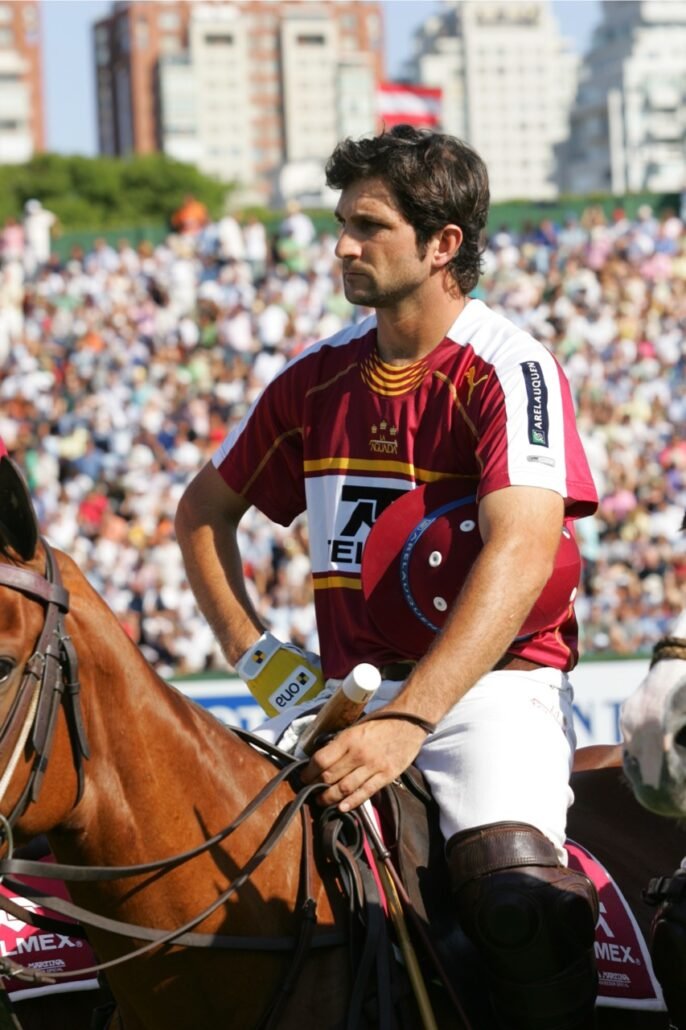
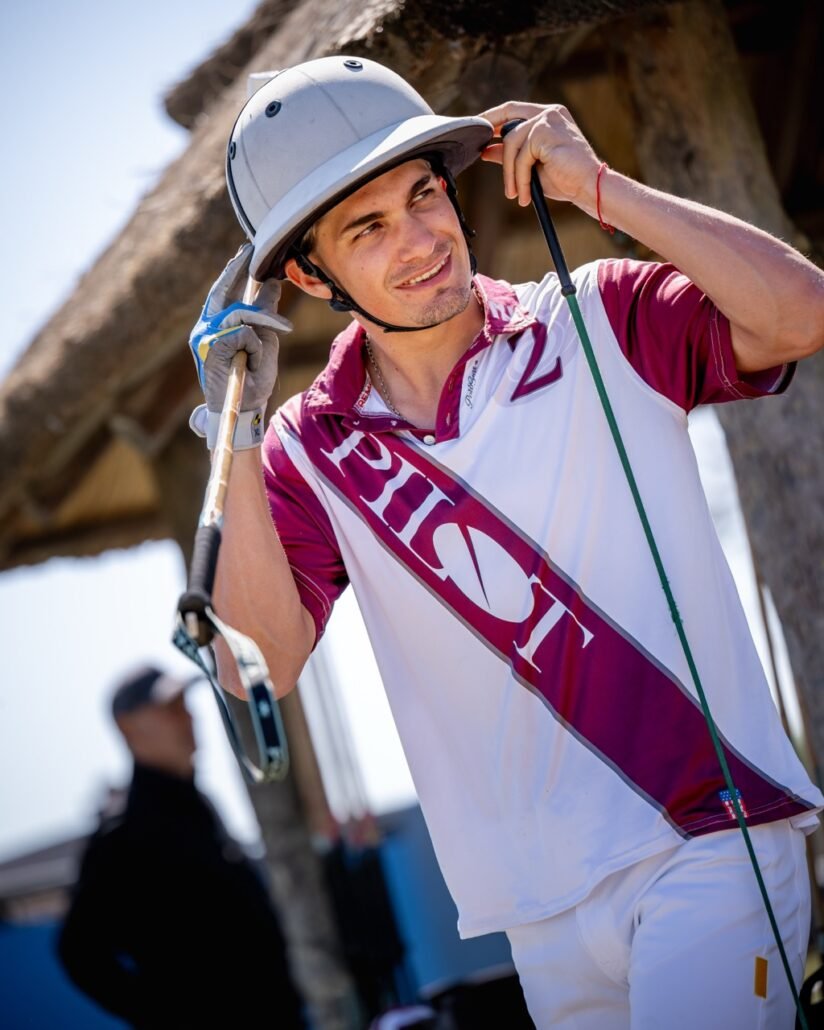
2. How Polo Is played: The rules
At its core, polo is straightforward. Two teams of four players compete to drive a small hard ball between two goalposts using long-handled mallets, while mounted on trained horses at speeds that regularly exceed 35 mph (56 km/h). The team scoring the most goals across the allotted periods wins. The complexity, and the beauty, lies in the tactical and physical layers beneath this simple premise.
The field
An outdoor grass polo field is the largest playing surface of any team sport: 300 yards long by 160 yards wide when boarded (bounded by low boards) or up to 200 yards wide when unboarded. To put that in perspective, nine American football fields could fit inside a single polo ground. The goalposts are placed 8 yards (7.3 metres) apart at each end and are designed to collapse on impact for safety.
Chukkas: The periods of play
A polo match is divided into periods called chukkas (sometimes spelled ‘chukkers’, from the Hindi word for ‘wheel’). Each chukka lasts seven minutes of playing time, with a 30-second bell sounded at the seven-minute mark; play continues until the ball goes dead or a further 30 seconds elapse, whichever comes first.
The number of chukkas varies by competition: six is standard in England and most international play, eight in Argentina, and four in many continental European tournaments. Three-minute intervals separate each chukka; half-time is five to ten minutes, during which spectators are traditionally invited onto the field for the famous divot stomp.
Because of the physical demands on the horses, a pony may play no more than two chukkas per match and these cannot be consecutive. For a six-chukka match, a player will typically need a string of six up to twelve ponies depending upon the level of play.
Scoring and direction of play
A goal is scored whenever the ball passes between the goalposts at any height. Immediately after a goal is scored, the teams change ends, a tradition rooted in the colonial-era Indian game, designed to neutralise the advantage of sun, wind and slope over the course of a match. Play restarts with the umpire throwing the ball underarm between the two facing teams (also known as the “throw-in”).
The line of the ball and right of way
The single most important concept in polo, and the foundation of all its safety rules, is the Line of the Ball (LOB). When a player strikes the ball, an imaginary line is created along the path the ball travels. The player who last struck the ball, or who is closest to and riding along that line, holds the Right of Way (ROW): the legal right to continue unimpeded.
No opposing player may cross the line of the ball if doing so could create a dangerous collision. This is the most fundamental rule in polo and the source of most penalties. Importantly, a player can legally challenge for the ball by riding parallel to the player with the right of way and attempting to push them off the line, a manoeuvre known as a ride-off.
Ride-offs, hooking and fouls
A ride-off is a legal act of body-to-body contact between two horses, carried out at matching speed and a contact angle of no more than 45 degrees. It is one of polo’s most exhilarating and technical skills. A player may also defend by hooking, using their mallet to intercept and block an opponent’s swing, provided the hook is made on the same side as the ball, at or below shoulder height.
Penalties are graduated from the most severe (Penalty 1: an automatic goal, awarded for dangerous fouls near the goal) to the least severe (Penalty 5: a free hit from the centre of the field). Two mounted umpires oversee the match from horseback; disagreements between them are resolved by a third official on the sideline.
| Beginner Tip: The most common foul – Crossing the line of the ball is by far the most frequent infringement for new players. Before your first chukka, study where the line is after every shot, not just when you are the one hitting. Umpires apply the rule for safety, not as a technicality. |
3. Positions and the handicap system
The four playing positions
Each of the four players in a polo team is numbered 1 through 4, a designation that indicates both their primary position on the field and their default marking responsibilities against the opposing team.
- Number 1 – The Forward: the primary attacking player, responsible for scoring and for marking the opposing Number 4. In amateur matches, Number 1 is often occupied by the least experienced player, though it is tactically one of the most demanding roles, requiring exceptional anticipation and positional awareness.
- Number 2 – The Support Forward: an aggressive, high-mobility player who supports the Number 1, picks up rebounds and transitions quickly between attack and defence. This position typically requires the fastest ponies in the string.
- Number 3 – The Pivot: traditionally the team’s most experienced and highest-handicapped player, acting as the tactical captain and playmaker. The Number 3 must combine exceptional hitting power for long passes with the strategic vision to direct the team.
- Number 4 – The Back: the primary defender, tasked with clearing the ball out of danger and neutralising the opposition’s Number 1. A good Back is the difference between a team that concedes preventable goals and one that absorbs pressure without cracking.
The Polo handicap system
Polo’s handicap system is one of sport’s most elegant mechanisms for competitive balance. Every registered player worldwide holds a handicap rating on a scale from minus two (−2) to plus ten (+10), expressed in ‘goals’. The four players in a team’s collective handicap, the sum of their individual ratings, determines which tournaments the team may enter.
It is important to understand what the handicap number means, and what it does not. It is not a measure of how many goals a player will score in a given match. Rather, it is a holistic assessment of horsemanship, hitting ability, tactical intelligence, positional play and sportsmanship, reviewed twice yearly by national associations. A player rated +10 is considered world-class and capable of winning a match almost by themselves. There are fewer than ten such players on the planet at any given time.
Tournaments are typically described by their maximum team handicap. ‘Low goal’ events accommodate teams of 8 goals or fewer, ideal for beginners and developing players. ‘Medium goal’ (10 to 15 goals) and ‘high goal’ (15 to 22 goals) tournaments represent the domestic elite level in most countries. ‘Open’ events, of which the Argentine Open is the most celebrated example, place no handicap restriction whatsoever.
In the United Kingdom, beginners who have not yet received an official handicap are classified as ‘S’ (Starter). After passing a written rules examination and receiving instructor approval, the player may be registered at −2 — the first step on the competitive ladder. In Argentina, the Asociación Argentina de Polo recently extended the system downward from its historical 0–10 range to −2, acknowledging the growing global base of amateur and recreational players.
| Beginner insight: your first handicap: most polo clubs require you to attend a minimum number of lessons and pass a basic rules test before you can receive an official ‘S’ or −2 handicap and play in club chukkas. Treat this not as a barrier but as a foundation, the rules exist primarily for the safety of horses and riders. |
4. The Polo Pony: The most important partner
Ask any experienced polo player what single factor most determines their performance on the field, and the answer is almost always the same: the horse. Estimates vary, but most professionals attribute between 60 and 80 per cent of a player’s effectiveness to the quality and training of their ponies. The ‘pony’ designation is historical, dating to a 19th-century height restriction now long abolished. Today’s polo horses stand a full 15 to 16 hands high and are among the most athletically refined animals in equestrian sport.
Breeds and characteristics
The Argentine Polo Pony, the product of decades of selective breeding between English Thoroughbreds and native Argentine Criollo horses, is the gold standard at elite level. Formally recognised as a distinct breed in 1984 by the Asociación Argentina de Criadores de Caballos de Polo, which registers approximately 3,000 polo foals each year, it combines the Thoroughbred’s explosive speed and aerobic capacity with the Criollo’s toughness, agility and trainability.
In the United Kingdom, retired racehorses retrained through the Retraining of Racehorses (RoR) programme are a popular source of polo ponies. In the United States, the Thoroughbred–Quarter Horse cross (known as an Appendix) is prized for its ability to stop and pivot rapidly. Australian players favour the Australian Stock Horse, while Manipuri ponies remain integral to traditional polo in northeastern India.
What unites the best polo ponies across breeds is a set of specific temperamental and physical qualities: explosive acceleration over short distances, the ability to stop from full gallop within a few strides, the courage to ride off into contact with other horses, and, perhaps most critically, a calm disposition under the noise and confusion of match play.
Polo tack and equipment for the horse
A polo pony carries specific tack designed for the sport’s unique demands. A close-contact saddle, similar to a jumping or forward-seat saddle, keeps the rider balanced and low. Polo-specific bridles often feature gag bits, pelhams or ring-bit combinations with standing martingales to provide control at speed. The horse’s tail is braided and bound to prevent entanglement with the mallet.
Under HPA rules, all four legs must be protected with polo wraps, usually applied over cotton or fleece under-bandages, to support the tendons and guard against ball and mallet strikes. Over-reach (bell) boots and brushing boots provide additional protection to the lower legs.
For players investing in their own ponies or managing a school string, a well-fitted polo saddle is the foundation of both horse welfare and rider effectiveness. The quality of the saddle’s craftsmanship directly affects the horse’s comfort and movement, an investment that compounds across every chukka played.
5. Essential Polo equipment for players
Polo demands a specific and non-negotiable set of player equipment. Some items are compulsory under the rules of every governing body; others are optional but so strongly recommended as to be effectively universal. Understanding what you need, and why, before your first lesson will save both time and frustration.
The question I get most from players just starting out is ‘what should I buy first?’ My reply is always the same: once you’re ready to invest in your own kit, begin with the compulsory safety equipment, helmet, kneepads, eyewear — and don’t cut corners on any of it. Then prioritise quality where your body meets the horse: gloves, breeches and boots. Get those right and everything else can follow.” — Alejandra Falkinhoff
The Polo helmet
A certified polo helmet is the single non-negotiable item of player equipment. Under HPA (Hurlingham Polo Association), USPA (United States Polo Association), AAP (Asociación Argentina de Polo) and FIP (International Federation of Polo) regulations, no player may take to the field without a properly fitted, certified helmet with a three-point harness. Modern polo helmets feature a fixed peak designed to deflect ball strikes and may include a NOCSAE-rated faceguard or wire mask, particularly recommended for beginners who have not yet developed the instinctive defensive reflex of an experienced player. Approved helmets must meet specific international safety standards, including PAS015:2011, VG1 01.040, NOCSAE ND050 (a requirement in USPA events), UTAC/CRITT or SNELL E2001, and bear a quality control mark (such as the BSI Kitemark in the UK or INTI in Argentina).
The Polo mallet
The mallet consists of a long flexible shaft, traditionally made from manau cane (a rattan sourced from South-East Asian rainforests), attached to a cigar-shaped wooden head made from tipa hardwood. The ball is struck with the broad face of the head, not the end, using a pendulum swing from the shoulder.
Mallet length is critical and determined primarily by the height of the pony being ridden. The most common lengths fall between 49 and 54 inches, with 51, 52 and 53 inches being the most frequently used. A general rule of thumb: measure from the ground to your palm while sitting normally in the saddle, that measurement is approximately your correct mallet length.
Beginners often receive mallets from the club; once you begin playing regularly, investing in your own mallets in the correct length and head weight (185–195 grams is a sensible starting point) will accelerate your development considerably.
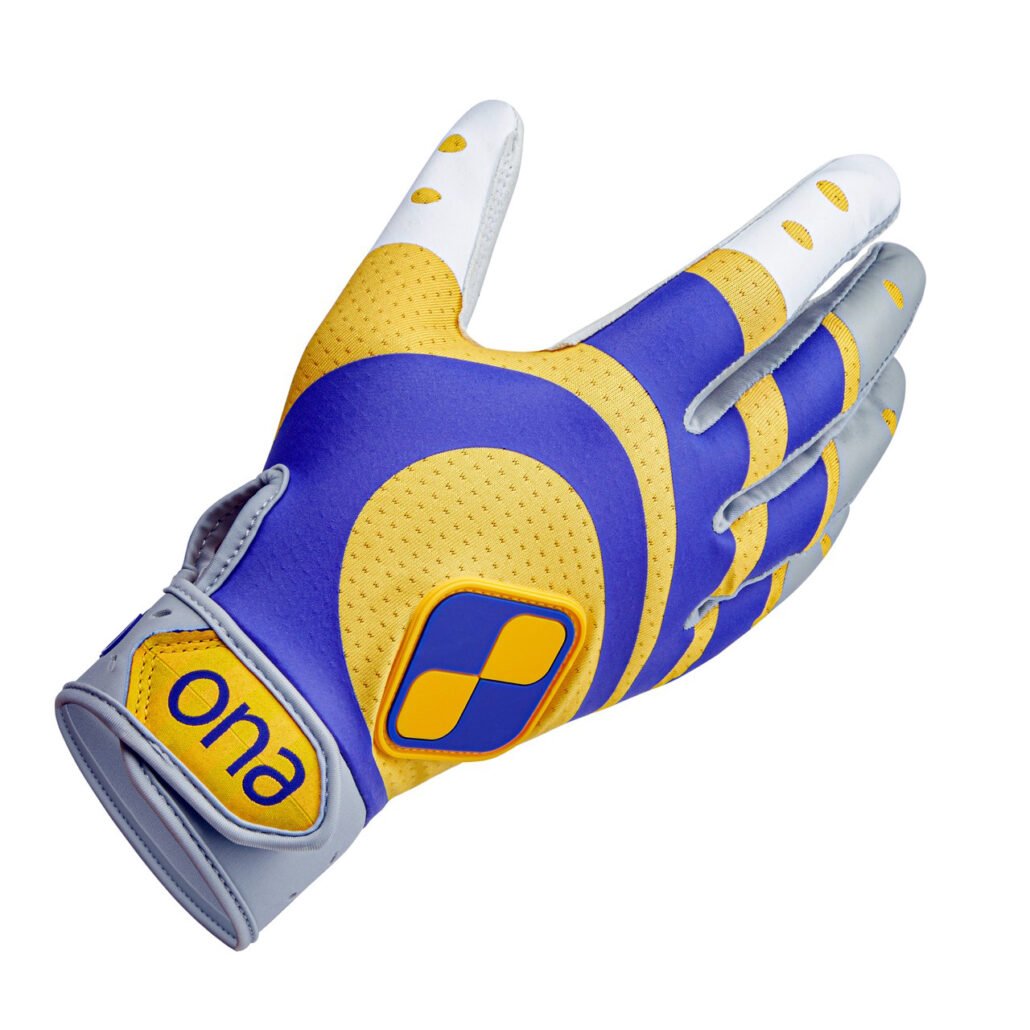
Polo gloves
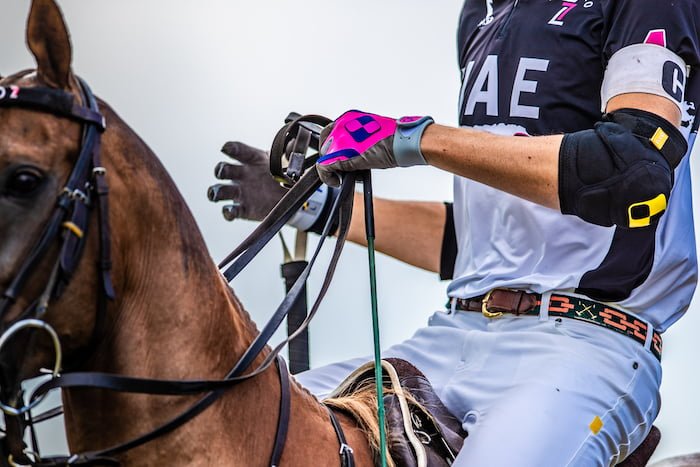
While not compulsory under every rulebook, polo gloves are worn by nearly every player worldwide. They serve three purposes: improving grip on the mallet handle, particularly in wet or sweaty conditions; protecting the palm and fingers from blisters during extended stick-and-ball sessions; and absorbing the vibration that travels up the shaft on contact.
Gloves designed specifically for polo, with the right combination of grip material, flexibility and durability, make a measurable difference in both comfort and control, and are an important first-time equipment purchase for a new player.
“Glove fit is the single most personal decision in your kit, and there is no single rule. A quality glove that fits ergonomically makes a huge difference during play. Some players prefer a snug, next-to-skin feel; others play better with a little more room. What never changes is this: the glove must feel comfortable and secure, and give you complete confidence in your grip. That confidence directly affects how you communicate with your horse through the reins. I also always recommend keeping at least two pairs in your bag, sweat and humidity break down leather faster than most people realise, and rotating between matches protects that investment and extends the life of both pairs.” — Alejandra Falkinhoff
Polo boots and knee guards
Standard polo boots are knee-high in brown or black leather, with a front zip fastening and reinforced lateral padding to protect the calf and knee from ball and mallet strikes. Knee guards are mandatory under HPA regulations and strongly recommended by every governing body: padded leather pads secured with Velcro or buckle straps, often with shock absorbing materials at the primary impact points.
Polo eyewear
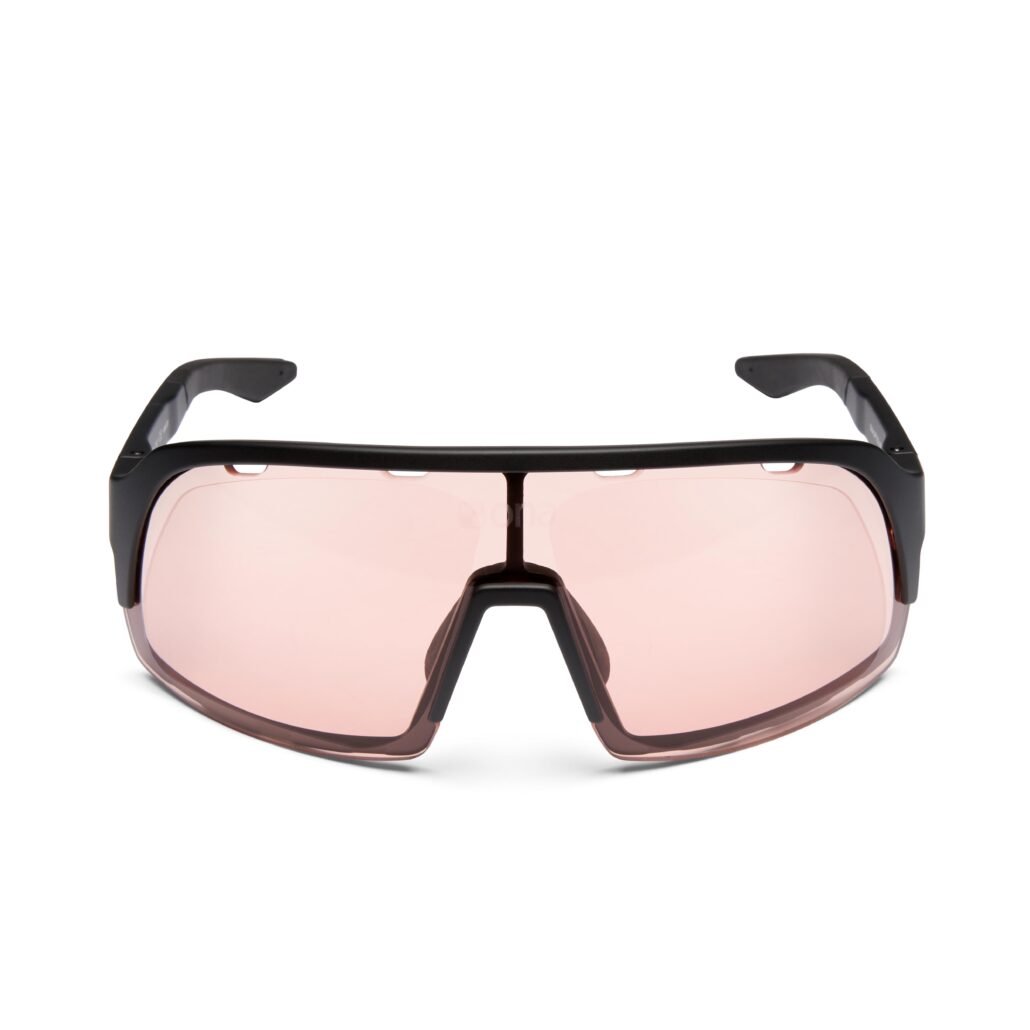
Protective eyewear is strongly recommended for all polo players and compulsory at many clubs. Impact-rated sports glasses or goggles with interchangeable lenses protect against flying balls (a polo ball travels at speeds of over 100 mph), mallet rebound, divots and airborne debris. Sport-specific polo eyewear designs account for the wide field of vision required at speed and the need to remain secure during physical contact, factors that standard sunglasses or fashion eyewear simply cannot address.
“I’ve seen injuries that could have been avoided with the right eyewear. In polo, UV protection alone isn’t enough, you need a frame that won’t shift on impact, won’t fog up, and gives you a full field of vision to track the ball and the other players at the same time. Not any sports eyewear will do. Every player should be looking for polycarbonate lenses, which offer high impact resistance, but the standard it’s tested to matters just as much as the material. Look for compliance with ANSI Z87.1 as a baseline, or better still, MIL-SPEC certification, which is the standard originally developed for military-grade optical protection. That’s the level of confidence every player deserves on a polo field.” — Alejandra Falkinhoff
Elbow pads
Though optional under most governing body rules, elbow pads have become standard practice at all levels of the game. Modern designs use Kevlar reinforcement or carbon-fibre inserts to protect the elbow joint from mallet and ball strikes, an injury that, once sustained, can keep a player out of the saddle for weeks.
| Beginner’s equipment checklist: for your first few lessons, most clubs will supply a helmet and mallet. Before you begin playing chukkas, you will need: certified polo helmet, knee guards, polo boots, polo gloves, and appropriate white trousers or breeches. Eyewear and elbow pads are an important next investment. |


6. Polo clothing and apparel: The whites tradition
Polo has one of the most distinctive dress codes in sport. The combination of white breeches, a numbered team shirt and knee-high brown boots is as recognisable as any uniform in the equestrian world, and the tradition it represents is rooted in history, practicality and an enduring aesthetic sensibility.
Polo whites: Why white?
The tradition of white polo trousers traces back to British India in the 19th century, where light-coloured garments were simply practical in the heat. As the game formalised under HPA regulations, white breeches became mandatory match attire for competitive play, a rule that persists today. For tournaments under AAP, HPA and USPA jurisdiction, players must wear white below the waist.
Polo pants and breeches
Modern polo trousers come in several styles suited to different levels and contexts. Traditional close-cut breeches in white cotton or stretch fabric offer freedom of movement and the clean silhouette associated with the sport. Contemporary ‘polo jeans’, cut in a four-way stretch denim, have gained significant traction at high-goal level, favoured by players who appreciate the combination of flexibility and durability.
Regardless of style, polo trousers should be reinforced at the knee and ideally have abductor panels, free from external seams that could irritate against the saddle, and cut to allow unobstructed hip rotation and deep hip-flexion positions required by the polo seat. Fit and fabric quality are not aesthetic luxuries, they directly affect comfort over a four to six chukka match.
“White breeches are a polo tradition, but tradition should never come at the cost of performance. The priorities are clear: first, total comfort and freedom of movement, a player who is thinking about their breeches is not thinking about the game. Second, grip to the saddle, because without it you are fighting your own kit on every turn. And third, a pattern that moves with the body in every direction the game demands. What excites me most is that fabric technology has advanced so dramatically that achieving all three in a single garment is now genuinely possible. The mills we work with today have given us materials that would simply not have existed a decade ago, and that’s what allowed us to develop what I truly believe is the perfect polo trouser.” — Alejandra Falkinhoff
Team shirts and numbers
In competitive play, each player wears a long- or short-sleeved jersey with a contrasting number (1 to 4) at least 9 inches high on the back, identifying their position. Under HPA rules, shirts with black-and-white vertical stripes are prohibited as they resemble umpire uniforms. For practice and club play, collared polo shirts in team colours are the universal standard.
Spectator dress codes
For polo spectators, the dress code varies by venue and event but smart casual is universally the minimum. At prestigious tournaments such as the Cowdray Gold Cup or the Queen’s Cup at Guards Polo Club in Windsor, the expectation leans toward light dresses, blazers, hats and brogues. Flat shoes or wedges are strongly advised, not merely as a style recommendation but as a practical necessity for divot stomping on a grass field.
Argentine Open attendees in Palermo often dress with a fashion-forward elegance that would not look out of place at a design week event. American polo at the National Polo Center in Wellington, Florida, blends garden-party attire with tailgate culture. The through-line everywhere is that polo takes its presentation seriously, and visitors who dress to reflect that are welcomed accordingly.
| Style tip for beginners: even for lessons and club practice, arriving in appropriate attire shows respect for the sport and your hosts. White breeches, a collared polo shirt, long socks and leather riding boots are always appropriate. |
7. How to get started in Polo
The barrier to entry in polo is lower than most people assume. You do not need to own a horse, possess prior riding experience, or have a family connection to the sport to take your first lesson. Polo clubs across the UK, Europe, the Americas and beyond actively welcome beginners, and structured pathways exist to take a first-time visitor from complete novice to competitive club player.
Step 1: Find a Club
The best starting point is your national governing body. In the United Kingdom and Ireland, the Hurlingham Polo Association maintains an online club finder listing over 70 outdoor clubs and more than 30 arena polo clubs affiliated under HPA rules, more than 100 clubs in total. In the United States, the USPA operates several hundred member clubs. Argentina’s AAP, along with the national associations of Australia, France, Germany, Spain, the UAE and dozens of other countries, provide equivalent directories.
University and school polo clubs, affiliated in the UK through SUPA (Schools and Universities Polo Association), offer some of the most accessible and affordable entry points to the sport, with group lessons at costs substantially below those of private polo schools.
Step 2: Book an introductory lesson
A typical introductory polo lesson lasts one to two hours and requires no previous riding experience. Most club polo schools will start you on a quiet, well-trained school pony and walk you through the fundamental skills: the polo seat, one-handed reining, basic swing technique on a wooden horse or simulator, and your first controlled stick-and-ball session on horseback.
Costs vary by country, club and format. Group introductory lessons in the UK typically range from £35 at university clubs to £120–£140 at established polo schools. Private tuition commands a premium but offers significantly faster progression. In the United States, introductory group sessions at most USPA-affiliated polo schools are comparable in structure, typically one hour in length.
Step 3: Progress to instructional chukkas
After typically six to ten lessons, most clubs will offer beginners the opportunity to participate in instructional chukkas, match-format play in which experienced players and instructors mix with beginners to provide in-play coaching. These low-pressure sessions are where genuine progress happens: the combination of reading the play, riding at pace and striking on horseback is a skill that only accumulates in match conditions.
Once you have demonstrated basic competency and passed a written polo highway code examination, covering the rules, right of way, penalties and etiquette, you may register with your national association at −2 or ‘S’ handicap and compete in beginner and low-goal tournaments.
Managing the cost of Polo
Polo’s reputation as an expensive sport is not without foundation at the professional level, where a string of eight to ten ponies represents an investment of several hundred thousand pounds or dollars. However, club-level polo is more accessible. Many clubs operate ‘lease’ or ‘hire’ agreements that allow players to ride club or privately owned horses for a per-chukka fee. Beach and arena polo, both played with three-person teams on smaller surfaces, reduce horse requirements further.
The key first investment, beyond lessons, is your personal protective equipment. A certified helmet, knee guards, polo gloves, boots and appropriate breeches represent a one-time cost that will serve you across hundreds of chukkas. Beyond that, entry fees for club chukkas and tournaments, combined with horse hire, represent the ongoing cost of the sport at the beginner and intermediate level.
8. The different variants of Polo
Polo’s adaptability has allowed it to thrive across radically different environments, surfaces and scales. While outdoor grass polo remains the sport’s definitive format, three major variants have developed their own distinct identities, competitive circuits and global followings.
Arena Polo
Arena polo is played indoors or on enclosed outdoor surfaces of sand or compacted dirt, with teams of three players rather than four. The smaller surface (approximately 300 by 150 feet, compared to 300 by 160 yards for outdoor polo) creates a faster, more compact and more contact-heavy game. An inflatable leather ball replaces the hard outdoor ball; ponies wear cleated or studded shoes for grip on loose footing.
Arena polo is enormously important as a year-round pathway for players in climates that make outdoor polo impractical in winter. It is the primary format of polo in many US states and drives much of the winter tournament calendar.
Snow Polo
The world’s first snow polo tournament was held on 26 January 1985 on the frozen lake of St. Moritz, Switzerland, an event conceived by hotelier Reto Gaudenzi that has since spawned a global circuit. Snow polo is played on compacted snow or frozen lakes with three players per team, using brightly coloured inflatable balls for visibility. Ponies wear specially studded horseshoes for traction. Major venues now include Kitzbühel, Aspen, Cortina d’Ampezzo, Klosters and St. Moritz, which remains the sport’s spiritual home on snow.
Beach Polo
Beach polo was created in 2004 by Rashid Al Habtoor and Swiss polo entrepreneur Reto Gaudenzi in Dubai, with the first Miami Beach Polo World Cup following in 2005. Played on compact sand with three-player teams, inflatable balls and a condensed field, beach polo has expanded rapidly as an accessible and spectacular spectator event. Tournaments now operate across more than twenty countries from Argentina to Australia, Spain to South Africa, combining the sport’s inherent dynamism with the visual appeal of a seaside setting.
9. The Grand Slams: Major Polo tournaments to know
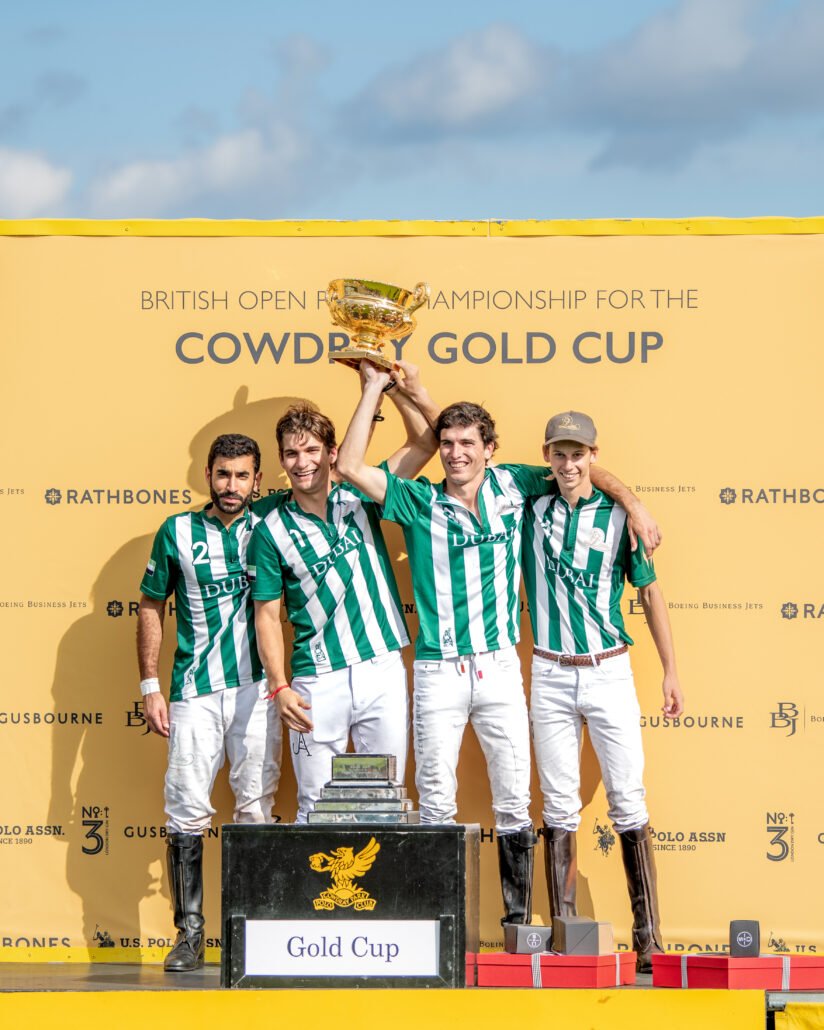
Polo’s prestige events are often referred to collectively as the sport’s Three Grand Slams: the Argentine Open, the British Open for the Cowdray Gold Cup, and the US Open Polo Championship. Together, they represent the pinnacle of the global circuit and the benchmarks by which players, teams and nations are judged.
The Argentine Open (Campeonato Argentino Abierto de Polo)
Founded in 1893 and held every November and December at the Campo Argentino de Polo in the Palermo neighbourhood of Buenos Aires, the Argentine Open is unambiguously the world’s greatest polo tournament. The stadium, inaugurated in 1928 and capable of accommodating approximately 30,000 spectators, has earned the sobriquet ‘the Cathedral of Polo’ among the sport’s faithful.
As a true open event with no handicap restriction, the Argentine Open attracts the world’s finest players and produces matches of the highest possible standard. It forms the final leg of the Argentine Triple Crown, preceded by the Tortugas Open and the Hurlingham Open, a sequence that concentrates the global polo elite in Buenos Aires for the better part of two months each southern hemisphere spring.
The Cowdray Gold Cup (British Open)
Established in 1956 by Weetman Pearson, 3rd Viscount Cowdray, the Gold Cup is the centrepiece of the English high-goal season, contested at the spectacular grounds of Cowdray Park Polo Club in Midhurst, West Sussex, in June and July. At 22-goal level, it attracts the finest Argentine, British, American and international patrons and professionals. The late Mexican player Carlos Gracida holds the all-time record, having won ten times between 1987 and 1997.
The Cartier Queen’s Cup
Contested in May and June at Guards Polo Club in Windsor Great Park, the Queen’s Cup (established 1960 in honour of Queen Elizabeth II) is the second most prestigious tournament on the English calendar, also at 22-goal level. Guards Polo Club, adjacent to Windsor Castle and set within one of England’s finest royal parks, provides one of the most magnificent settings in all of equestrian sport.
The US Open Polo Championship
The oldest polo championship in the United States — established 1904 — the US Open is played annually at the National Polo Center in Wellington, Florida, in March and April. It forms the final leg of the Gauntlet of Polo, following the C.V. Whitney Cup and the USPA Gold Cup. The winning team receives a prize of $100,000. Wellington, with its concentration of stables, players, trainers and vendors, is the operational heartland of American polo.
10. Polo Culture, lifestyle and etiquette
Polo occupies a unique position in the cultural landscape. It is, simultaneously, a world-class competitive sport, a social institution, a fashion environment and a community of genuine enthusiasts united by their love of horses. Understanding the culture is part of understanding the sport.
The divot stomp
No polo tradition is more beloved, or more universally practised, than the divot stomp. At half-time, spectators are invited onto the playing field to replace the chunks of grass and earth torn up by the ponies’ hooves during play. It is entirely unpretentious, wonderfully communal, and practically important: a well-maintained pitch affects the quality and safety of the play as much as the condition of the ponies.
Club etiquette
Polo clubs operate within a set of unwritten but widely understood codes. Arrive punctually; players and officials operate on tight schedules. Keep voices measured during play, horses are sensitive to loud, unexpected sounds. At competitive matches, only the team captain may approach an umpire to discuss a call; all other players are expected to accept decisions without protest. On the spectator side, remain behind the boards during play and exercise care around the pony lines.
The social character of polo, especially at club and amateur level, is warm and genuinely welcoming to newcomers. The divot stomp, the post-match gathering and the informal chukkas that follow formal games are all designed to integrate new players and visitors into the community.
The professional landscape: Patrons and players
At high-goal level, polo operates under a patron-player system that distinguishes it from most professional sports. A patron (also known as the sponsor in the USA) is typically a wealthy amateur player who funds the team, providing horses, player salaries and operational costs in exchange for playing alongside top professionals. This arrangement has been central to polo’s economics for well over a century and provides the financial foundation that makes world-class competition possible.
The sport’s most recognisable global ambassador is Argentine player Ignacio ‘Nacho’ Figueras, a six-goaler, brand ambassador for Ralph Lauren and Veuve Clicquot, and a figure who has done more than almost anyone to bring polo to new global audiences through media, fashion and cultural visibility.
11. Common beginner mistakes (and how to avoid them)
Every polo player remembers the specific errors that delayed their development in the early stages. Many of them are universal. Awareness of these pitfalls before you encounter them will accelerate your progress significantly.
- Tunnel vision on the horse. Beginners who are still working to feel secure in the saddle often focus their gaze downward, at the horse’s neck, the mallet, the ball. Polo demands the opposite: look up, scan the field, anticipate the next play. Comfort in the saddle comes with mileage; start building the habit of looking up from lesson one.
- Gripping the mallet too tightly. A death grip on the mallet shaft kills the swing and fatigues the forearm within minutes. The mallet should be held firmly but with the suppleness of a relaxed wrist — the sling around the thumb provides the security; the fingers provide the control.
- Hitting from the wrist alone. A polo swing is a pendulum, initiated from the shoulder with wrist involvement at the moment of contact. Beginners who try to generate power purely from the wrist produce inconsistent, weak shots and strain the tendons quickly.
- Using the wrong mallet length. A mallet that is too short forces the player to lean dangerously; one that is too long produces mechanical inefficiency. Always measure on your specific horse before committing to a length.
- Crossing the line of the ball. The most frequently penalised infringement at beginner level. Study the line after every shot, your own and everyone else’s, until reading it becomes instinctive.
- Forgetting that the ends change after every goal. This sounds trivial but in the heat of a first chukka, beginners repeatedly ride toward the wrong goal immediately after a score is made. Mentally anchor the rule before you go on.
- Skipping stick-and-ball practice. Lessons with an instructor are invaluable, but the mechanical skill of striking a moving ball from a moving horse is only internalised through repetition. Allocate time for solo stick-and-ball work, even thirty minutes at a trot, walking through the basic shots, outside of formal lessons.
12. Essential Polo glossary
Polo has a lexicon that can seem impenetrable to newcomers. The following terms cover the concepts you are most likely to encounter in your first season.
| Term | Definition |
| Bump | Legal shoulder-to-shoulder contact between ponies to dislodge an opponent from the line of the ball. |
| Chukka | A period of polo play lasting 7 minutes. From the Hindi/Sanskrit for ‘wheel’ or ‘circle’. |
| Goal | A score, also used as the unit of the handicap system (e.g. ‘a 5-goaler’). |
| Handicap | A player’s official rating from −2 (beginner) to +10 (world-class). |
| Hook | A defensive move using the mallet to block an opponent’s swing; only legal on the ball side, below shoulder height. |
| Knock-in | A free hit awarded to the defending team after the attackers send the ball over the back line wide of goal. |
| Line of the ball | The imaginary path traced by the ball after it is struck; defines the right of way. |
| Mallet | The polo stick, a cane or composite shaft with a tipa-wood head. |
| Nearside | The left side of the pony; a nearside shot is played across the body. |
| Offside | The right side of the pony; the natural and most powerful striking side. |
| Patron | A wealthy amateur player who funds a high-goal team that includes hired professionals. |
| Ride-off | A legal manoeuvre in which a player pushes an opponent off the line by riding parallel, body-to-body. |
| Right of way | The right of the player on the line of the ball to proceed unimpeded. |
| Stick-and-Ball | Solo mounted practice, riding and hitting without a match context. |
| Third man | The off-field referee who resolves disagreements between the two mounted umpires. |
Your Polo journey starts here
Polo is not a sport you observe from a distance for very long before wanting to participate. Its combination of speed, skill, strategy and the irreplaceable partnership between rider and horse creates an experience that is both deeply physical and uniquely meditative, a rare quality in competitive sport.
The path from curious newcomer to club player is shorter and more accessible than the sport’s prestige suggests. A single introductory lesson is enough to understand why players return week after week, year after year, spending decades in pursuit of a skill that is never fully mastered. The ponies are extraordinary; the community is welcoming; the learning curve is steep and endlessly rewarding.
Begin with the right equipment, a certified helmet, properly fitted knee guards, quality polo gloves, protective eyewear and white breeches that allow you to move freely in the saddle. Then find your nearest club, book a lesson, and let the game do the rest. The field is waiting.