
Polo may be one of the world’s most equipment-intensive sports, yet most of what you actually need to get started is simpler, and cheaper , than many newcomers assume. On your first lesson, a reputable polo school will provide everything: a safe pony, a compliant helmet and a mallet. Your own wallet stays in your pocket.
But the moment you decide to play regularly, a clear equipment picture matters. Get the helmet wrong and you’re not just playing poorly, you’re playing illegally. Get the mallet length wrong and your hitting will never quite feel natural. Get the trousers wrong and a 7-minute chukka becomes an 84-step chafing exercise.
This guide cuts through the noise. It identifies the three items that are legally required, the eight items that every regular player needs, the full tournament kit, the tack your pony requires, and the common beginner mistakes that cost people money without improving their game. It also maps out exactly what to spend at each stage of the journey.
1. The three to four legally required items
Only three pieces of equipment are mandatory under both the HPA and USPA rules of polo. Everything else improves performance, comfort or safety , but these three will get you removed from the field if you don’t have them.
1.1 The Polo Helmet
This is the single most important purchase you will ever make as a polo player , and the one where the rules are most frequently misunderstood. Do not buy a used helmet. Do not assume that any riding helmet will qualify. The certifications required for polo are polo-specific.
USPA (United States): effective 1 May 2021, every USPA Event or Club Event , including club chukkas, leagues, and youth play , requires a helmet certified to NOCSAE Standard ND050, the first-ever polo-specific helmet standard. A key practical point: NOCSAE ND050 tests for multiple impacts (falls, mallet and ball strikes, player contact). A general-purpose equestrian ASTM F1163 helmet is not polo-legal and must be replaced after a single impact. A facemask is only legal if it is the manufacturer’s authorised accessory , fitting a non-authorised mask voids the certification. Failure to comply earns the player removal from the game and a delay-of-game penalty.
HPA (UK, Ireland and ~28 affiliated nations): per the HPA Safety Committee Helmet Regulations (5 January 2024, v17), helmets must be both “type-approved” to a recognised standard AND carry a Quality Control (QC) mark such as the BSI Kitemark, SEI, Snell or INSPEC mark. Accepted type-approval standards include PAS 015:2011, VG1 01.040 2014-12, UTAC/CRITT 04/2015, NOCSAE, EN1384:2017 and EN1384:2023. PAS 015:1998 and Snell E2001 are no longer accepted due to the age of helmets made to those standards. Helmets that are type-approved but lack a QC mark have been banned since 1 April 2024 , even if bought before that date.
Replacement: Replace every 4 years or immediately after any major impact. Always buy new , you cannot verify the impact history of a second-hand helmet.
Price range: $150–$500+ new; premium and custom models higher.
1.2 Knee Guards
Knee guards (kneepads) are mandatory under HPA and USPA rules. Modern polo involves hard ride-offs and close physical contact, and the knee is directly in the path of a mallet or boot collision. Construction is typically thick padded leather , often the same hides used for polo boots , with two or three Velcro or buckle straps. Carbon and synthetic moulded options exist for lighter weight. Unlike general equestrian knee protection, polo knee guards are engineered for repeated lateral impact.
Price range: $135–$300.
1.3 Polo Boots
Knee-high leather boots are required because they protect the lower leg from ball and mallet strikes, ride-offs, and stirrup contact, while providing a stable platform for riding. Quality polo boots use multiple layers of leather with hand-welted, linen-stitched soles. They should fit snugly to the calf and reach just below the knee.
Key brands range from accessible entry-level options to the legendary Casa Fagliano (founded 1892 in Hurlingham, Argentina; first polo boots made in 1920; bespoke made-to-order with a 6–8 month lead time, producing around 80 pairs per year). Store boots on wooden boot trees to prevent ankle wrinkling, and condition the leather after each match.
Price range: $200 (entry/off-the-shelf) to $1,500+ (bespoke).
1.4 Eye protection
Under the current Hurlingham Polo Association (HPA) rulebook (Rule 2.3, Players’ Equipment, item d(iv)), eye protection is mandatory for all players, regardless of age, and the requirement can be satisfied by sports glasses, goggles, or a face guard. More broadly, a mandatory requirement for under-18 players to wear eye protection is a near-universal standard across polo’s governing bodies worldwide. Bodies such as the USPA and the AAP go further by also strongly recommending eye protection for adult players, even though it is not legally binding for them.
2. Essential player apparel
These items are not legally mandated but are required by dress code for match play, strongly recommended for safety, or functionally essential for serious riders.
2.1 Polo Whites (Competition Trousers)
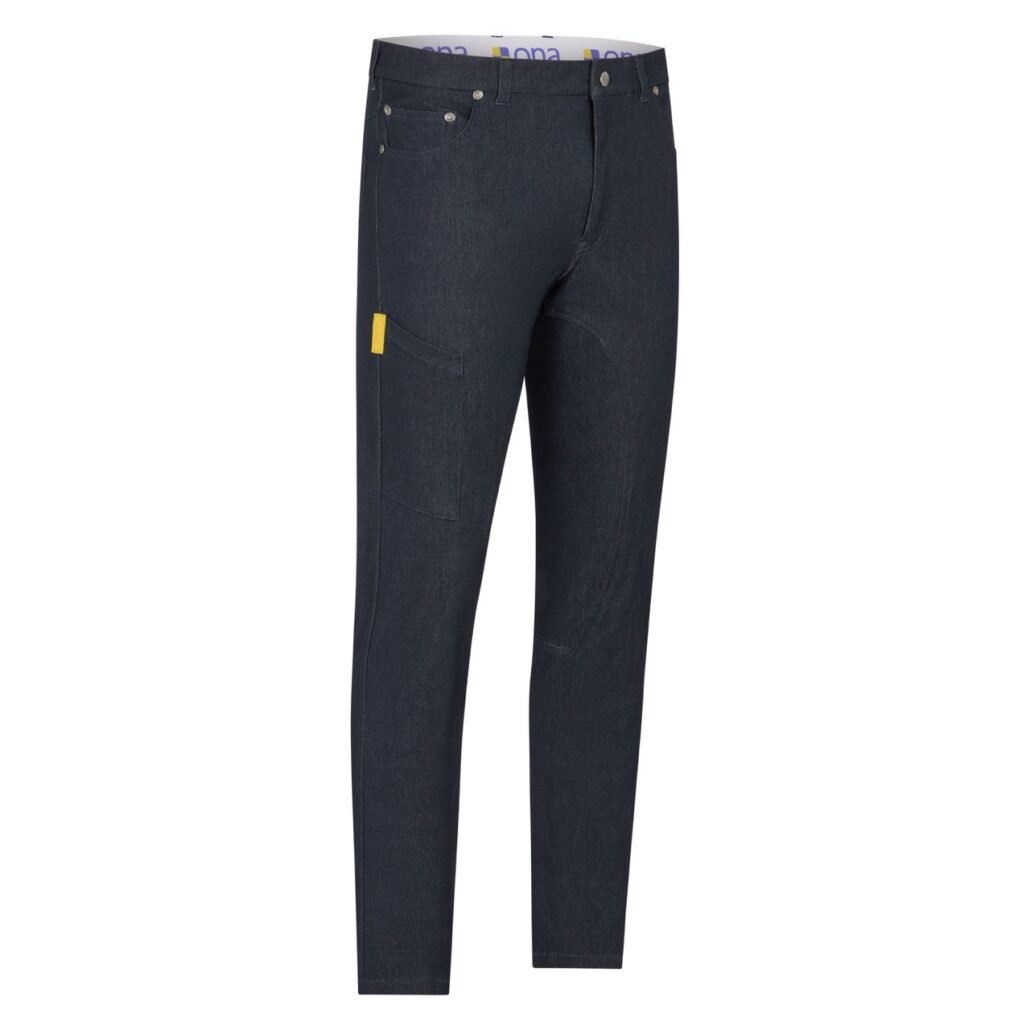
White trousers are required for tournament and match play under both HPA and USPA dress codes. Traditional polo whites were white cotton denim; premium modern trousers use a bi-elastic Schoeller® softshell with GripIt® abductor panels , a transparent non-slip coating at the inner-thigh saddle-contact zone that improves lateral grip during ride-offs without restricting the rider’s forward-backward movement.
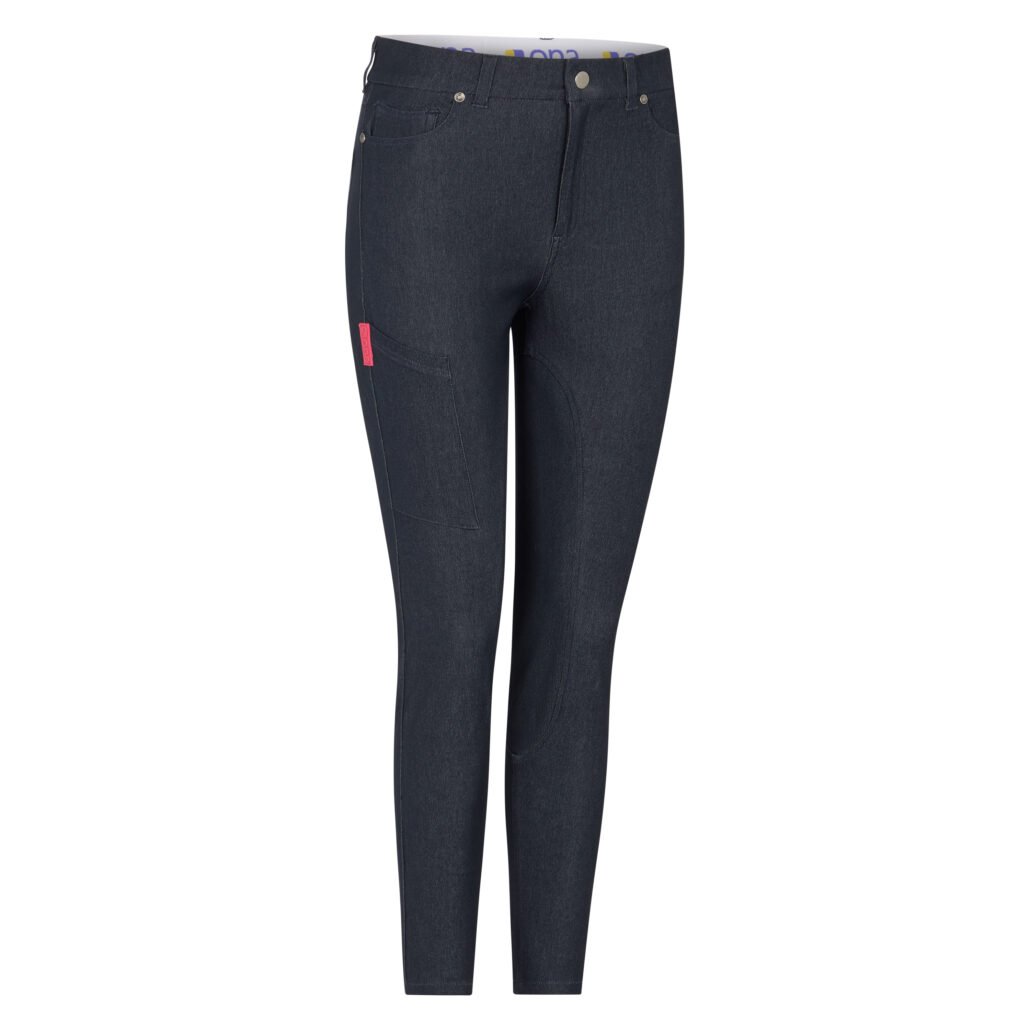
Competition whites are kept for match days; practice pants in navy or black carry identical construction but darker colours that hide daily wear. A well-cared-for pair of premium technical whites should last a full season.
Price range: $120–$150 (cotton denim); $290–$350+ (Schoeller® softshell). Care: machine wash 30°C, no bleach.
2.2 Polo Shirt / Jersey
Team shirts are numbered 1–4 by position and should be breathable, quick-dry fabric. Most clubs provide a team shirt or lend one for chukkas; when you start playing regular club matches you’ll typically need your own set in team/club colours.
2.3 Polo Gloves
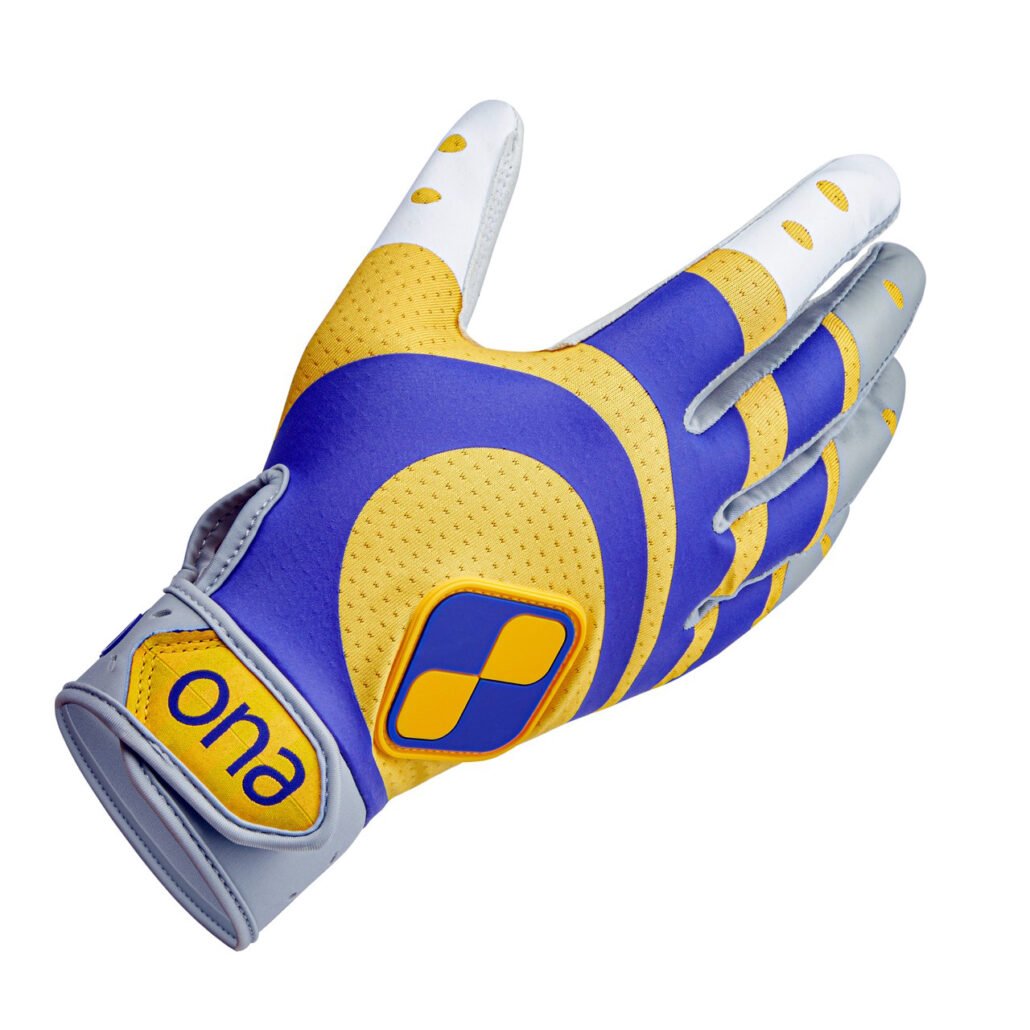
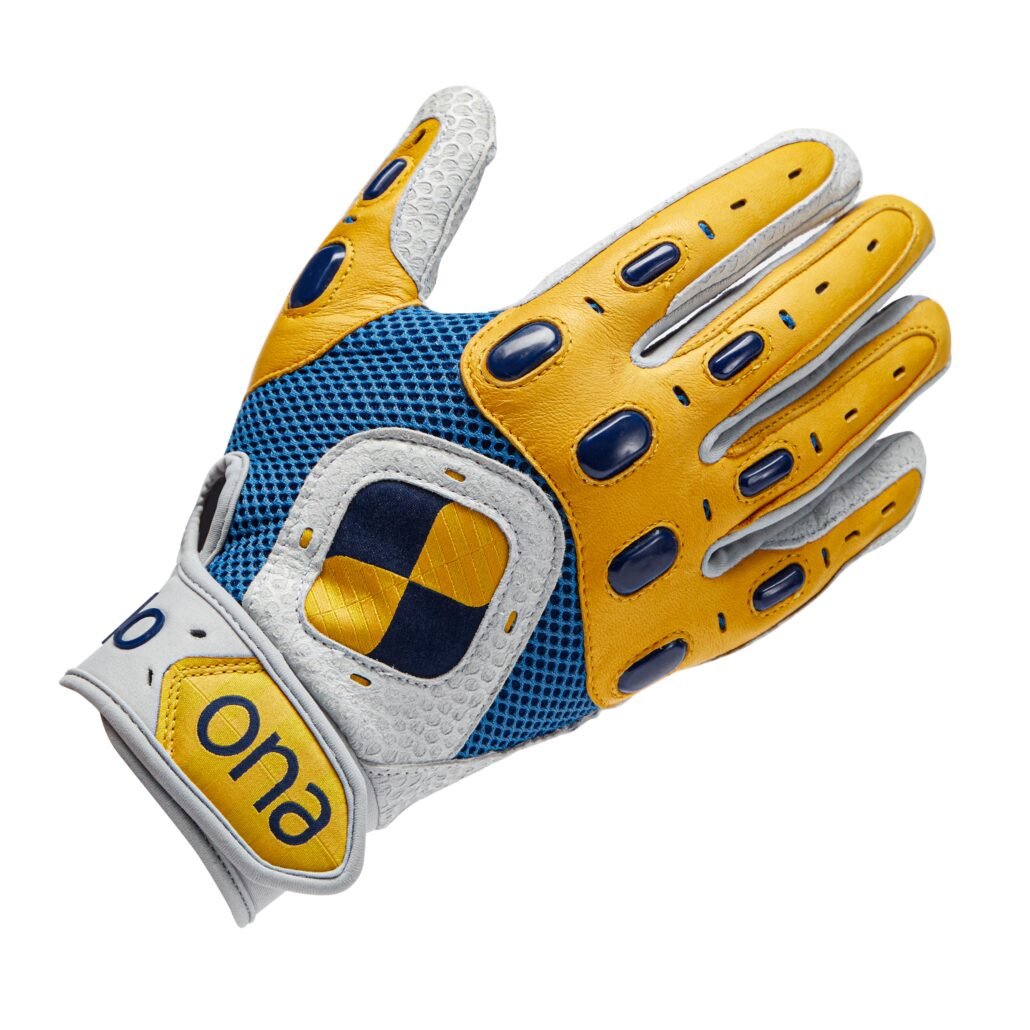
Polo gloves protect against blisters, mallet friction, rein rope burns and , in premium carbon-knuckle models , direct hand impact. Because all polo must be played right-handed, the left hand holds the reins and the right hand drives the mallet: the two gloves do different jobs, so asymmetric construction matters. Some brands have incorporated friction relief between the index and middle fingers on the left hand anda reinforced palm and thumb pad on the right hand.
Materials range from cabretta leather to Pittards® WR100X (water-repellent, stays soft) and engineered synthetic suedes. Premium models add carbon-fibre knuckle inserts at the points most vulnerable to ball or mallet impact.
Price range: $25–$60 (entry synthetic); $90–$115 (leather pair); $150–$195 (carbon-knuckle pair).
2.4 Polo Eyewear
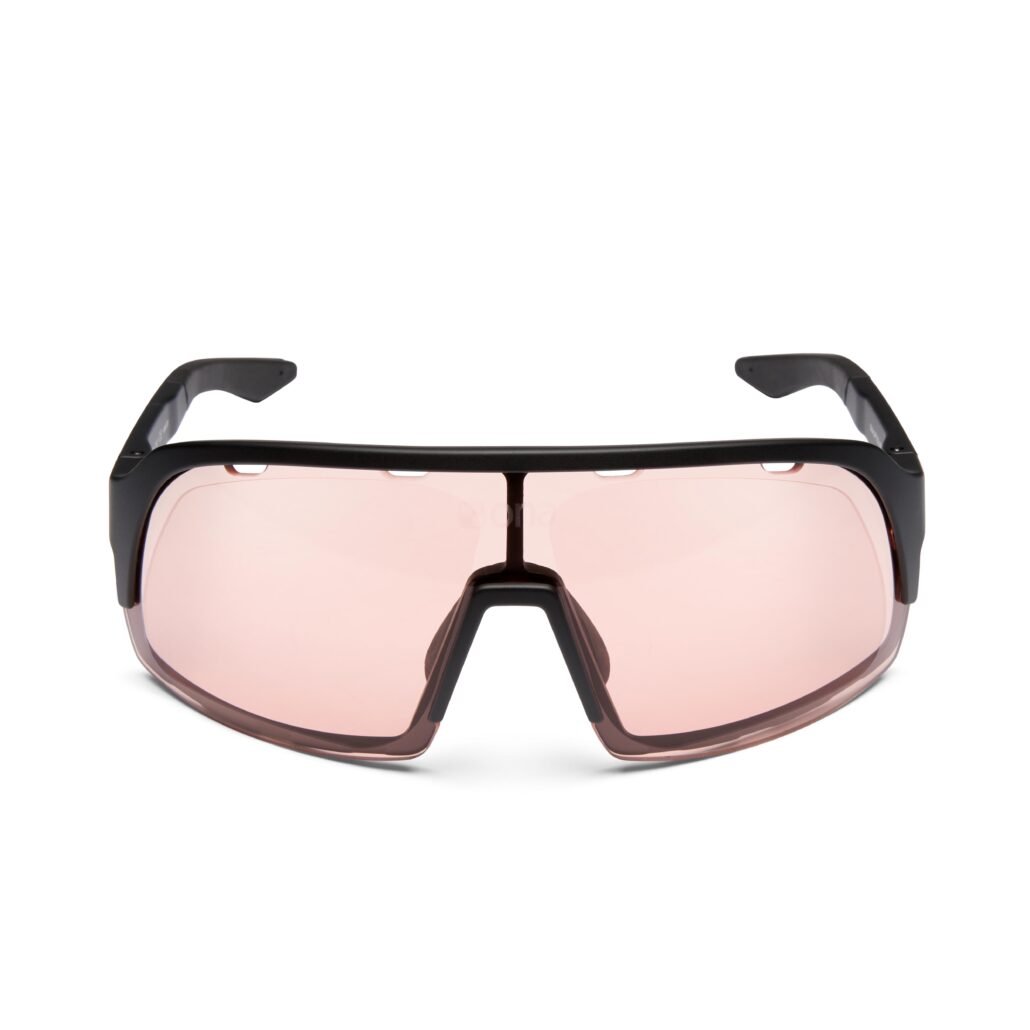
A polo ball can reach 110 mph. Regular sunglasses shatter on impact and become a hazard in their own right. Polo-specific eyewear uses impact-rated polycarbonate lenses, full UV protection and a close-fitting wraparound design to shield against balls, mallet strikes and divots. This is strongly recommended for all play and mandatory at some clubs; prescription options are available for players who need them.
Price range: $150–$350 (standard); $600–$985 (prescription performance lenses).
“Protection was the starting point, but it can’t be the only consideration if players are actually going to wear the eyewear every chukka. We designed for anti-fog performance and proper ventilation because gear that mists up mid-match gets pushed up onto the helmet within minutes — and once it’s off, it’s not protecting anyone. Style matters too: if players don’t feel good wearing it, compliance becomes a battle rather than a habit.” – Alejandra Falkinhoff, founder and CEO of Ona Polo
2.5 Elbow Guards
Studies on polo injury incidence consistently show that approximately 40% of polo injuries involve the upper limb, with the elbow highly exposed during ride-offs, falls and mallet collisions. Polo-specific elbow guards provide a hard outer shell over viscoelastic or EVA foam cushioning, with an abrasion-resistant outer layer. Construction options include hard shell over EVA foam, neoprene-over-Kevlar, and advanced Rheon® active-polymer pads , La Martina’s Rheon guards launched in 2020 as the first elbow guards to receive CE approval specifically for polo, Ona Polo elbow guards meet EN 1621-1:2012 Level 2 standard for motorcycling.
Adoption among professionals has grown significantly over the past decade. Ona polo ambassador Hazel Jackson, 10-goal women’s player, puts it simply: “My must-have Ona item are the elbow guards , I have no idea why not every single person who plays polo doesn’t use them. They are so comfy and you don’t even feel them.”
Price range: $60–$150 depending on construction.
2.6 Polo Belt
A polo belt is functional as well as traditional. It secures the shirt during the constant leaning, twisting and standing-in-stirrups that polo demands, prevents the shirt pulling out and maintains a clean silhouette on the field. Leather belts coordinated webbing are commonplace in the sport and a fashionable accessory.
2.7 Polo Socks
Over-the-calf socks worn under knee-high boots prevent rubbing and blistering over long match days. Padded heel and ball-of-foot zones, and light compression through the arch and calf, make a genuine difference in comfort when you’re wearing stiff leather boots for several chukkas.
Wearing sports compression socks can make a big difference in performance. They provide a faster recovery, improved circulation and oxygen delivery, reduce muscle vibration, provide calf muscle and Achilles tendon support helping prevent shin splints and cramping.

3. The Polo Mallet
The mallet is not a generic stick , it is a fitted instrument, and getting the length, weight and flex wrong will limit your hitting as surely as the wrong golf clubs would limit your swing.
3.1 Length
Mallet length is chosen by the combined height of the player’s torso/arm and the height of the pony. The classic fitting method: sit mounted with your arm hanging straight down and measure from the ground to your palm , that distance in inches is your baseline mallet length. Common lengths run 48–54 inches; 51–53” suits most adult players on standard-height ponies.
3.2 Shaft materials
Manau cane: Traditional rattan, prized for its natural feel and feedback. Increasingly scarce and inconsistent as sustainable supply dwindles; the best cane shafts are still used by many high-goal professionals.
Composite (carbon / glass-fibre): More consistent weight and flex from shaft to shaft, more durable, weather-resistant (won’t wring or absorb moisture). Hybrid cane-tip composite shafts combine the feel of cane at the hitting end with composite consistency through the body —but they haven’t caught on; classic bamboo remains the preferred choice.
3.3 Head
Heads are almost universally made from Tipa hardwood (Tipuana tipu, sourced from Argentina) , the industry standard for durability and hitting response. Sycamore and ash are alternatives. Head weight runs 160–240g; 185–195g is a sensible all-round choice for intermediate players. Total mallet weight typically lands around 500–530g. Flex grade (whippy, medium, medium stiff, stiff) is a matter of playing style , most players prefer a shaft that is stiff through the top three-quarters with a small amount of flex at the tip.
3.4 How many to own
Mallets break. Carry at least two or three to every session; a match string typically includes one per chukka plus a spare. Players also need different lengths for different ponies, so a modest collection builds naturally.
3.5 Grip and sling
The rubber grip and thumb sling can be re-taped. The sling should sit firm across the back of the hand so the mallet pivots freely from the wrist , gripping tightly is a beginner mistake that costs accuracy and tires the forearm. Re-gripping requires plastic binding tape (e.g., 3M 471) wound tightly to anchor the grip to the shaft.
Price range: $60–$300+ per mallet.
4. The Polo Pony and Horse Tack
A polo pony is a co-athlete, not merely transport. The relationship between rider and horse determines 60–80% of the outcome of any chukka. The tack that connects them is purpose-engineered for polo’s demands: explosive acceleration, sharp turns, sudden stops and sustained physical contact with other horses.
4.1 Saddle
The polo saddle is flat-seated with a shallow pommel and forward-cut flaps, designed to let the rider shift quickly from a forward balanced seat (for a forehand shot) to an upright strong seat (for a ride-off) without the thigh contact that a deep-seated dressage saddle would prevent. Entry-level used polo saddles start around $400; premium and bespoke saddles run to the thousands.
4.2 Bridle and bits
Polo ponies are ridden in a gag or Pelham bit with double reins , not because they are unruly, but because polo players need nuanced one-handed control while leaning, reaching or swinging. The double rein allows precise directional pressure without the pony over-reacting. A complete Argentine polo bridle typically includes the caveson, double reins, running or standing martingale, and a breastplate as a package.
4.3 Leg protection
All four legs are wrapped before every chukka, either with fleece polo wraps (cheap, washable, sold in sets of four) applied fetlock to knee, or with tendon and brushing boots. The primary function is protection from ball strikes, mallet contact and horse-on-horse collisions during ride-offs; the support benefit for tendons is limited and the technique matters greatly , over-tight or wet bandages can cause harm.
Overreach (bell) boots protect the heels and coronet band from the hind hoof striking the front foot , particularly important on hard or slippery ground.
4.4 Martingale and breastplate
A standing martingale controls head height during fast stops and direction changes, preventing the pony’s head from striking the rider. A breastplate keeps the saddle from slipping backward as the rider leans far forward and out of the saddle for off-side shots.
4.5 Tail and mane
The mane is hogged (clipped) and the tail is bandaged and tied up or plaited to prevent entanglement with the mallet shaft during the swing , a wrapped tail snagging a full-speed mallet is a safety hazard for horse and rider alike.
4.6 Polo whip
A short, lightweight riding whip. Used with restraint and care , aggressive use is prohibited under the rules.
5. Arena Polo: Where the kit changes
Arena polo is played 3 v 3 on an enclosed surface of approximately 300 × 150 feet with 4-foot sideboards. It is the most accessible entry format, requires fewer ponies and is the standard starting point for beginners at most UK and US clubs. The kit differences are specific:
| Item | Outdoor vs Arena Difference |
| Ball | Outdoor: solid PVC/willow wood in ARG, ~3¼” diameter. Arena: leather-covered, air-inflated, ~4½” diameter. |
| Mallet | Stiffer shaft and larger-diameter head (often 160–190g) to strike the bigger inflatable arena ball cleanly. Composite mallets are more commonplace. |
| Number of ponies | Outdoor: 1 per chukka (typically 2+ per match). Arena: often 1 pony for the full match due to shorter duration. |
| Players per team | Outdoor: 4. Arena: 3. |
| Sideboards | Not present outdoors. In arena: 4-ft boards keep the ball in play and fundamentally change defensive and tactical play. |
| Safety equipment | Same mandatory items (helmet, knee guards, boots). Some clubs mandate face guards and eyewear in arena due to enclosed space. |
6. The master equipment checklist by player level
Use this table to identify exactly what to buy at each stage. Items are listed in recommended purchase order within each tier.
Item | First Lesson | Club Player | Tournament | Notes |
Certified helmet | Borrowed | ✓ Own | ✓ Own | NOCSAE ND050 (USPA) or type-approved + QC mark (HPA). Always new. |
Polo boots | Borrowed | ✓ Own | ✓ Own | Knee-high leather. Boot trees essential for shape. |
Knee guards | Borrowed | ✓ Own | ✓ Own | Mandatory. Leather, carbon or synthetic padding. |
Polo gloves | Optional | ✓ Own | ✓ Carbon-knuckle | Right-hand first; pair if preferred. |
Polo whites (trousers) | Borrow / jeans | ✓ Own | ✓ Technical | Schoeller® softshell for tournaments. Cotton denim for club. |
Practice pants | — | ✓ 2 pairs | ✓ 3 pairs | Navy or black. Identical construction to whites. |
Polo shirt / jersey | Club shirt | Club shirt | ✓ Team shirt | Usually provided or purchased as a team. |
Polo eyewear | Recommended | ✓ Own | ✓ Own | Impact-rated polycarbonate. Not regular sunglasses. |
Elbow guards | Optional | ✓ Recommended | ✓ Recommended | ~40% of polo injuries involve upper limb. |
Polo belt | — | ✓ Optional | ✓ Optional | Secures shirt during riding. |
Polo socks | — | ✓ Own | ✓ Own | Over-the-calf, padded or compression. Comfort under stiff boots. |
Polo mallet(s) | Borrowed | ✓ 1–2 Own | ✓ Full string | Fitted to player + pony. Have several; they break. |
Pony / lease | Provided | Lease / club | ✓ Own string | Defer buying until you know you’re committed. |
Saddle | — | When leasing | ✓ Own | Flat English polo saddle. |
Bridle, bits, bandages, boots | — | When leasing | ✓ Multiple sets | Full tack kit per pony. |



7. Cost breakdown by player level
Tier | Approx. Total | What’s Included |
Absolute minimum (first lessons) | $0–$300 | Lessons with borrowed pony, helmet, boots and mallet. Wear jeans and a boot with a heel. |
Budget entry kit | $500–$1,000 | Certified helmet ($250–$400), entry-level boots ($200–$350), knee guards ($135–$200), gloves ($25–$60), cotton whites ($120). |
Serious club player | $2,000–$5,000 | Certified helmet ($250– +$400), Premium boots ($400–$800), technical whites ($190–$430), 6 mallets ($120–$720, protective eyewear ($150–$350), elbow guards ($60–$150), premium gloves ($90–$195). Plus lease costs. |
Tournament player (kit only) | +$5,000 | Bespoke boots ($800–$1,500+), multiple competition whites, full mallet string (+10 mallets), protective eyewear, premium elbow guards, several gloves for different weather conditions. Excludes ponies. |
Professional string + full kit | Illustrative only | A full high-goal string, grooms, transport and a complete backup of all wearable items runs to tens of thousands per season. A patron’s team budget can reach seven figures. |
8. Care and Maintenance
The lifespan of polo equipment is directly proportional to how well it is maintained. Most items are technically demanding and worth extending; replace only what must be replaced.
| Item | Care Routine |
| Helmet | Inspect after every fall. Replace every 4 years or immediately after any major impact. Never store in direct sunlight or heat. Remove and clean the liner periodically per the manufacturer’s guidance. Do not buy second-hand. |
| Polo boots | Clean after each use with a damp cloth; condition the leather regularly; dry away from direct heat; store on wooden boot trees to prevent ankle wrinkling. Polish before matches. |
| Polo whites and practice pants | Machine wash at 30°C on a gentle cycle, mild detergent. Never use chlorine bleach (degrades elastane and dulls white). Air dry; tumble dry on lowest heat only if necessary. Pre-treat stains (grass, mud, saddle oil) before washing. |
| Polo gloves (leather) | Wipe down with a dry cloth after every chukka. Hand-wash gently in lukewarm water with mild soap flakes; air dry. Apply a small amount of neutral leather conditioner monthly. Never machine-wash leather. |
| Polo gloves (synthetic) | Machine-washable cold on a delicate cycle inside a garment bag. Air dry only. |
| Polo mallet | Wipe the head clean after play. Re-tape grips and adjust slings as they stretch. Broken shafts can be spliced; a standard cane splice with head remount runs around $40. |
| Polo bandages | Machine-wash and re-roll tightly after every use , a loosely rolled bandage applies unevenly, which is both ineffective and potentially harmful. |
| Knee guards | Wipe leather clean and condition. Check straps and Velcro regularly. |
9. What you don’t need as a beginner
A significant proportion of beginner polo spending goes on items that either the club provides, or that beginners genuinely don’t need yet. Here is what to defer , and the most costly mistakes to avoid.
What clubs and schools provide
Reputable polo schools provide school ponies, loaner helmets, loaner boots in common sizes, and often mallets for lessons. For your very first chukkas, wear jeans, a shirt, and boots with a small heel (many schools also lend boots).
Items beginners commonly overspend on
Bespoke boots before commitment: A made-to-order pair of Fagliano boots with a 6–8 month lead time is a reward for a serious player, not a beginner’s starting point.
A quiver of custom mallets: One or two well-fitted mallets are enough to start. Borrow from the school until you know your pony’s height and your preferred flex grade.
A personal saddle before you own a horse: Buy the saddle when you know the horse; a saddle fitted to one pony may not suit another.
Fashion sunglasses at the expense of safety: Regular sunglasses are both inadequate (they shatter on impact) and a waste of money. If you’re buying eyewear, buy impact-rated polo eyewear once, and own it for years.
The single most dangerous beginner mistake
Buying a non-compliant or second-hand helmet to save money. A polo helmet that does not meet the recommended standards as per the HPA and USPA rules, is not legal, not safe, and will get you removed from the field. A second-hand helmet may have sustained an impact you cannot see and cannot verify. The helmet is the one item where there is no acceptable shortcut.
The polo equipment landscape is wider than it first appears, but the buying logic is straightforward: start with the three mandatory safety items , always bought new and to the current standard , then build the player kit in the order that matches your commitment to the game. A beginner needs only a compliant helmet, boots and knee guards to be field-legal; everything else follows naturally as the sport becomes part of life.
The clearest principle in all of polo equipment: never compromise on the helmet. Every other item is a matter of degree , better, faster, more comfortable, more protective , but the helmet is binary. If it is not currently certified, it is not safe to play in, regardless of what it cost, who made it, or how good it looks.


Frequently asked questions
Do I need to own a horse to start playing polo?
No. Every polo school and most clubs provide school ponies for lessons and chukkas. You can play regular club polo on leased ponies indefinitely; owning a horse is a decision for when you’re playing frequently and competing.
What’s the difference between polo-specific eyewear and regular sunglasses?
Polo eyewear uses impact-rated polycarbonate lenses certified for sports use; regular sunglasses do not. At polo ball speeds, a non-rated lens can shatter on impact and cause serious eye injury. Polo eyewear also uses a wraparound frame design for safety and to shield against peripheral impacts. The Argentine Polo Association (AAP) rules make it mandatory for players under 18 years of age to wear protective eyewear. As from 2026 the HPA has also made it mandatory for all players to wear protective glasses. Protective sports eyewear must at least meet the ANSI Z87 standard.
How do I know if my current helmet is polo-legal?
For USPA play: check the interior label for the NOCSAE ND050 certification mark and the SEI/NOCSAE logo. For HPA play: the helmet must show both type-approval (e.g., PAS 015:2011 CE mark) AND a Quality Control mark (BSI Kitemark, SEI, Snell, or similar). If in doubt, contact your club or the HPA; if the helmet is more than 4 years old or lacks a QC mark, replace it.
How many mallets should I buy?
Start with two. A beginner needs one decent fitted mallet and a spare; they break at inconvenient moments. As you progress and know your ponies, build to 4–6 mallets of varying lengths to match different mounts.
Can I use dressage or show jumping boots for polo?
Not ideally. Polo boots are specifically designed to protect against mallet and ball strikes and ride-off contact, with a stiffer construction and specific height. Dress boots and field boots are acceptable in an emergency at practice, but the rules and safety considerations both point to purpose-built polo boots.
How long does polo equipment last?
With proper care: a good pair of leather polo boots lasts 5–10+ years; premium technical trousers last a full season (2–3 seasons with proper care); gloves last a season with care (synthetic) or slightly longer (leather); mallets break unpredictably; helmets should be replaced every 4 years.