
Arena polo is not a smaller version of grass polo. It is a different game played by the same riders, on the same kind of horse, with a different ball, a different number of players, a different set of distances and, in one significant respect as of this season, a different equipment requirement.
It is also the format through which a great many players enter the sport. The arena is where beginners take their first chukkas, where universities and schools run their entire competitive programmes, and where British polo happens between November and March while the grass fields recover. If you have watched polo on a summer afternoon and wondered how anyone learns to do that, the answer is usually: in an arena, in the winter, in the rain.
This guide sets out what actually changes. It assumes some familiarity with the basics (the line of the ball, the positions, how a chukka works) which are covered in our general guide to playing polo. What follows is the comparison: the rules that differ, the seasons in the UK and the US, and which pieces of kit genuinely need to change when you move indoors.
“People describe the arena as practice for the real thing, and anyone who has actually played a competitive arena chukka knows that is nonsense. It is a harder game in some respects. There is nowhere to hide in a space that size, and the ball comes back at you off the boards whether you were ready or not.” – Alejandra Falkinhoff, CEO, Ona Polo
What Arena Polo is
Arena polo is polo played three-a-side in an enclosed, boarded arena roughly 300 feet long by 150 feet wide, with an inflated leather ball rather than the small hard ball used on grass. The walls are live throughout: the ball rebounds off them and play continues.
The consequences of that enclosure run through everything else. A grass field is around ten times the area of an arena, so a fourth player per side would make the space unsafe. A hard ball travelling at grass speeds would be unmanageable off boards. Long penalty distances would be meaningless in a space where no shot is ever far from goal. Almost every rule difference between the two codes traces back to the same cause.
The game that results is tighter, faster in its exchanges and considerably more physical. There is more hooking, more riding off, more contact and far more contact with the ball per player per chukka. Grass polo rewards speed across open ground; arena polo rewards control in a crowd.
Arena and grass at a glance
The comparison below draws on the published rules of the Hurlingham Polo Association in the UK and the United States Polo Association. Where the two bodies differ, both are given.
Arena polo compared with grass polo
| Arena polo | Grass polo | |
| Players per side | Three | Four |
| Playing area | Around 300 by 150 feet, enclosed | Up to 300 by 200 yards; 160 yards wide if boarded |
| Goals | Height-limited – the USPA gives 10 feet wide by 15 feet high as ideal | Eight yards apart, no height limit |
| Ball | Inflated leather; 12.5–15 inches around, 170–182 grams | Small and hard; 3–3.5 inches across, 120–135 grams |
| Boards | Always in play – the ball rebounds and play continues | Low boards guide the ball; typically no more than 11 inches high |
| Chukkas | Usually four | Four to six under HPA rules |
| Changing ends | After each chukka | After every goal |
| Handicap | A separate arena handicap | Outdoor handicap |
| Spurs | Not permitted in HPA arena polo | Blunt, smooth spurs permitted |
One note on units, because it is the single most common error in secondary write-ups: the arena is measured in feet and the grass field in yards. An arena of 300 by 150 feet is the same as 100 by 50 yards – a fraction of a full-size grass field at 300 by 200 yards.
The rules that actually change
The fundamentals carry across. The line of the ball and right of way govern both codes, the mallet is held in the right hand only, and dangerous crossing is a foul in either game. What follows are the genuine departures.
“The boards are the thing that catches people out. On grass the ball leaving the field is the end of the play. In the arena it is the middle of one. Players who learn to use the wall gain a season on players who treat it as a boundary.” – Alejandra Falkinhoff, CEO, Ona Polo
Three players, and what each does
Arena teams field three players, numbered one to three. The USPA arena rules state it plainly: there shall be three players on each team, designated No. 1, No. 2 and No. 3. The HPA says the same for the British arena game.
The practical effect is that positions become less rigid than on grass. With only three riders covering an enclosed space, every player defends and every player attacks, and the number three carries more of the defensive and playmaking burden than the equivalent role on grass. Newcomers often find this easier rather than harder: there is less positional theory to absorb and more of the game happening within reach.
The arena, the boards and the goal
The USPA describes a playing area of 300 feet by 150 feet as ideal, normally enclosed by walls and gates; the HPA gives approximately the same figures. In practice arenas vary, and clubs play on what they have.
The goal is the more interesting difference. Arena goals are height-limited – the USPA gives an ideal of 10 feet wide by 15 feet high, measured inside, typically marked by a goal box with a cross-piece at the top. On grass the posts stand eight yards apart with no upper limit at all: a ball that passes between them at any height is a goal. In the arena, a ball lofted over the cross-piece is not.
The boards themselves are the defining feature. They are live for the whole game, and learning to use them – to play a ball off the wall, to pin an opponent, to read a rebound, is one of the genuine skills of the format, and one that has no grass equivalent.
The ball
The arena ball is an inflated leather ball. The USPA specifies a circumference of not less than 12.5 inches and not more than 15, weighing between 170 and 182 grams – roughly the size of a small football. The grass ball, by comparison, is a hard composite sphere of 3 to 3.5 inches in diameter weighing 120 to 135 grams.
This changes the feel of the game more than any other single factor. The inflated ball sits up on the sand rather than skimming, travels a shorter distance for the same swing, and rebounds off the boards in ways a hard ball never would. It also asks for a different strike, which is why the mallets differ.
Chukkas, and changing ends
An arena match is usually four chukkas. On grass, HPA rules allow four to six, each a maximum of seven and a half minutes, with three-minute intervals and a five-minute half-time. Arena chukka timing is broadly similar at club level, though tournament conditions vary between bodies and competitions – it is worth checking the conditions of any tournament you enter rather than assuming.
Ends change per chukka in the arena, not per goal. Grass polo’s habit of switching direction after every goal exists to even out wind and ground conditions across an enormous field; in an enclosed arena, that reasoning does not apply.
Penalties over shorter distances
Because no part of the arena is far from goal, the penalty distances compress. The USPA sets the arena free hit under Penalty 6 at 25 yards from the goal line, against 60 yards in the outdoor game, and takes the shoot-out free hit from the 25-yard line rather than the 40. The mid-field penalty used on grass has no real function in a space this size.
Beyond the distances, the penalty framework is recognisably the same. If you know the outdoor penalties you will not be lost in an arena match, but you will find the geography unfamiliar for a chukka or two.
Arena handicaps are separate
This surprises people moving between the codes. Arena handicaps are maintained separately from outdoor handicaps, and a player can hold two different ratings.
The HPA notes that arena handicaps are adjusted from a player’s outdoor handicap, with a standard adjustment of one goal higher, though the Arena Handicap Committee can vary it. The USPA likewise maintains distinct scales for outdoor, arena, women’s outdoor and women’s arena play. If you are entering an arena tournament on the strength of an outdoor rating, check which number applies.
Spurs
A small rule with immediate practical consequence: the HPA does not permit spurs in arena polo. Blunt, smooth spurs are permitted on grass. If you are moving indoors for the winter, this is one of the few pieces of kit that comes out of the bag rather than into it.


The season
Arena polo is winter polo in both principal markets, but it occupies a different place in each.
The United Kingdom
The British arena season runs broadly from November through to February or March, filling precisely the months in which grass fields cannot take the traffic. The HPA counts over seventy outdoor clubs and around thirty arena clubs – the highest concentration of arena polo anywhere, which is less a matter of preference than of climate.
The winter calendar carries real weight. The Arena Gold Cup at the Royal County of Berkshire Polo Club, whose all-weather arena was the first in Europe, sits alongside the Arena Polo Masters, the National Club Championships, arena test matches at Hickstead and International Arena Polo Day at the All England Polo Club. Club leagues run through the season. This is not off-season practice; it is a competitive calendar in its own right.
The United States, and the college game
In the northern United States the arena serves the same climatic purpose. But the more significant fact is that arena polo is the backbone of American school and university polo.
The USPA’s intercollegiate and interscholastic programme plays under arena rules, and it operates on a split string – both teams ride from the same pool of horses, which equalises conditions and cuts the cost of entry dramatically. The season builds from autumn through regional qualifiers to the National Intercollegiate Championships; in 2024 the USPA recorded a record thirty-two colleges fielding fifty-two teams. The interscholastic championship dates back to 1928.
For an American player, in other words, arena polo is frequently not the winter alternative to the real thing. It is where the competitive career begins.
How the kit differs
Some of what changes indoors is equipment we make, and some of it is not. It seems more useful to set out the whole picture than only our part of it.
“We have sold eyewear for years and argued for it long before anyone was obliged to wear it, so we are hardly neutral on the rule change. But the number that matters is not how often eyes get hit. It is how often an eye injury is the one that ends up in hospital.” – Alejandra Falkinhoff, CEO, Ona Polo
What changes that we do not make
Three of the most significant arena-specific items are not part of the Ona range, and we would rather say so than imply otherwise.
Mallets are the first. Many players use an arena mallet around an inch shorter than their grass mallet, with a larger, lighter head suited to striking an inflated ball. Cane and fibre-cane arena mallets in the region of 52 to 53 inches are common in Europe, though the correct length depends on your pony’s height and your own reach, and deep arena footing can push a player up an inch. Take advice from whoever supplies your sticks.
The ball is the second, and is supplied by the club rather than the player in most arena polo. The third is knee protection, which is required under both HPA and USPA rules and matters more in the arena than on grass simply because there is more contact in a confined space. We do not make knee guards, helmets, boots or mallets. Buy them from someone who does.
Eyewear: the rule that has changed
This is the most consequential equipment development in British polo in some time, and it applies to the arena as much as to grass.
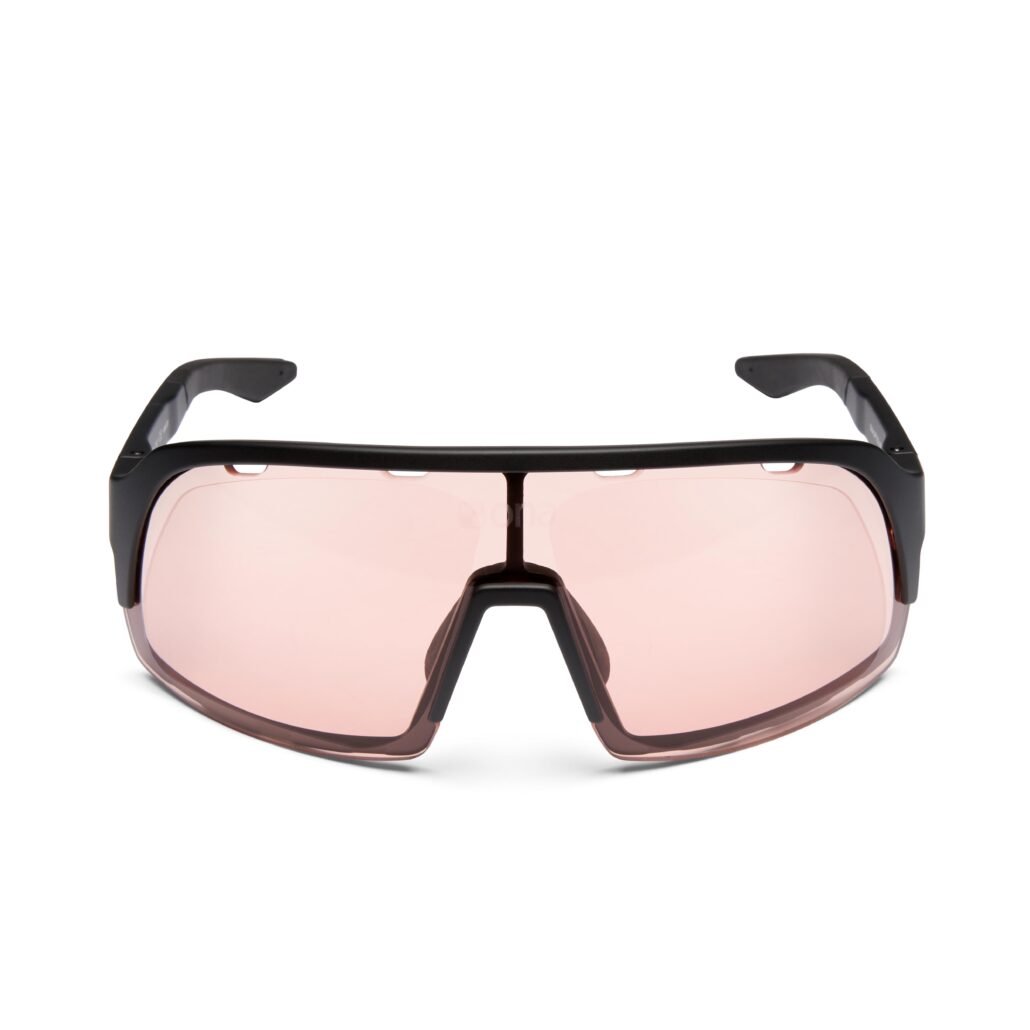
The HPA’s 2026 rules require eye protection for all players. The wording in the players’ equipment section is that all players are required to use eye protection, which can be satisfied by sports glasses, goggles or a face guard. The significance is in the verb. The previous edition listed goggles alongside elbow pads and gum shields as recommended; eye protection has now moved from the recommended list to the required one, while elbow pads and gum shields remain recommended. Because the HPA’s general rules apply in the arena unless a specific arena rule supersedes them, the requirement carries indoors.
The United States has taken a different position. USPA arena rules strongly encourage eye protection for all players and make it mandatory for players under the age of eighteen. An adult playing arena polo in America is not currently obliged to wear it; an adult playing under HPA rules is.
The evidence behind the change is worth understanding, because it is more persuasive than the headline suggests. A study of polo injuries published in the Postgraduate Medical Journal in 2026, drawing on 236 injured players across twenty-six English clubs between 2018 and 2024, found that eye injuries accounted for around twelve per cent of injury sites, but for roughly forty-five per cent of the cases requiring hospital treatment, more than limb injuries or other head and facial injuries. Eye injuries are not the most frequent. They are the most likely to be serious.
The HPA rule specifies the form the protection must take rather than naming a certification standard, so choose eyewear built for impact rather than for style, and if you wear a prescription, address it properly – through prescription sports frames or an insert, rather than playing without correction.
Elbow protection
Elbow pads remain recommended rather than required under HPA rules, but the arena is the format in which most players decide they want them. The enclosed space produces more ride-offs, more hooking and more incidental contact with boards and other players than grass polo does, and the elbow is exposed in all three.
For winter arena play, a pad that washes easily matters more than you might expect: sand and damp are constant, and kit that is awkward to clean tends not to get cleaned.
Whites, practice pants and what people actually wear
Tournament and match play requires whites under both governing bodies, the USPA arena rules are explicit that players shall wear white pants or breeches. That does not change indoors.
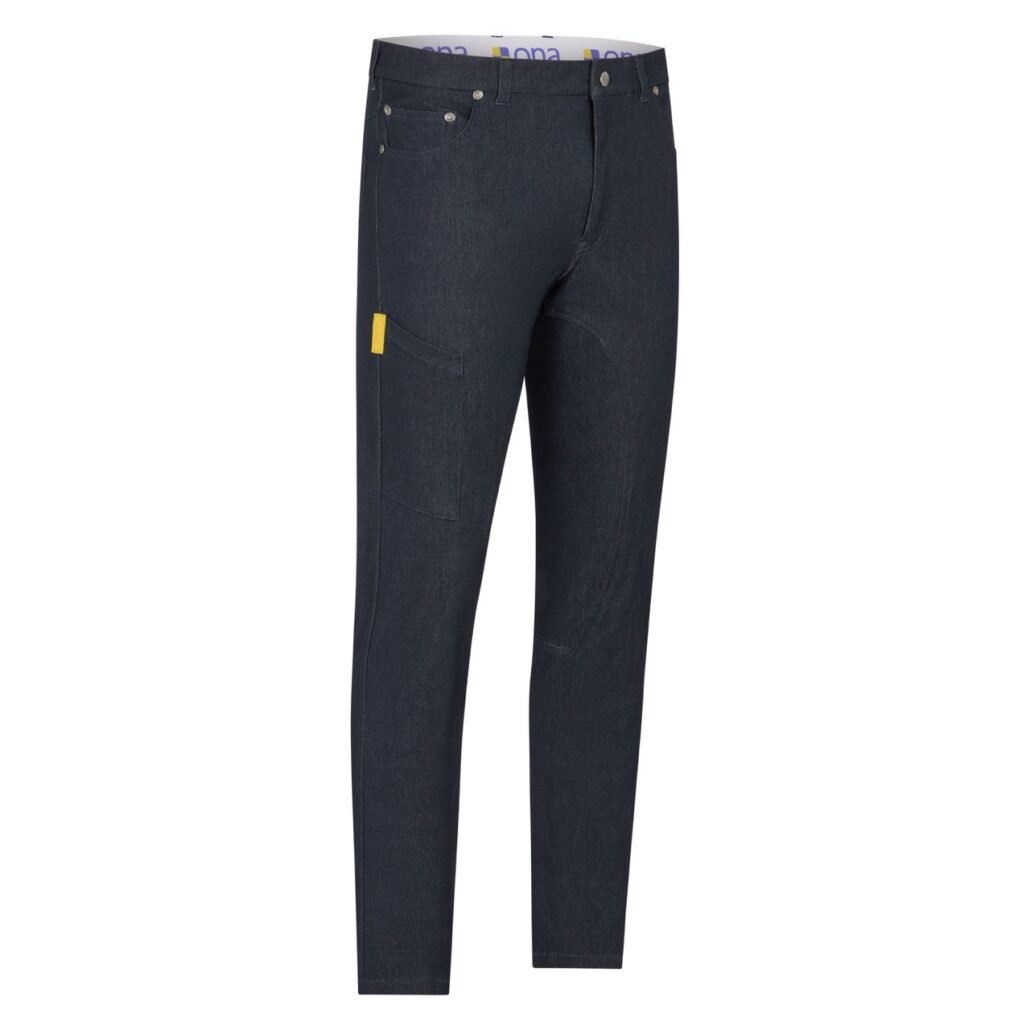
Club and practice chukkas are another matter. Arena footing is sand, the British arena season is wet, and darker practice pants in navy or black are the pragmatic choice for anything short of a match. Most players who play through a winter own both, and use whites for tournaments and practice pants for everything else.
Layering for a winter season
This is the change most new arena players underestimate. Grass polo is played in British summer; arena polo is played in a cold building, or an open-sided one, between November and March.
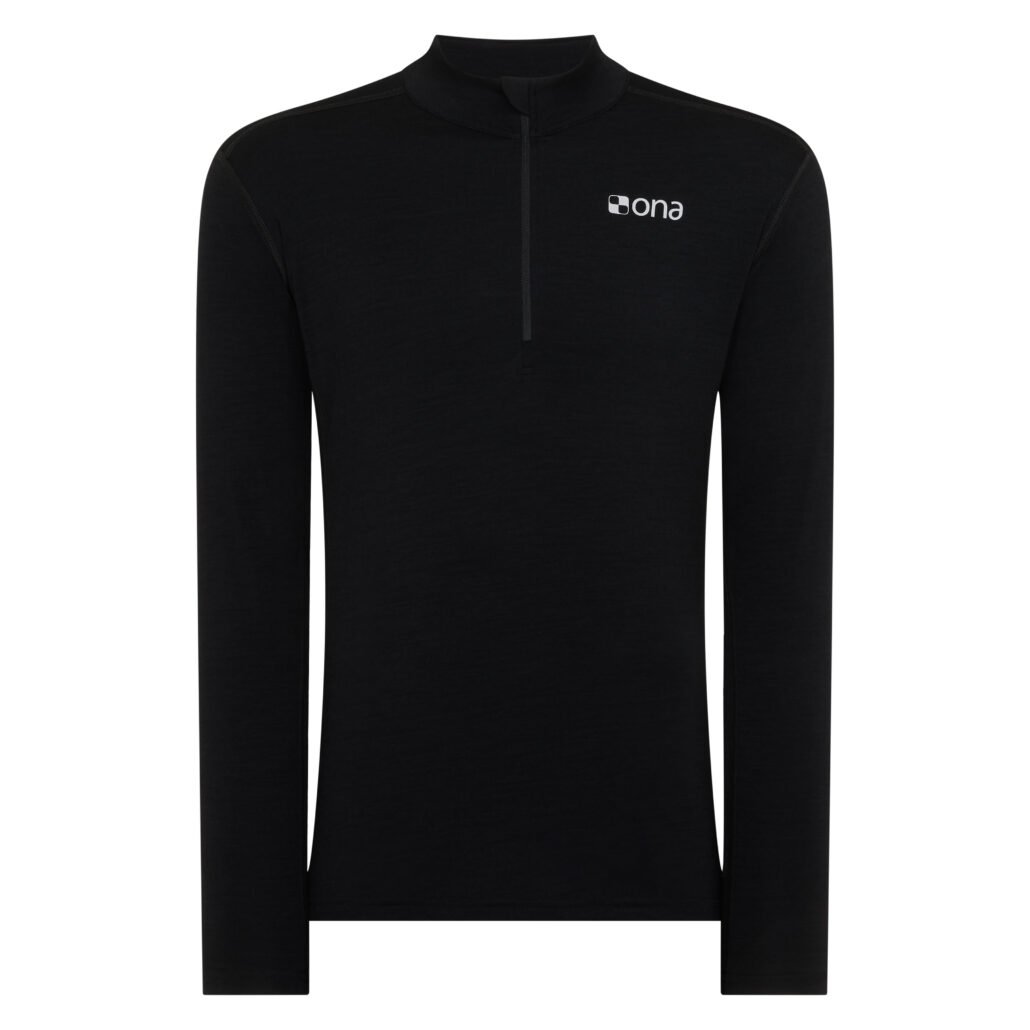
The demand it creates is specific. You produce a great deal of heat during a chukka and then stand still in the cold between them, which is exactly the pattern that leaves a rider soaked and then chilled. A base layer that manages moisture, with a mid-layer that can be removed to play and put back on immediately afterwards, solves more of the winter problem than any single warm garment will.
Gloves
Cold, damp conditions change what a glove has to do. Wet reins and a damp mallet grip make grip performance the priority in a way that a dry August afternoon never does, and cold hands lose fine control before anything else in the body does.
If you play through a British arena season with a glove chosen for summer grass, you will notice. All-weather and grip-enhanced constructions exist precisely for these months.
Saddles, tack and ponies
Arena play does not call for a different type of saddle. Tack must be arena-legal, and the spur prohibition noted above applies, but a saddle that fits your pony and suits your seat on grass will do the same job indoors.
The ponies themselves are a more interesting question. There is no arena breed – most polo ponies are Thoroughbreds or Thoroughbred crosses, typically standing around 15.1 hands, the old 14.2 height limit having been abolished in 1919. But the arena rewards a different profile: acceleration over a few strides, quick stops and tight turning rather than sustained flat-out speed. It also requires fewer horses, which is one reason the format is used to bring on youngsters and to make the sport accessible.
Why Arena Polo is the best way into the sport
If you are considering taking up polo, the arena is almost certainly where you should start, and the reasons are practical rather than sentimental.
You need fewer horses. A grass chukka at any pace demands a string; arena polo can be played on one or two, which removes the largest single cost barrier in the sport. The space is smaller, so you touch the ball far more often per chukka and improve faster. The inflated ball is easier to strike than the hard grass ball, which shortens the frustrating early phase considerably. And because the arena format concentrates hooking, riding off and positioning into a confined space, the skills that take longest to learn on grass are the ones you practise most.
There is a further advantage that rarely gets mentioned: the winter season means lessons and club chukkas are available in months when grass clubs are closed. A beginner who starts in November has learned a great deal by the time the grass season opens in May.
“If somebody tells me they want to learn polo, I send them to an arena in November. They will hit the ball ten times as often, they will need one horse instead of four, and by May they will actually be able to play. Starting on grass in the summer sounds more glamorous and takes twice as long.” – Alejandra Falkinhoff, CEO, Ona Polo
The instinct to treat arena polo as grass polo’s understudy does the format a disservice. It has its own rules, its own handicaps, its own championships and its own skills – reading a rebound off the boards is not a lesser version of anything. In Britain it carries the competitive calendar through five months of the year, and in the United States it is where most players learn the game in the first place.
For a player moving indoors for the winter, the adjustments are manageable and mostly predictable. Three players instead of four. A ball that behaves differently. Shorter penalty distances and a handicap that is not the one on your outdoor card. Spurs out of the bag, knee protection in it, and – under HPA rules this season – eye protection no longer a matter of personal judgement.
The rest is what winter always demands of riders: kit that copes with cold, damp and sand, and the sense to layer properly for a sport that alternates between full effort and standing still in an unheated building. Get that right and the arena season is not the wait until May. It is half the year of polo you would otherwise not be playing.


Frequently asked questions
How many players are in an arena polo team?
Three. Arena polo is played three-a-side, compared with four-a-side in grass polo. The reduction reflects the size of the playing area: an arena is a fraction of the area of a grass field, and a fourth rider per side would make the space unsafe.
How big is an arena polo field?
The USPA describes a playing area of 300 feet long by 150 feet wide as ideal, and the HPA gives approximately the same dimensions. That is equivalent to 100 by 50 yards. A full-size grass field, by comparison, is up to 300 by 200 yards – note the change of unit from feet to yards, which is a common source of confusion.
What is the difference between arena polo and outdoor polo?
Arena polo is played three-a-side in an enclosed, boarded arena of about 300 by 150 feet with an inflated leather ball; the boards stay in play and the ball rebounds off them. Grass polo is played four-a-side on a field of up to 300 by 200 yards with a small hard ball. Arena matches change ends after each chukka rather than after every goal, penalty distances are shorter, arena goals are height-limited, and players carry a separate arena handicap.
What is the arena polo ball made of?
It is an inflated leather ball. USPA rules specify a circumference between 12.5 and 15 inches and a weight between 170 and 182 grams, roughly the size of a small football. The grass ball is a hard composite sphere of 3 to 3.5 inches in diameter weighing 120 to 135 grams.
How many chukkas are there in arena polo?
An arena match is usually four chukkas. Grass polo under HPA rules runs to between four and six, each a maximum of seven and a half minutes. Exact arena chukka timing varies between governing bodies and tournaments, so check the conditions of any competition you enter.
Is protective eyewear mandatory in polo?
Under the HPA’s 2026 rules, yes, all players are required to use eye protection, which may take the form of sports glasses, goggles or a face guard. This is a change from the previous edition, in which eye protection was recommended rather than required. The USPA position differs: eye protection is strongly encouraged for all players and mandatory for those under eighteen.
Do you wear whites for arena polo?
For tournament and match play, yes, USPA arena rules require white pants or breeches, and the same convention applies under the HPA. For club chukkas and practice, darker practice pants are the norm, because arena footing is sand and the winter season is wet.
Is arena polo good for beginners?
It is generally the best route into the sport. It requires fewer horses, which removes the largest cost barrier; the smaller space means far more ball contact per chukka; the inflated ball is easier to strike than the hard grass ball; and because the season runs through the winter, lessons are available when grass clubs are closed.
Do arena and grass polo use the same handicap?
No. Arena handicaps are maintained separately from outdoor handicaps and a player may hold different ratings in each. The HPA notes that an arena handicap is adjusted from the outdoor handicap, with a standard adjustment of one goal higher, subject to variation by the Arena Handicap Committee.