
Kit rarely fails on the field. It fails in a dark corner of a tack room between October and April, while nobody is looking.
A saddle put away damp develops mould across the panels. Gloves dried on a radiator crack. Whites stored in a plastic garment bag come out faintly yellow. A merino base layer folded away with a season’s sweat still in it becomes an invitation to clothes moths. None of this happens because the equipment was poor. It happens because the last thirty minutes of the season were spent unloading the car rather than putting kit away properly.
This guide covers that thirty minutes, and what it should contain. It is deliberately about storage rather than routine cleaning, the day-to-day washing and conditioning instructions for each Ona product live on our product care page, and this article assumes you already follow them. What follows is the additional layer of thinking that applies when kit is going to sit untouched for months: the humidity, the pests, the slow chemistry of oxidation, and the specific ways each material in a polo kit bag degrades when it is left alone.
“We see more equipment ruined between seasons than during them. Somebody plays their last chukka, throws everything in the boot, and opens the bag again six months later. The damage was not done on the field; it was done in the dark.” – Alejandra Falkinhoff, CEO, Ona Polo
First: When is your end of season?
“Storing kit for winter” means different months in different places, and for a good number of players it does not apply at all.
In the United Kingdom, the grass season runs roughly from May to September, with the major tournaments falling between June and August. Grass kit typically comes off the field in September or October. But the arena season begins as the grass season ends and runs through to March, which means a large part of a British player’s kit is not being stored at all – it is changing use. What actually goes into storage is the surplus: spare whites, the saddles not in rotation, warm-weather layers, and anything specific to grass play.
In the United States the picture inverts depending on latitude. Northern clubs play through the summer and pack away for a genuine winter layup. In Florida, the high-goal season runs from late December through to the start of May, so January is peak season rather than storage season, and the equivalent layup happens in late spring.
The useful framing, then, is not the calendar month. It is the question: which items will sit untouched for three months or more? Those are the ones this guide is about. Anything in continuous rotation just needs the normal cleaning routine.
The pre-storage sequence
Order matters here, and the most common mistake is skipping straight to step four. Kit put away dirty degrades faster than kit put away worn.
- Empty and sort. Take everything out of the kit bag and the car. Separate what is going into storage from what stays in rotation for the arena season.
- Clean everything, following the normal care instructions for each item. Nothing goes into storage soiled, sweat, body oils, grass and mud all continue to work on the material while it sits.
- Dry completely, at room temperature, away from direct heat and sunlight. This is the step most often rushed. Residual moisture is what causes mould, and leather in particular can feel dry on the surface while still holding water in the fibres.
- Condition leather lightly, once it is fully dry, not before, and not heavily.
- Inspect and repair. Check stitching, zips, buckles, billets and seams now, while there is a whole off-season to get something mended. A loose stitch in September is a repair; the same stitch in April is a cancelled match.
- Store in the right environment, in breathable containers, off the floor.
- Check once mid-season. Fifteen minutes in January will catch a humidity problem before it becomes a write-off.
Leather: Saddles and Gloves leather: Saddles, bridles, boots and gloves
Leather is the material with the most to lose over a long layup, because it degrades in two opposite directions and the conditions that prevent one encourage the other.
That applies to everything in the kit made of hide, not only the saddle. Bridles girths, stirrup leathers and the rest of the saddle accessories, riding boots and the leather facings of kneepads all sit in the same tack room, under the same conditions, and all of them fail in the same two directions.
“The instinct with leather is always to feed it more, and it is usually the wrong instinct. A saddle going into storage wants a light dressing and a dry room, not a heavy one. Grease and damp together are what you are trying to avoid, and generosity with the conditioner gets you both.” – Alejandra Falkinhoff, CEO, Ona Polo
How leather fails in storage
Too dry and leather loses moisture and fats, embrittles and cracks, conservation guidance puts the danger threshold below around 40% relative humidity. Too damp and you get mould: above roughly 65% relative humidity, mould growth on leather becomes likely, and the higher the humidity the faster the outbreak. Heat accelerates both.
There is a further trap. Mould feeds on the oils and greases used to condition leather, so a heavily oiled saddle stored in a damp tack room is not protected, it is provisioned. This is the single most counter-intuitive point in leather storage, and it is why the pre-storage conditioning step should be light rather than generous.
Cleaning and conditioning before a layup
Strip the saddle down. Remove the girth, run the stirrups up or take the leathers off entirely, and take off any numnah or pad, do not store a pad under the saddle, where it will hold moisture against the panels and compress unevenly.
Clean the leather thoroughly, then let it dry naturally, away from any heat source. Only once it is genuinely dry should you condition, and the guiding principle for storage is frequent light feeding rather than one heavy one. Over-conditioning leaves leather greasy, and both the stitching and the leather fibres deteriorate as a result. For a garment or a saddle heading into months of stillness, use a dedicated leather conditioner rather than a household oil: food oils can oxidise and turn rancid over a long storage period, which is a problem you will only discover in April.
Storing a saddle
Support the tree properly. A saddle should sit on a rack or pole broad enough to carry it through the gullet; a narrow bar or a single pommel hook concentrates pressure and can leave permanent indentations in the flocking. Store it off the floor, away from exterior walls, and out of direct sunlight.
Cover it with something breathable, a proper saddle cover or a cotton sheet. Never a plastic bag, a bin liner or an airtight container: they trap the small amount of moisture inevitably present and turn the cover into a humidity chamber. If the saddle is valuable, and a made-to-order saddle usually is, the honest advice is to store it in the house rather than the tack room. A spare room at a stable temperature will do more for it than any product you can buy.
Bridles and saddle accessories
A bridle carries the same risks as a saddle in a thinner, more fragile form. The leather embrittles faster in a dry room, and the buckles, bit rings and stud fastenings hold sweat and saliva salts that corrode metal and rot the stitching around them.
Take the bridle apart before it goes away: undo the cheekpieces, remove the bit, and separate the reins and the noseband. Clean each piece, paying particular attention to the folds behind the buckles where dirt collects, then let everything dry naturally and condition lightly, exactly as with the saddle. Store the pieces on a wide bridle rack or flat in a breathable bag, never coiled tightly around a narrow hook, which bends the headpiece over months and leaves a crease that does not come out.
The same routine covers the rest of the saddle accessories: girths, stirrup leathers, breastplates, martingale, reins and any other leather straps. Girths concentrate more sweat than anything else on the tack, so clean them thoroughly and dry them flat. Take the stirrup leathers off the saddle, clean them and store them flat rather than folded, because a fold left for six months becomes a weak point. Clean the metalwork separately, dry it completely, and store it away from the leather so that no moisture sits against the hide.
Leather gloves
Gloves absorb more sweat than any other item in a polo kit bag, and sweat leaves salts behind. Those salts draw moisture out of the hide and attack the stitching, which is why gloves that were merely dirty in September are stiff and split in April.
Ona’s glove care guidance is to wash them gently in lukewarm water with a mild detergent or soap flakes, rinse thoroughly, squeeze the water out from the fingers downwards, pull them gently back into shape and hang them to dry away from direct sunlight or heat. For storage the same routine applies, with two additions: wash them before they are heavily soiled rather than after, and allow considerably longer to dry than you think necessary, a full day or more.
Store gloves flat and in shape, not crushed at the bottom of a bag and not rolled. Leather takes a set, and a glove folded for six months will hold the crease.
Riding boots and kneepads
Boots are the item most often put away wet and then left standing in a corner. Sweat on the inside, mud and water on the outside, and months of stillness: that combination is where cracking across the ankle flex and mould on the calf come from.
Clean the outside, wipe the inside dry, and let them dry slowly at room temperature, never against a radiator or a heater, which cooks the leather and shrinks the lining. Once dry, condition lightly and give the leather a day to absorb it before polishing. Store them upright, with boot trees or shapers holding the shape, off the floor and in a breathable boot bag rather than plastic. A boot left slumped will hold the fold at the ankle for the rest of its life.
Kneepads combine a leather or coated outer with a foam or padded core, so they need both routines: clean and dry the outer as you would any other piece of leather, and store the pad uncompressed, with nothing stacked on top of it and nothing crushing it at the bottom of a kit bag. Everything said about protective foam later in this guide applies to their core as well.
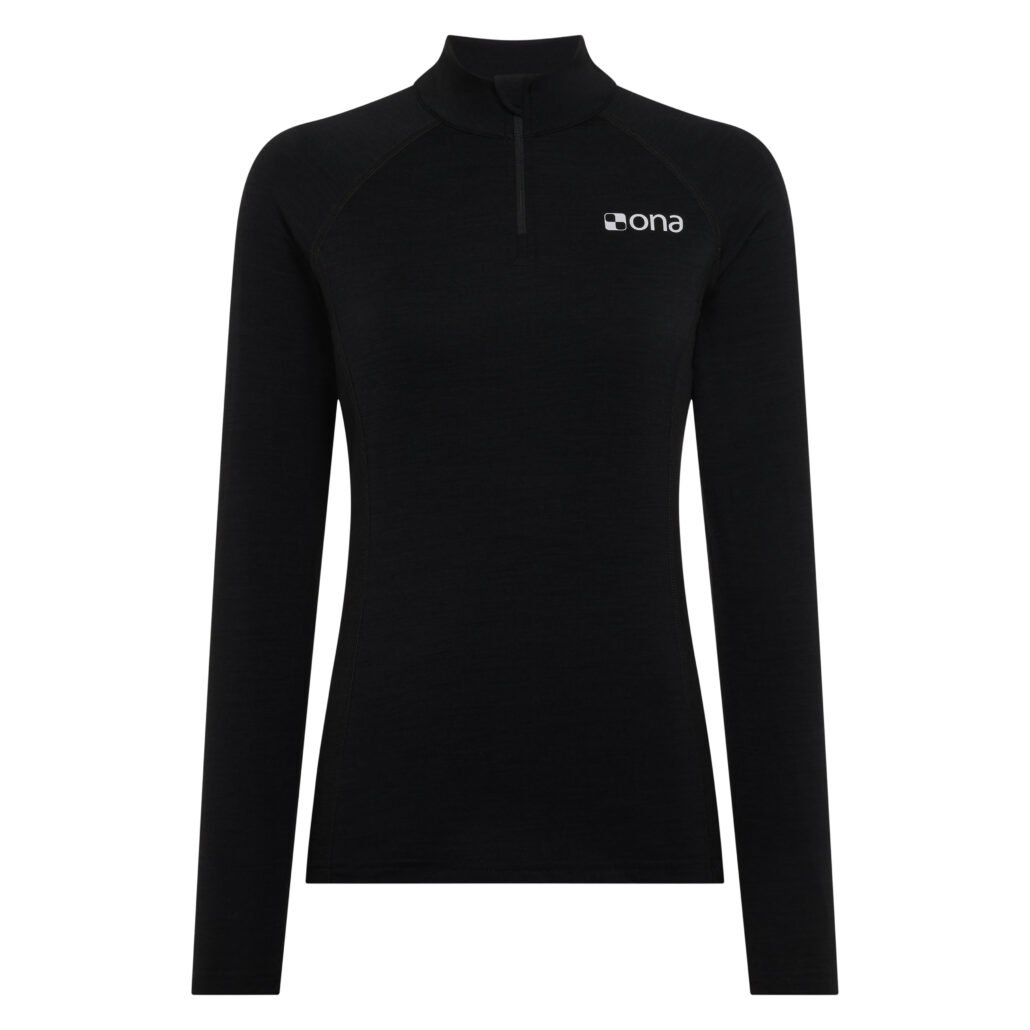
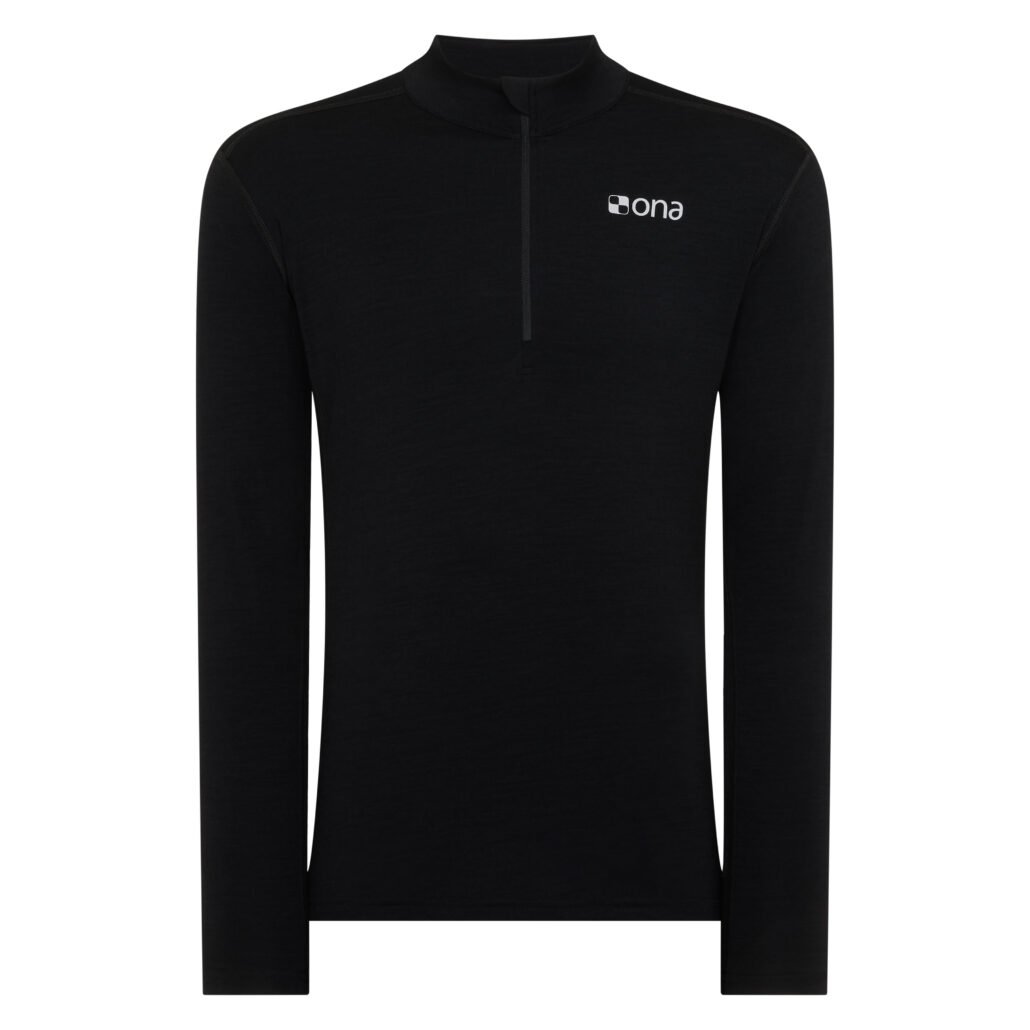

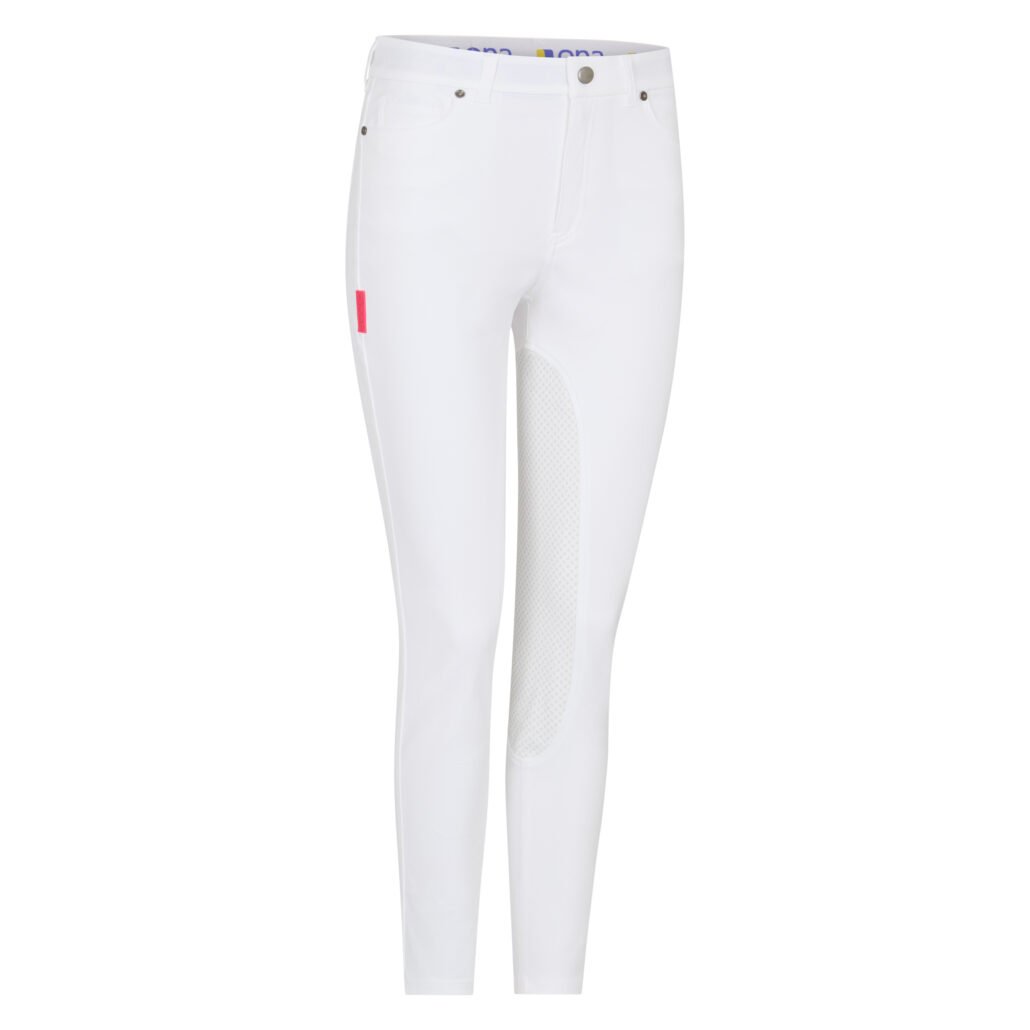


Whites and technical fabrics
Polo whites present a specific storage problem: they can go into a wardrobe clean and come out yellow.
The yellowing is oxidation. Residual body oils, sweat and grass tannins that survived the wash continue to react over months, and the discolouration typically appears first at the collar, the waistband and under the arms, exactly where the residue was heaviest. The implication is that whites need to be genuinely clean before storage, not merely washed.
Two rules matter more than any product. First, heat sets stains: a stained garment run through a hot wash or a tumble dryer will keep the stain permanently, which is one reason Ona’s guidance for whites is to hang them to dry and not to use a tumble drier. Second, avoid bleach and whitening agents on technical performance fabric, they can damage the fibres and, over time, contribute to yellowing rather than preventing it.
For storage itself: completely dry, in a breathable cotton garment bag or an open shelf, away from light and heat, and never in a plastic dry-cleaning bag. Plastic traps moisture and accelerates exactly the process you are trying to prevent. Keep whites away from coloured items.
Merino Base Layers and the moth problem
Wool is the one material in a polo kit bag that something actively wants to eat.
“Nobody expects to lose a base layer to moths until it happens once, and then they never forget it. The frustrating part is how avoidable it is. Wash it before you put it away and you have done ninety per cent of the work.” – Alejandra Falkinhoff, CEO, Ona Polo
What you are actually protecting against
The culprit is the webbing clothes moth, whose larvae feed on keratin – the protein in wool, silk, fur and feathers. The adult moths do no damage at all; the larvae do all of it, and a single female can lay several hundred eggs. Larvae will not normally touch synthetic fibre, but they will feed on a synthetic garment that is soiled with sweat and skin cells.
That last point is the whole strategy. Moths are drawn to soiled protein fibre far more than clean, which makes washing before storage the single most effective protection available – more effective than any deterrent you can add afterwards.
Storing merino correctly
- Wash before storage, without exception. Follow the care instructions for your specific garment, superwash merino goes into a 30°C wool cycle, while non-superwash needs a mesh bag or a hand wash.
- Dry completely and store fully dry. Damp wool in a sealed container is a mould problem waiting to happen.
- Fold, do not hang. Knitted wool stretches under its own weight over months on a hanger, and the shoulders never fully recover.
- Store in breathable containers, cotton bags, a clean drawer, or a lidded box. Cedar and lavender are traditional deterrents and are worth using, but treat them as a deterrent rather than a treatment: they discourage adults, they do not kill eggs already present.
- Do not vacuum-seal. Compression crushes the crimp that gives merino its loft and insulating ability, and it stresses the elastane content. Wool needs to breathe.
- Inspect once mid-season. Pheromone traps are useful for monitoring, they tell you whether you have a problem before the damage is visible.
Elastane and technical synthetics
The stretch content in base layers, whites and practice pants also ages. Elastane is degraded by heat, chlorine, ultraviolet light and, relevantly for storage, residual body oils, which keep working on the fibre while the garment sits. It is another argument for washing before storage rather than after.
Fabric conditioner deserves a specific warning. It leaves a residue that both degrades elastane and blocks the moisture management you paid for, which is why Ona’s care guidance for base layers is explicit about not using it. Store technical garments clean, cool, dark and loosely folded rather than tightly compressed.
Elbow pads and protective foam
Impact protection is the one category where storage conditions can quietly reduce performance without any visible sign.
Foam degrades with heat, compression and time. Ona elbow guards are machine washable at 30°C, and washing them in a laundry bag helps them retain their original shape; they should then be hung to dry away from direct sunlight or heat. For storage, the priority is not to crush them. Store pads flat or hung, with nothing stacked on top, and keep them out of a hot car boot or an unventilated tack room – heat and damp are the two conditions that age protective foam fastest.
It is also worth knowing that impact foam has a working life. In the wider equestrian world, certified body protectors carry a recommended service life of three to five years, and the standard field test is instructive: after a heavy impact, foam should recover its shape within about half an hour, and a dent that remains suggests that section has lost its protective properties. Elbow pads are not certified body protectors, so this is a principle rather than a specification – but the end of the season is a sensible moment to look at your pads honestly and decide whether they have another year in them.
Eyewear
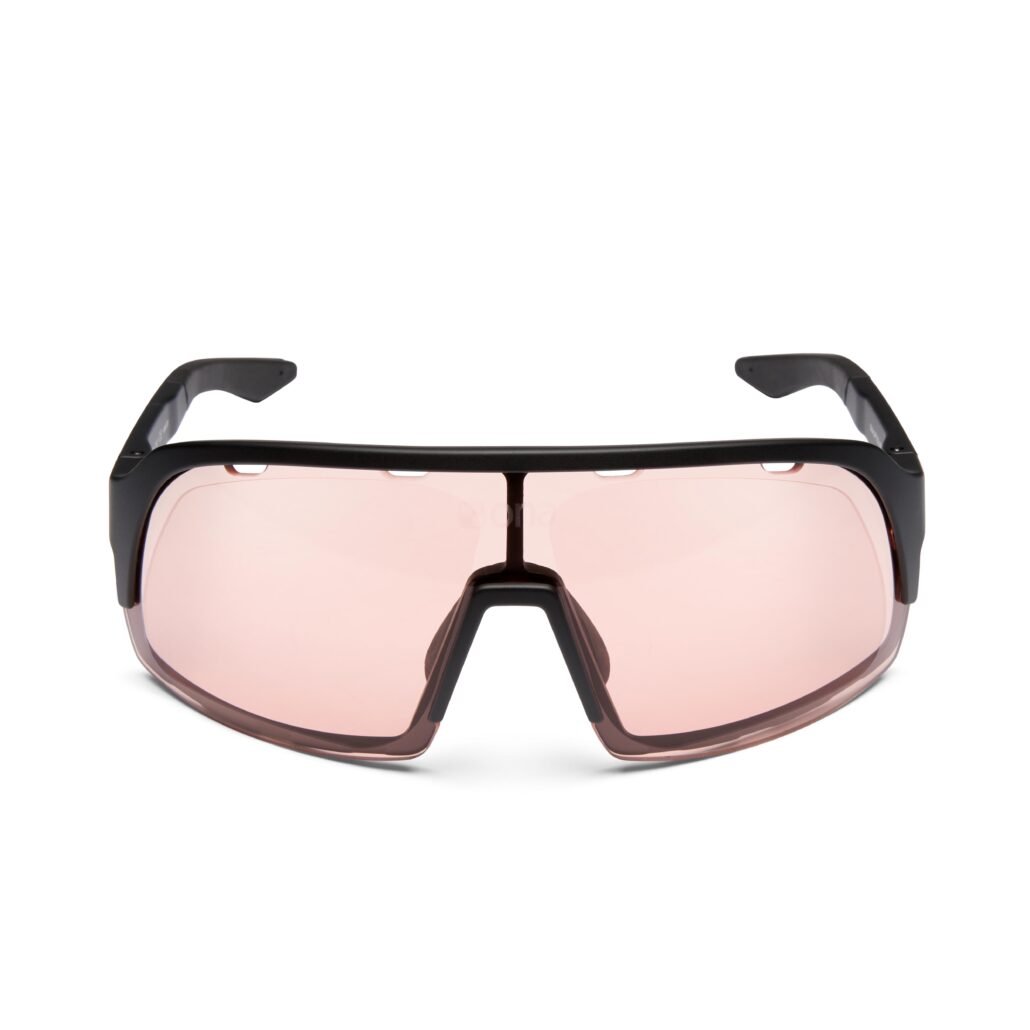
Sports eyewear is usually damaged by the cleaning, not the playing.
Coated polycarbonate lenses scratch easily, and the most common error is wiping them dry. Grit and dust sit on the lens surface, and a dry wipe drags that grit across the coating. Rinse first, then clean with a lens-safe spray or a little mild soap and a dedicated microfibre cloth. Never use paper towels, tissues or a shirt tail, wood-pulp fibres are abrasive at the scale that matters. Never use household glass cleaner, ammonia or alcohol-based products, which strip anti-reflective and mirror coatings. Prescription lenses with multiple coatings are more sensitive again.
Store eyewear in a hard case, and keep it out of heat. This is not a minor point: a car dashboard, a sunlit windowsill or the top shelf of an unventilated tack room can reach temperatures high enough to warp frames and craze lens coatings, and the damage is not reversible. Over a long off-season, a hard case in the house is the right answer.
The storage environment
Most polo kit is stored in the worst available room. A typical tack room swings between temperatures, holds damp, is poorly ventilated, collects dust and, in many yards, hosts rodents that will chew leather.
The targets below come from conservation practice rather than marketing, and they are achievable with a dehumidifier and some attention.
“The tack room is where kit goes to age. It is damp, it swings twenty degrees between afternoon and night, and there are usually mice. If a piece of equipment matters to you, take it home. It costs nothing and it is more effective than anything you can buy.” – Alejandra Falkinhoff, CEO, Ona Polo
Storage conditions by material
| Material | Target conditions | What goes wrong outside the range |
| Leather (saddles, glovessaddles, bridles, saddle accessories, boots, kneepads, gloves) | Around 45–55% RH; 18–20°C, stable; 25°C maximum | Below 40% RH: moisture and fat loss, embrittlement, cracking. Above 65% RH: mould, accelerated by any conditioning oils present |
| Wool and merino | Cool, dry, dark; breathable containers | Damp encourages mould; soiling attracts clothes moth larvae; compression crushes loft |
| Technical fabrics and elastane | Cool, dark, loosely folded | Heat and UV degrade elastane; residual body oils continue to attack fibres |
| Protective foam | Cool, uncompressed, ventilated | Heat and sustained compression reduce impact absorption |
| Eyewear | Hard case, room temperature | Heat warps frames and crazes coatings; dry wiping scratches lenses |
The shared threshold is 65% relative humidity. Below it, most materials are stable; above it, mould becomes likely across leather and textiles alike. If you store only one instrument, make it a cheap hygrometer.
Practical mitigations
- A dehumidifier with an automatic shut-off, or moisture-absorbing tubs for a small space.
- Ventilation and airflow – a sealed room holds damp; leave gaps around stored items.
- Everything off the floor and away from exterior walls, which are the coldest and dampest surfaces in the room.
- Rodent-proofing: sealed hard containers for anything leather, and no feed stored alongside kit.
- Breathable covers throughout. If it is airtight, it is wrong.
- For the most valuable items – a made-to-order saddle, leather gloves, eyewear – store them in the house. It is free, and it beats every other intervention.
If something has already gone wrong
Two problems account for most off-season losses, and both are recoverable if caught.
Mould on leather
Take the item outside before you touch it – brushing mould indoors distributes spores across everything else in the room. Brush the growth off dry, then wipe the surface with a solution of white vinegar and water, roughly one to one, testing first on an inconspicuous area. Let the leather dry slowly and naturally, well away from heat or direct sun.
Once dry, clean it properly and condition lightly. Use a soap without glycerine for this particular job: glycerine residue can feed a fresh outbreak. Dispose of or hot-wash any cloths you used. Then fix the cause – if the humidity that produced the mould is unchanged, it will simply return.
Yellowed whites
Yellowing from stored body oils responds better to patient treatment than to aggressive chemistry. Resist the impulse to reach for chlorine bleach, which can worsen the discolouration on technical fabric and damage the fibres. A gentle re-wash, an oxygen-based approach, or professional cleaning are all better bets, and it is worth accepting that heavily set yellowing may not fully reverse.
The lesson is preventative. Whites go into storage genuinely clean, genuinely dry, and in something that breathes.
Bringing kit back
Do not open the boxes the week the season starts. Give yourself a fortnight.
Take everything out and inspect it in daylight. Check leather for stiffness, surface mould and stitching integrity, and give saddles and gloves a light conditioning to bring them back before they are asked to flex. Air textiles for a day or two – anything stored for months carries a stale note that a single airing removes. Try whites and base layers on, because bodies change over a winter and a base layer that has stretched or shrunk is better discovered at home. Check elbow pad foam for dents that have not recovered. Clean eyewear properly and check the lenses against the light for coating damage.
Anything that needs repair, send it now. A fortnight is enough time for a saddler; the morning of the first chukka is not.
“Open everything a fortnight before you need it, not the night before. Every saddler and every repair service in the country is busy the week the season starts, and the person who checked in March is already back on a pony.” – Alejandra Falkinhoff, CEO, Ona Polo
Everything above reduces to three ideas. Store it clean, because sweat, oils and grass keep working on a material long after the last chukka. Store it dry and let it breathe, because damp and airtight containers are what produce mould, and because the 65% humidity threshold applies to leather and textiles alike. And store it in a stable environment, which for the pieces that matter most usually means the house rather than the yard.
The rest is inspection. An off-season is several months of doing nothing, which is exactly the amount of time in which a loose stitch, a dented pad or a rising humidity reading can be caught and fixed without costing anybody a match. Fifteen minutes in January is the cheapest insurance in the sport.
Good kit is expensive because it is made to last a long time under hard use. What it is not made to survive is neglect during the months when nothing is being asked of it at all.
Ona Polo makes equipment for players who ride hard across a full season, polo gloves, whites and practice pants, base layers, polo shirts, elbow protection, eyewear and made-to-order saddles. For the routine cleaning and care instructions that apply to each of them through the year, see our product care guide; for the details of any individual product, the specifications and care notes are published on every product page. Kit that is cleaned properly, stored properly and inspected once a season will still be doing its job several years from now.



Frequently asked questions
What is the best way to store a saddle over the off-season?
Clean it, let it dry fully, condition lightly, then store it on a rack broad enough to support the tree through the gullet, off the floor, under a breathable cover. Aim for around 45–55% relative humidity and a stable temperature between 18 and 20°C. Never use a plastic bag or an airtight container, and never store a pad or numnah underneath it.
How do I stop tack going mouldy in storage?
Keep relative humidity below 65%, which is the threshold above which mould growth on leather becomes likely. Store leather dry, off the floor, under breathable covers, in a ventilated space, and condition lightly rather than heavily, mould feeds on the oils and greases used to condition leather, so a heavily oiled saddle in a damp room is more vulnerable, not less.
Should I oil my saddle before storing it?
Condition it lightly rather than oiling it heavily. Frequent light feeding is better than one generous application, because over-conditioned leather turns greasy and both the stitching and the leather fibres deteriorate. For a long layup specifically, use a dedicated leather conditioner rather than a household or food oil, which can oxidise over several months.
How do I protect merino base layers from moths?
Wash them before storage. Clothes moth larvae feed on keratin and are drawn to soiled wool far more than clean wool, so cleaning is the most effective single measure. Then store them folded rather than hung, fully dry, in a breathable container. Cedar and lavender help deter adult moths but will not kill eggs already present.
Can I vacuum-seal wool or technical kit for storage?
It is not recommended for long-term storage. Vacuum compression crushes the natural crimp that gives merino its loft and insulating ability, and prolonged compression stresses the elastane in technical fabrics. Breathable containers are the better choice.
Why do stored whites turn yellow, and can it be reversed?
Yellowing is oxidation of residual body oils, sweat and tannins that survived the wash, continuing to react over months, which is why it appears first at the collar and waistband. Prevention is washing thoroughly and storing dry in something breathable. Light yellowing often responds to a gentle re-wash or professional cleaning; heavily set discolouration may not fully reverse, and chlorine bleach usually makes it worse on technical fabric.
Do elbow pads expire?
The foam does age. Certified body protectors in the wider equestrian world carry a recommended service life of three to five years, and foam that stays dented after an impact rather than recovering its shape has likely lost protective capacity in that area. Elbow pads are not certified body protectors, so treat this as a guiding principle: heat, damp and sustained compression age foam, and the end of the season is a good moment to assess honestly.
How should I store riding boots and a bridle over the off-season?
Clean both inside and out, then dry them slowly at room temperature and well away from any heat source, and condition the leather lightly once it is completely dry. Store boots upright with boot trees or shapers so the ankle does not crease, off the floor and in a breathable bag rather than plastic. Take the bridle apart, store the pieces on a wide rack or flat in a breathable bag rather than coiled around a hook, and keep the metalwork clean, dry and stored separately. Leather put away damp is the most common source of mould in a tack room.
Where is the best place to store polo kit?
Somewhere with a stable temperature and moderate humidity, which, for most players, means the house rather than the tack room. Tack rooms swing in temperature, hold damp, ventilate poorly and often host rodents. If kit must live in the tack room, use a dehumidifier, store everything off the floor and away from exterior walls, and check it once mid-season.