
Polo is, by most measures, the oldest organised team sport in recorded history. Its roots reach back more than two and a half thousand years to the cavalry training grounds of Persia; its modern form was codified on the polo fields of colonial India and at London’s Hurlingham Club in 1875; and its present-day professional circuit is dominated by players from Argentina who are, with little exaggeration, the finest equestrian athletes on earth.
Yet polo remains poorly understood outside its own world. To a first-time spectator it looks like controlled chaos – eight horses galloping across a field the size of nine football pitches, riders swinging long-handled mallets at a white ball. This guide explains everything: the history, the rules, the equipment every player carries, and how anyone can take their first lesson.
1. What is Polo?
Polo is a mounted team sport in which two teams of four players use long-handled mallets to drive a small ball through the opposing team’s goal. A full-size outdoor field measures 300 × 160 yards – roughly the area of nine American football fields. A match is divided into periods of 7 minutes called chukkas. The team scoring more goals wins.
What makes polo unlike any other team sport is the relationship between rider and horse. The pony is not merely transport – it is a co-athlete, chosen and trained for speed, agility, courage and an instinct to chase the ball. The horse does between 60 and 80 per cent of the work in any given chukka. The best polo players describe the pony as an extension of the body, as natural to ride as walking.
“People come to polo for the speed, but they stay for the partnership with the horse. No other team sport asks you to make split-second decisions in sync with a living athlete moving at forty miles an hour — that is what makes it unlike anything else on a field.” – Alejandra Falkinhoff, CEO, Ona Polo
2. The history of Polo
Ancient origins: Persia, China and the Silk Road
Polo is arguably the oldest organised team sport in recorded history. Encyclopaedia Britannica places the earliest documented matches in Persia (modern Iran) between the 6th century BCE and the 1st century CE, where it began as a cavalry training exercise typically played by the king’s guard or other elite troops. Matches were enormous by modern standards – sometimes 100 riders a side, essentially a controlled cavalry battle.
The Persian progenitor game was called Chovgan (چوگان). A closely related game spread eastward along the Silk Road, and archaeological evidence of polo-related ceramic figurines and tomb murals is widespread in Tang Dynasty China (618–907 CE). The English word “polo” is a direct loan from pulu, the Balti and Standard Tibetan word for “ball.”
Manipur and the British discovery (1850s–1862)
Modern polo descends specifically from the Manipuri game sagol kangjei, played on the Mapal Kangjeibung ground in Imphal – the oldest extant polo ground in the world. The royal chronicle Cheitharol Kumbaba records play there from the 1st century CE.
In the 1850s, Lieutenant Joseph Ford Sherer of the Sylhet Light Infantry and Captain Robert Stewart encountered the game and are credited with the famous declaration, “We must learn the game!” They founded the Silchar Kangjei Club in 1859 – the world’s first polo club – followed by the Calcutta Polo Club in 1862, the oldest surviving polo club in the world. Sherer is rightly remembered as the father of modern polo.
England, Hurlingham and the global rulebook (1869–1875)
In June 1870, Edward “Chicken” Hartopp of the 10th Hussars organised the first match on English soil at Hounslow Heath. The pivotal codification came from Captain John Watson of the 13th Hussars, who formulated the first real rules of the game in India in the 1870s. Watson introduced the backhand shot and the discipline of the “line of the ball” that became the foundation of every modern rulebook.
The Hurlingham Polo Committee drew up the first formal English rules in 1875 at the Hurlingham Club in London. Renamed the Hurlingham Polo Association (HPA) in 1925, it remains the governing body for polo in the UK, Ireland, the UAE and more than 26 other countries. The Federation of International Polo (FIP) rules are produced jointly with the HPA, USPA (united States Polo Association) and AAP (Asociación Argentina de Polo).
The global spread (1875–1900)
Argentina: British settlers organised the first Argentine match in 1875, building on the gaucho horsemanship tradition. The Asociación Argentina de Polo has run the Argentine Open at Palermo continuously since 1893.
United States: Publisher James Gordon Bennett Jr. returned from Hurlingham in 1876 with mallets, balls and the rules, staging the first American match at Dickel’s Riding Academy, New York. The United States Polo Association (USPA) was formally constituted on 21 March 1890 – the second-oldest national sports governing body in the USA after the USTA.
Australia (1876), Ireland (1870) and Malta (1868) were among the other early adopters, all following British military and colonial networks.
Olympic polo (1900–1936)
Polo was an official Olympic sport at five Summer Games: 1900 (Paris), 1908 (London), 1920 (Antwerp), 1924 (Paris) and 1936 (Berlin). Great Britain medalled in every edition; at London 1908 all three teams were British. Argentina won gold in 1924 and 1936, the latter before a crowd of 45,000 in Berlin. The sport was removed after 1936 because of the logistical impossibility of moving 125+ horses to a single venue and the post-war mechanisation of cavalry. The IOC re-recognised polo in 1996; it returned as a demonstration event at the 2018 Buenos Aires Youth Olympics.
The Argentine era (1970s–present)
From the 1970s onward, Argentina has produced virtually every 10-goal player in the world. The Triple Crown of Tortugas, Hurlingham and the Argentine Open at Palermo is the most prestigious domestic circuit in polo. Adolfo Cambiaso (b. 1975), co-founder of La Dolfina (with Bartolomé Castagnola, in 2000), is universally regarded as the greatest player in the sport’s history. He has won the Argentine Open 19 times after the 132nd edition in December 2025. His legendary mare Cuartetera was cloned and a clone sold for a record $800,000 in 2010, reshaping how elite polo strings are produced.
3. The rules of Polo
The field
A full-size outdoor polo field is 300 × 160 yards (boarded) or 300 × 200 yards (unboarded) – roughly ten acres or nine American football fields. Two collapsible goal posts at each end stand 8 yards apart and 3 metres high. Marked lines run at 30, 40 and 60 yards from each goal.
Teams, positions and the handicap system
Each side fields four mounted players in outdoor polo, numbered 1 to 4 with distinct roles:
No. 1 – Attacker: Primary striker. Marks the opposing Back and looks for goals.
No. 2 – Secondary attacker: Often the team’s most relentless rider; charges into the play.
No. 3 – Playmaker / pivot: Usually the team’s highest-handicapped player, the tactical pivot.
No. 4 (Back) – Defender: Primary defender; responsible for clearing the ball.
Every registered player carries a handicap from −2 to 10 goals, representing their overall ability, horsemanship and the quality of their string. The team handicap is the sum of all four players. In handicap tournaments, the lower-rated team receives the difference as a goal advantage at the start (HPA formula: difference × chukkas ÷ 6).
Tournaments are classified by combined team handicap: low-goal (0–8 goals), medium-goal (10–14), high-goal (18–22+) and open (26+). A true 10-goal handicap is extraordinary – fewer than two dozen players in the world hold it at any time, the vast majority Argentine.
Chukkas and the clock
A match is divided into chukkas (US: chukkers) of 7 minutes (HPA) or 7½ minutes (USPA). Club polo typically runs 4 chukkas; medium-goal, 6; high-goal, 6 or 8. There is a 3-minute break between chukkas and a 5-minute half-time. A pony may play no more than two chukkas per match, never in consecutive periods.
The line of the ball – polo’s most important rule
There is no offside rule in polo. Instead, the game is governed by the line of the ball (LOB) – the imaginary extension of the ball’s path – and the right of way it creates. The player following the ball most closely along its line holds the right of way; opponents may only enter or cross that line safely without causing obstruction. A dangerous crossing is a foul. This is the single concept a first-time spectator most needs to understand.
“If you only learn one thing before watching your first match, learn the line of the ball. Once you can see it, the whole game opens up — the ride-offs, the fouls, the right of way all suddenly make sense. It is the single key that turns chaos into a sport you can follow.” – Alejandra Falkinhoff, CEO, Ona Polo
Legal contact: ride-offs and hooks
Ride-off: Shoulder-to-shoulder, at roughly equal speed, pushing an opponent off the line of the ball. The quintessential polo contact.
Hook: Using one’s mallet to block an opponent’s swing. Only legal when on the same side as the swing or directly behind, and never above the opponent’s shoulder height.
Sandwiching an opponent between two players is forbidden, as is any contact at a dangerous angle to horse or rider.
Penalties
| Penalty | Severity | What Happens |
| 1 | Most severe | Automatic goal awarded; no shot taken |
| 2 | Very severe | Free hit from 30 yards, undefended |
| 3 | Severe | Free hit from 40 yards, undefended |
| 4 | Moderate-severe | Free hit from 60 yards, defended (opponents 30 yards away) |
| 5a | Moderate | Free hit from the spot of the foul, opponents 30 yards away |
| 5b | Moderate | Free hit from the centre of the field |
| 6 (Safety) | Minor | Defending player hit ball over own back line: free hit opposite that point |
| 7 | Procedural | Re-take if Penalty 2–6 not executed correctly |
Officials and scoring
Every regulated match has two mounted umpires on the field and a Referee (the “third man”) seated at midfield. The mounted umpires make all calls; the third man rules only when the two umpires disagree. Two goal judges stand behind each goal. A goal is scored when the ball passes between the posts at any height. Uniquely, teams change ends after every goal – a tradition originating in colonial India to neutralise the advantage of the setting sun.
4. Polo equipment – The complete Kit
The polo pony
“Pony” is a historical misnomer. Modern polo horses typically stand 15 to 16 hands – well above the 14.2-hand pony cut-off. The term survives from a now-obsolete height restriction.
The dominant breed worldwide is the Argentine Polo Pony (Polo Argentino), a cross between the English Thoroughbred (for speed and reach) and the Argentine Criollo (for stamina, bone and calm temperament). Formally recognised in 1984, the Argentine Association of Polo Horse Breeders registers approximately 3,000 foals each year. At club level in the United States, Thoroughbred × Quarter Horse “Appendix” horses are common; Australian polo relies on the Australian Stock Horse.
A high-goal player brings up to 12 ponies to a match – one per chukka, with spares – since a pony may play no more than two chukkas per match and never in consecutive periods. At the highest level, cloning has transformed breeding: Adolfo Cambiaso rode multiple clones of his legendary mare Cuartetera in the 2016 Argentine Open final.
The polo mallet
The mallet is typically 50–53 inches (127–134 cm) long, chosen by player height, arm length and pony height.
Shaft: Traditionally manau cane (a rattan species – not hollow bamboo), carbon or glass-fibre composite (uncommon at present). Composite shafts are lighter, more consistent and more durable; cane retains a traditional feel preferred by some high-goal players.
Head: Cylindrical “cigar” shape, 9–9¼ inches long, 45 mm diameter at centre, 160–240 g. Made almost exclusively from Tipa (Tipuana tipu), an Argentine hardwood that has been the standard for more than 30 years.
Grip: Rubber-wrapped handle with a leather sling around the thumb to prevent the mallet slipping at the gallop. Four standard flex grades: whippy, medium flex, medium stiff, stiff.
The polo ball
Outdoor: Solid high-impact PVC, 3 to 3½ inches (7.6–8.9 cm) diameter, 3½–4½ oz (99–130 g), traditionally white. Plastic balls replaced bamboo-root balls in the 1970s.
Arena: Leather-covered, air-inflated, 4½ inches (approx. 11 cm) diameter, 170–182 g.
Snow polo: Larger, bright-orange, air-filled rigid ball for visibility against snow.
Player kit – item by item
| Item | Details and Requirements |
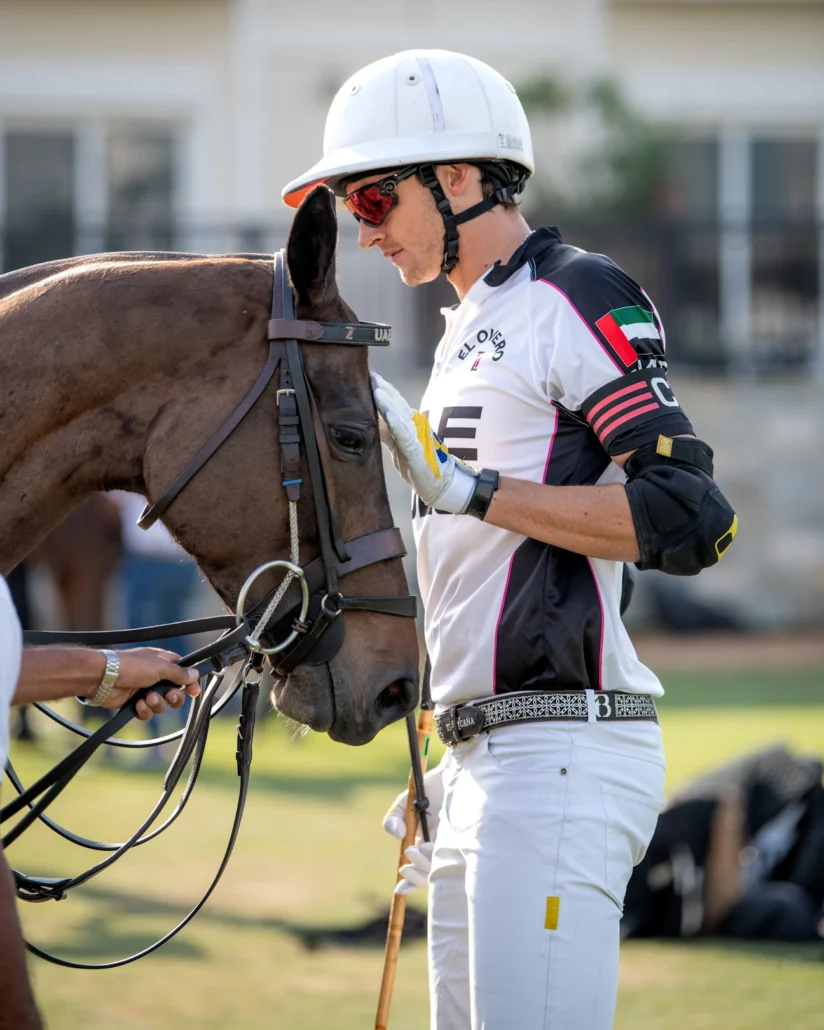
| Helmet | NOCSAE ND050 (USPA, mandatory since 1 May 2021) or PAS 015:2011 with QC mark (HPA), VG1 01.040, UTAC/CRITT or SNELL E2001. Replace every 4 years or after any significant impact. |
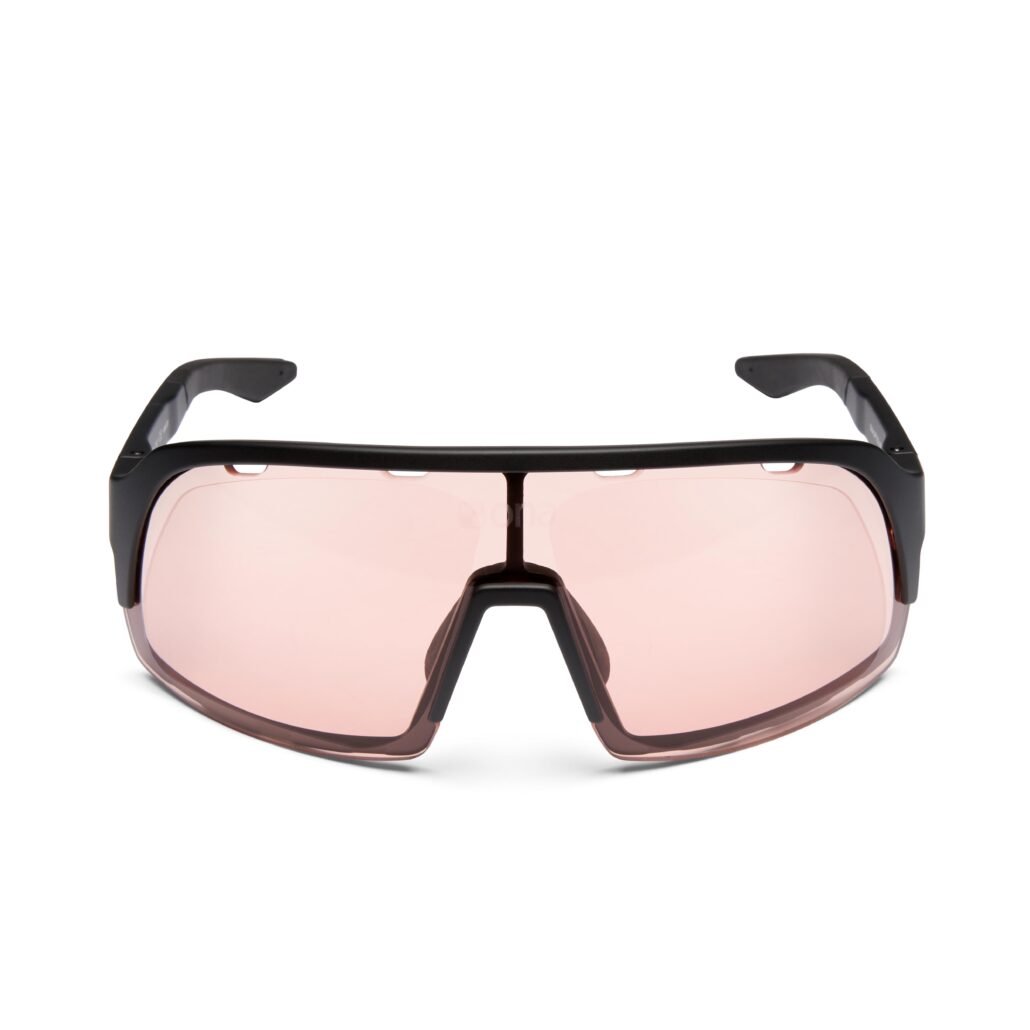
| Polo eyewear | Impact-rated, UV-protective lenses. Polycarbonate goggle or wire cage. USPA strongly recommends for every chukka. |
| Knee guards | Leather with shock absorption materials. Mandatory under HPA and USPA rules. |
| Polo boots | Knee-high, polished leather (Casablanca, Fagliano, La Martina). Stiff enough to protect shin and ankle. |
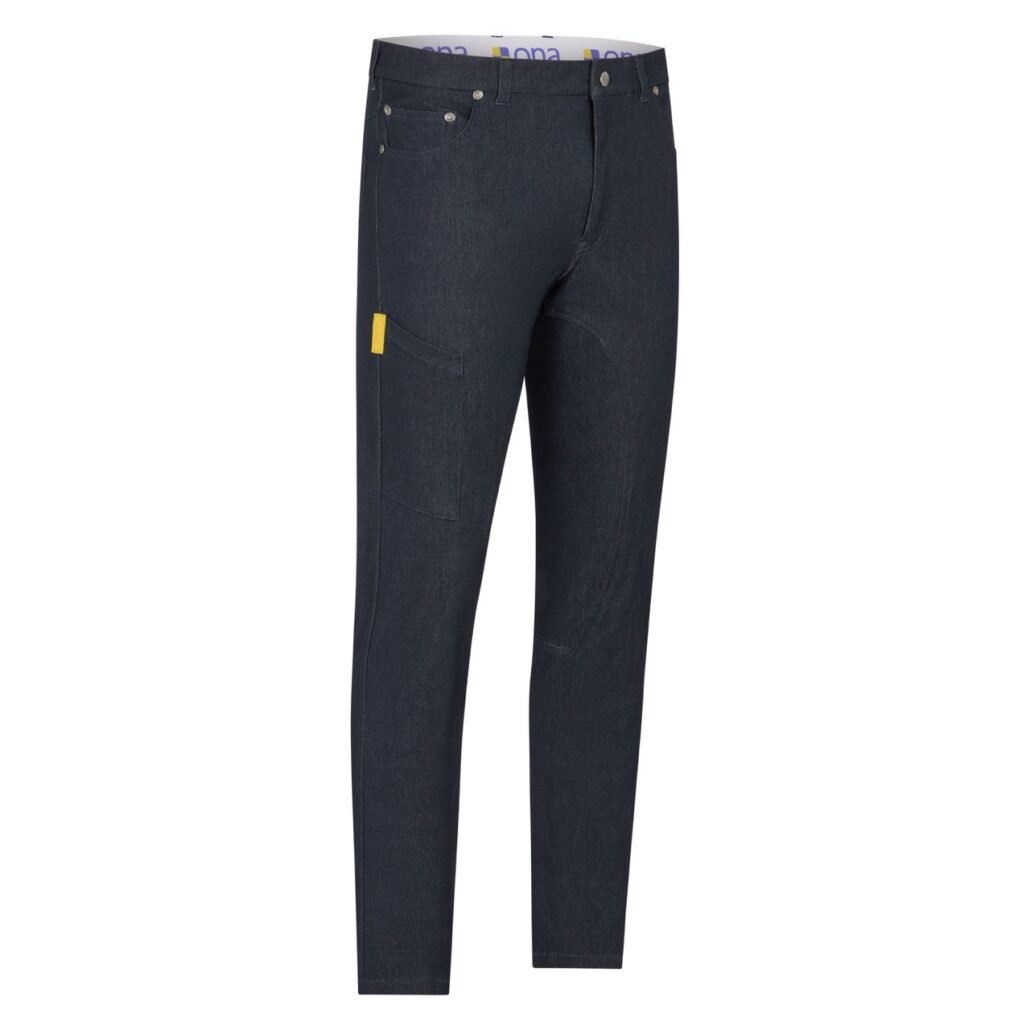
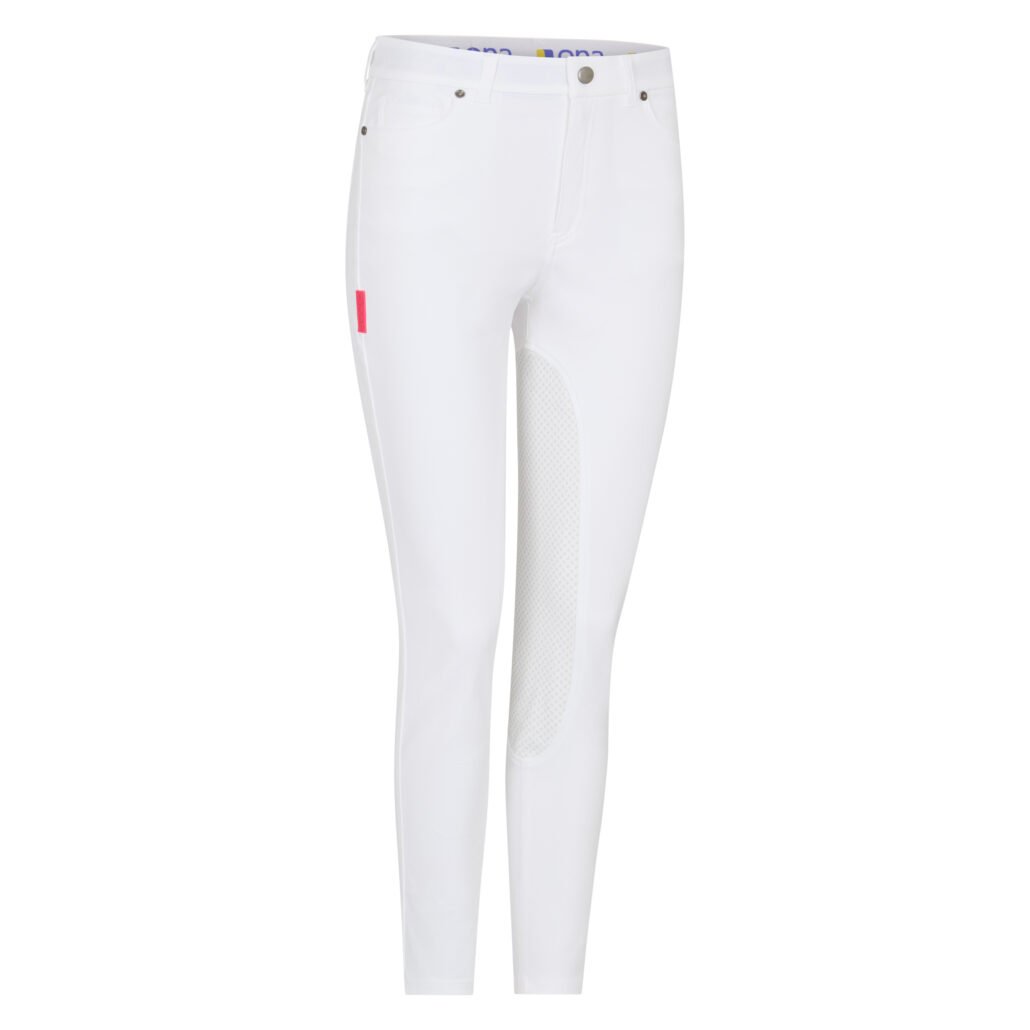
| Polo whites / trousers | White trousers required for HPA matches and USPA events. Ona’s premium models use Schoeller® softshell with GripIt® abductor panels. Dark colours for practice. |
| Jersey / shirt | Team colours with position number (1–4) on the back. |
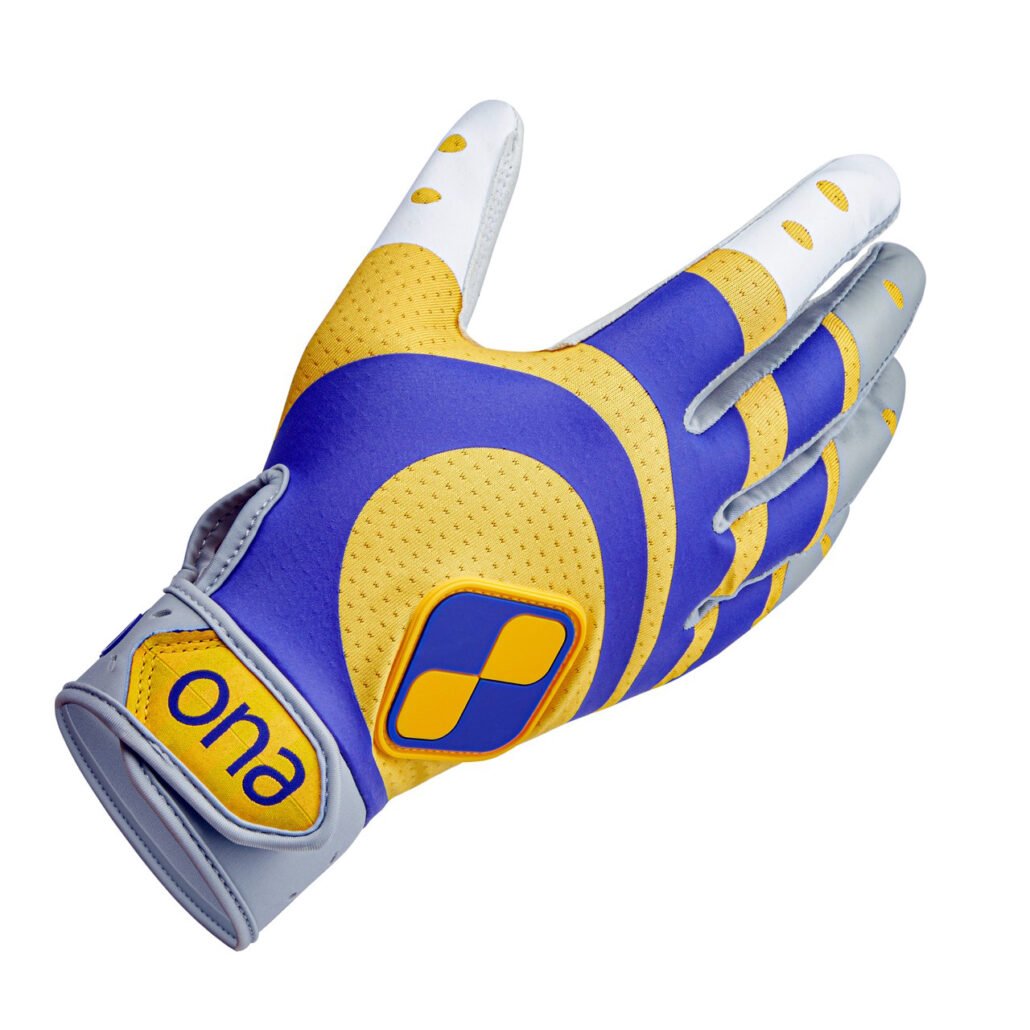
| Polo gloves | Right-hand for mallet grip; left-hand for rein control. Specifically designed for the sport. |
| Elbow guards | Essential protection in the ride-off and from mallet hooks. |
| Polo whip / crop | Short and lightweight. Never used aggressively. |
| Body protector | Optional; increasingly common at club level. |
Horse tack and pony protection
Saddle: Flat English-style polo saddle, deep-seated with forward-cut flaps and short stirrup leathers for an upright forward seat.
Bridle and bits: Double-rein Pelham or gag bits are standard – polo demands instant stopping power and fine lateral control simultaneously.
Bandages and tendon boots: All four legs wrapped in fleece polo wraps to protect against mallet strikes, ball impact and ride-off contact.
Overreach (bell) boots: Prevent the hind hoof clipping the front heel, especially on hard or frozen ground.
Martingale / breastplate: Keeps saddle position stable during sudden direction changes.
Shaved mane and wrapped tail: Prevents entanglement with the mallet shaft during the swing.


5. Variants of Polo
| Format | Key Details |
| Outdoor (grass) polo | The standard format: 4 v 4, 300 × 160 yd boarded field, 4–8 chukkas of 7 minutes. |
| Arena polo | 3 v 3 on an enclosed surface of 300 × 150 ft with 4-ft sideboards. Leather, air-inflated ball. The most accessible entry-level format; cheaper to run than outdoor polo and ideal for learning the line of the ball. |
| Snow polo | Invented by Swiss hotelier Reto Gaudenzi; first tournament on the frozen lake at St. Moritz on 26 January 1985. Bright-orange ball, studded horseshoes, 4 v 4. Major events: Snow Polo World Cup St. Moritz, Kitzbühel, Aspen St. Regis World Snow Polo Championship. |
| Beach polo | Created in Dubai in 2004. Played 3 v 3 in an enclosed sand arena. The Miami Beach Polo World Cup (founded 2005) is the world’s largest beach polo event. |
| Elephant polo | World Elephant Polo Association founded 1982 at Tiger Tops, Nepal. Ran annually until 2017, when Tiger Tops ended the event in response to animal-welfare concerns. |
| Cycle / bicycle polo | Invented by Irish cyclist Richard J. Mecredy in 1891; demonstration sport at the 1908 London Olympics. Modern hardcourt bike polo emerged in Seattle in 1998. |
| Para-polo / disability polo | No formally sanctioned Paralympic discipline exists under HPA, USPA or FEI. Polo’s historical links to disability sport trace to Dr Ludwig Guttmann’s wheelchair-polo experiments at Stoke Mandeville in the 1940s, considered a precursor to the Paralympic Games. |
6. Polo around the world today
Argentina – the world capital
Argentina is the undisputed centre of professional polo. The Triple Crown – Tortugas, Hurlingham and the Argentine Open (Palermo) – is the most prestigious domestic circuit in the sport. The 2025 Argentine Open was won by La Natividad La Dolfina, a merged super-team featuring Adolfo Cambiaso Sr., Adolfo “Porto” Cambiaso Jr., Camilo “Jeta” Castagnola and Bartolomé Castagnola Jr.
United Kingdom
Guards Polo Club (Smith’s Lawn, Windsor Great Park) – founded 1955 by Prince Philip; home of the Cartier Queen’s Cup (22-goal, since 1960). Cowdray Park Polo Club (West Sussex) – home of the British Open Polo Championship for the Cowdray Gold Cup, the most prestigious European tournament. Cirencester Park Polo Club (Gloucestershire) – the oldest polo club in the UK, founded 1894.
United States
The professional season runs through the winter and spring at the National Polo Centre (Wellington, Florida), home of the Gauntlet of Polo. Summer circuits operate in Aiken (South Carolina), Saratoga Springs (New York) and Santa Barbara (California). The USPA today has more than 200 member clubs and over 5,000 registered players.
Middle East and Asia-Pacific
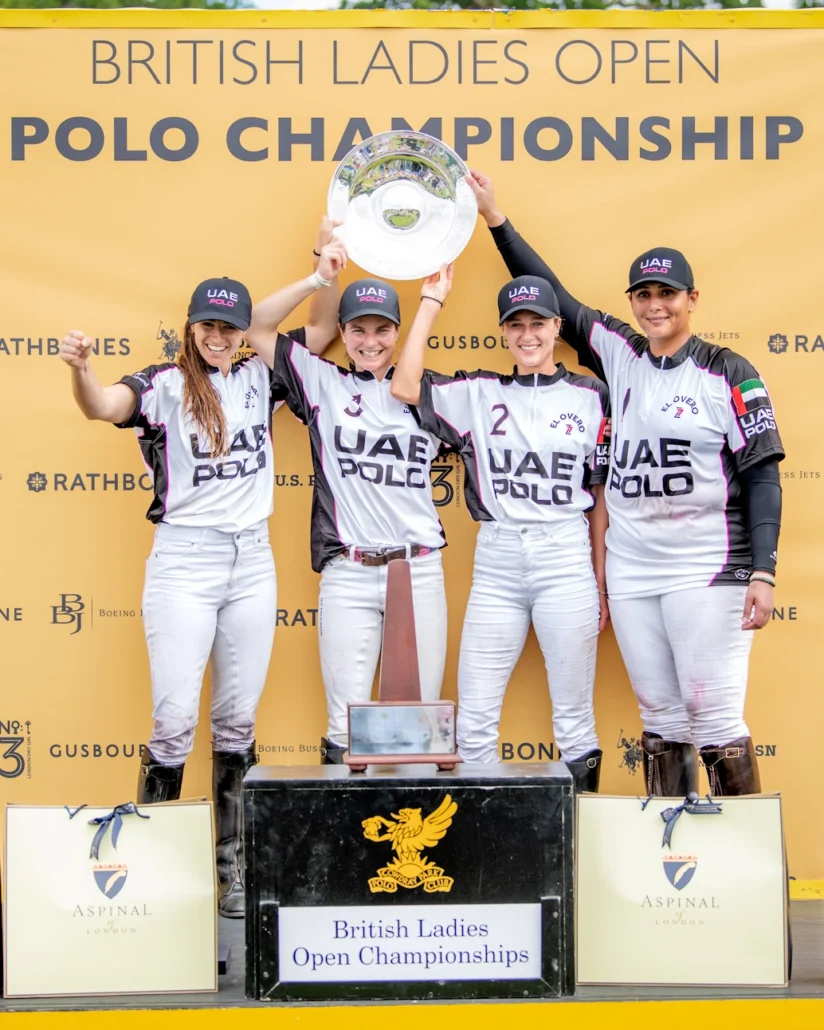
UAE: Al Habtoor Polo Resort (Dubai), Ghantoot Racing & Polo Club (Abu Dhabi); the UAE team is a regular in high-goal British and Argentine seasons.
India: Calcutta Polo Club (the oldest surviving club in the world), Jaipur, Delhi, Jodhpur and the heritage Manipuri tournament at Imphal.
Australia / New Zealand: Sydney Polo Club, Ellerston (Kerry Packer’s legacy), Clevedon in New Zealand.
The spectator experience – divot stomping and beyond
Polo is a spectator sport built around hospitality. The half-time divot-stomping tradition – spectators walking the field to replace turf divots kicked up by the ponies – is the most recognisable polo ritual worldwide. The broader scene combines major sponsorship (Cartier, champagne houses Veuve Clicquot Laurent Perrier, Moët & Chandon, Pommery, financial institutions, watch makers Rolex, Jaeger-LeCoultre, Hublot, Piaget), private patronage (patrons typically fund a team of three professionals), and old-school protocol: white trousers, brown boots, and the presentation of the Best Playing Pony trophy to the match’s outstanding horse.
7. How to get started in Polo
Step 1 – Find a polo school
Most HPA-affiliated polo schools and USPA Member Clubs offer introductory lessons that include a quiet school pony, helmet and mallet. Beginners need only jeans or jodhpurs and a boot with a heel. No previous riding experience is required, though basic equestrian confidence helps.
Step 2 – Understand the costs
| Item | Typical Cost |
| Introductory lesson (pony + kit included) | $120 / $150 per session |
| Stick-and-ball practice | $75–$150 per session (US) |
| Club seasonal membership | Approx. $1,500 per season + USPA membership ($200/yr) |
| Pony lease | $1,000–$2,000 per pony per month |
| Pony purchase (entry-level) | $5,000–$25,000 |
| First kit (helmet, boots, guards, gloves, mallet, trousers) | Approx. $1,500 total |
Step 3 – Start in the arena
Arena polo is the universal entry point: a smaller enclosed field, slower ball, only two ponies needed and shorter chukkas. It teaches the line of the ball and ride-off discipline in a controlled environment before graduating to outdoor grass polo.
Step 4 – Build a handicap
Every new player begins at −2 and is reassessed by the national association’s handicap committee at the end of each season. Most adult amateurs reach 0–1 within 2–3 seasons of consistent play.
Step 5 – Your first kit priority list
| Priority | Item | Why |
| 1st | Certified helmet (NOCSAE ND050 or PAS 015:2011, VG1 01.040, UTAC/CRITT or SNELL E2001) | No other item is as important. Do not play without a compliant helmet. |
| 2nd | Polo boots or jodhpur boots with a heel | Prevents the foot slipping through the stirrup iron. |
| 3rd | Knee guards | Mandatory under HPA and USPA rules. |
| 4th | Polo gloves | Right-hand for mallet; consider a pair once playing regularly. |
| 5th | A 50–52 inch mallet | Most schools supply mallets for beginners – buy your own once you know your preferred flex and length. |
| 6th | Polo whites (trousers) | One pair of white trousers for match play; two pairs of dark practice pants for daily training. |
“My advice to any beginner is to spend on the helmet first and never compromise there, then build the rest of your kit slowly as you learn what suits you. A good pair of gloves and a proper elbow guard are the next investments that genuinely change how you play — everything else can wait.” – Alejandra Falkinhoff, CEO, Ona Polo
Polo is simultaneously one of the oldest sports on earth and one of the most thrillingly modern – where ancient cavalry traditions meet cutting-edge equine cloning, technical sportswear and global television broadcasts from Palermo to Palm Beach. It is a sport of extraordinary physical demand on both horse and rider, governed by a beautifully simple central principle – the line of the ball – that makes every game legible to the patient spectator.
Whether you are watching for the first time, considering your first lesson, or already deep in the game and looking to upgrade your kit, the fundamentals are now clear: understand the chukka, the line of the ball, and the equipment required. Everything else – the handicap system, the Argentine pedigrees, the nuances of a 30-yard penalty shot – follows naturally from those three pillars.



8. Frequently Asked Questions
Is polo dangerous?
Polo carries genuine physical risk: falls, ride-off collisions and mallet or ball impacts do occur. Modern safety requirements – certified helmets, knee guards, tall boots and mandatory polo whites – exist precisely because the sport has been made progressively safer over decades. Arena polo on a well-trained school pony is considerably lower-risk than high-goal outdoor polo at speed.
Why do polo players wear white?
White trousers were adopted by British cavalry in the Indian subcontinent because white linen is cooler than dark fabrics in intense heat. The tradition became formalised into the rules: both the HPA and USPA mandate white trousers for sanctioned match play.
Why must polo be played right-handed?
The USPA rule (Rule 28-e) prohibiting left-handed play was formally reinstated effective 1 January 1974 to make the line of the ball predictable for all eight players and prevent dangerous head-on collisions.
How long does a polo match last?
A 6-chukka high-goal match takes approximately 2–2½ hours including intervals. A 4-chukka club match runs roughly 90 minutes. Allow extra time for the half-time divot-stomping ceremony and the post-match presentation.
How many horses does a player need?
For a 4-chukka club match, a minimum of two ponies. For a 6-chukka high-goal fixture, professionals typically bring up to 12 ponies. Each pony needs at least 48 hours rest between chukkas.
Can I start polo as an adult with no riding experience?
Yes. Most polo schools welcome complete beginners; good programs start on the ground (mallet technique on a wooden horse) before progressing to slow ridden work, then stick-and-ball, then arena chukkas. Adults without riding experience typically take 6–12 months to reach their first competitive chukka.
What is a chukka?
A chukka (US: chukker) is a 7-minute period of play in outdoor polo (7½ minutes under USPA rules). The word derives from the Hindi chakkar, meaning a round or circle.