
Three garments, one fabric. Ona Polo’s base layer collection is built on a single construction, the same merino blend, the same weight, the same seams, which means the choice between Selknam, Quillah and Howsh is not a choice about quality or warmth. It is a choice about how you ride, how you wash, and what else the garment has to do when you are not on a pony.
That is a more useful problem than it first appears. Most base layer buying decisions are muddled by incomparable specifications: different weights, different wool grades, different blends, all competing at once. Here the variables are stripped back to four, the neck, the cut, the care, and the colour, and each of them maps cleanly onto a real situation.
This guide is a direct comparison. If you want the underlying science of merino, why it handles moisture the way it does, what micron and fabric weight mean, how to build a layering system for a winter season, that is covered in our complete guide to merino base layers for polo and riding. What follows assumes you have already decided merino is right and now need to decide which one.
“People ask us which one is warmest, and the answer is that they are all the same fabric. That usually disappoints them for about ten seconds, until they realise it means the decision is actually simple. You are not choosing a performance level. You are choosing how you want to use the garment.” – Alejandra Falkinhoff, CEO, Ona Polo
What all three share
Before the differences, the common ground, because it is most of the garment.
Selknam, Quillah and Howsh are all knitted from the same technical blend: 67% merino wool, 22% polyamide and 11% elastane, at 160 grams per square metre. The merino does the thermoregulation, the moisture management and the odour resistance. The polyamide adds abrasion resistance and structure – important for a layer that takes constant friction from skin and outer layers during riding. The elastane delivers four-way stretch and shape recovery, which is what allows the fabric to move through a full swing and return to its original shape rather than bagging at the elbow by the third chukka.
All three use flatlock seam construction, which lies flush against the skin rather than forming a ridge under a shirt or a body protector. All three are cut in a slim performance fit, designed to sit next to the skin without excess fabric under breeches or polo whites. All three are knitted and finished in Italy.
At 160g they sit at the lighter end of the merino spectrum, which is deliberate. A base layer’s job during activity is to move moisture, not to insulate; insulation belongs to a mid-layer you can add between chukkas and remove before you play. A heavier next-to-skin garment will have you overheating within minutes of starting, and once saturated it becomes a liability for the rest of the afternoon.
So the decision below is not about which garment is warmer. It is about which one fits your riding, your laundry habits and your wardrobe.
The three at a glance
The full comparison, before we take each variable in turn.
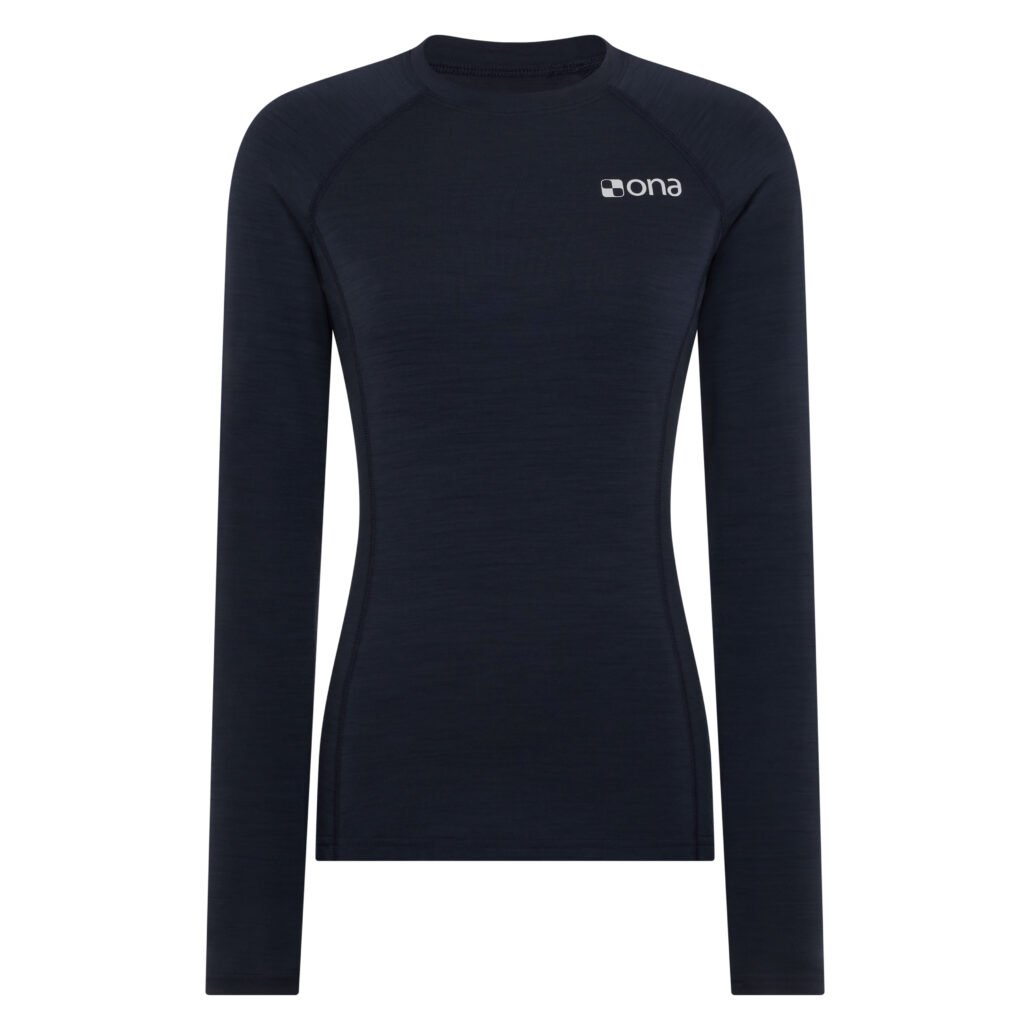
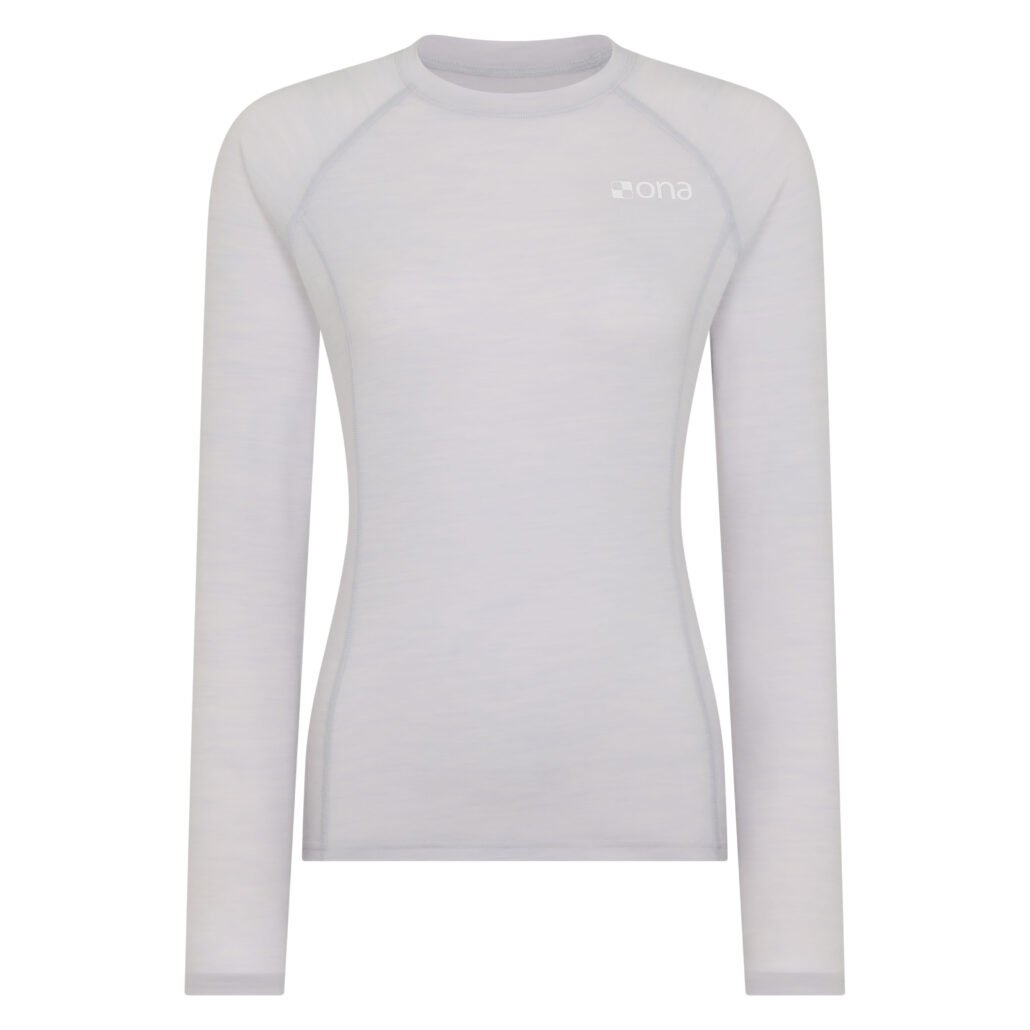
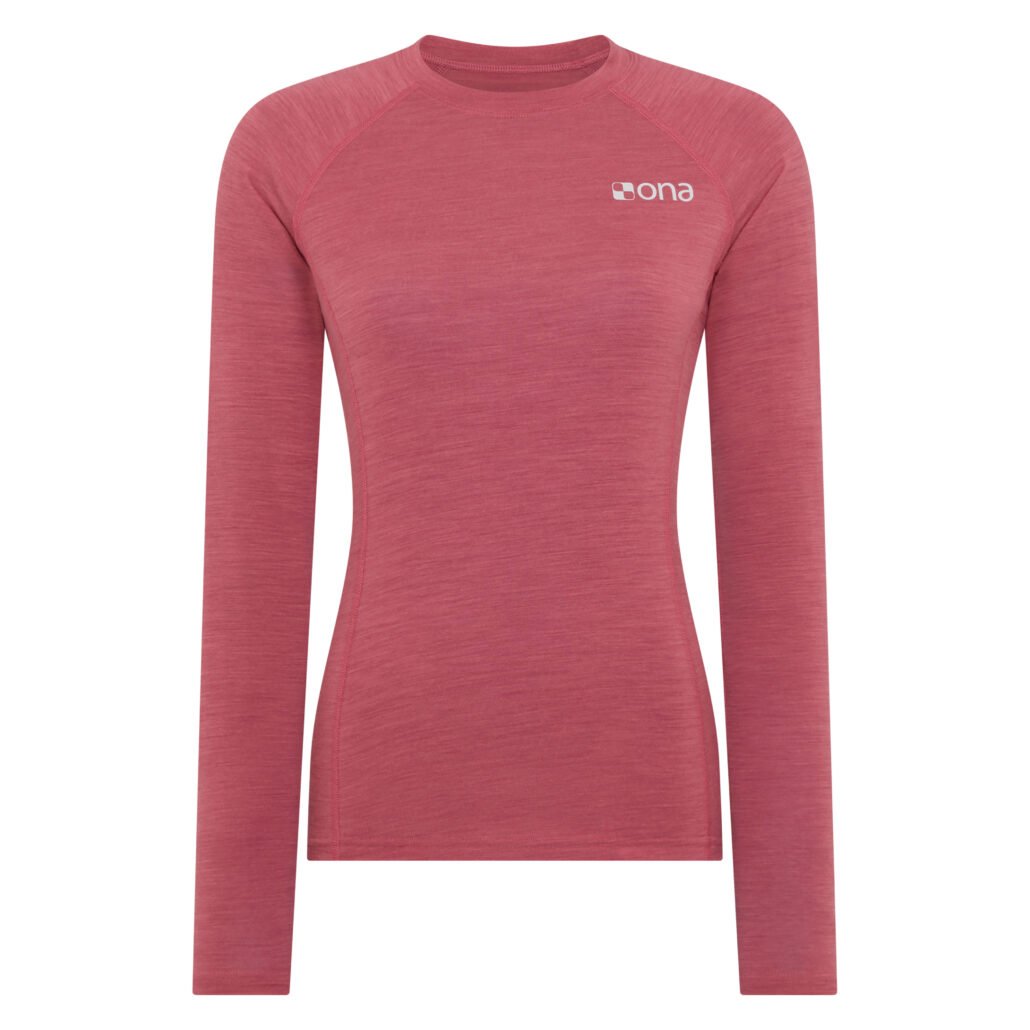
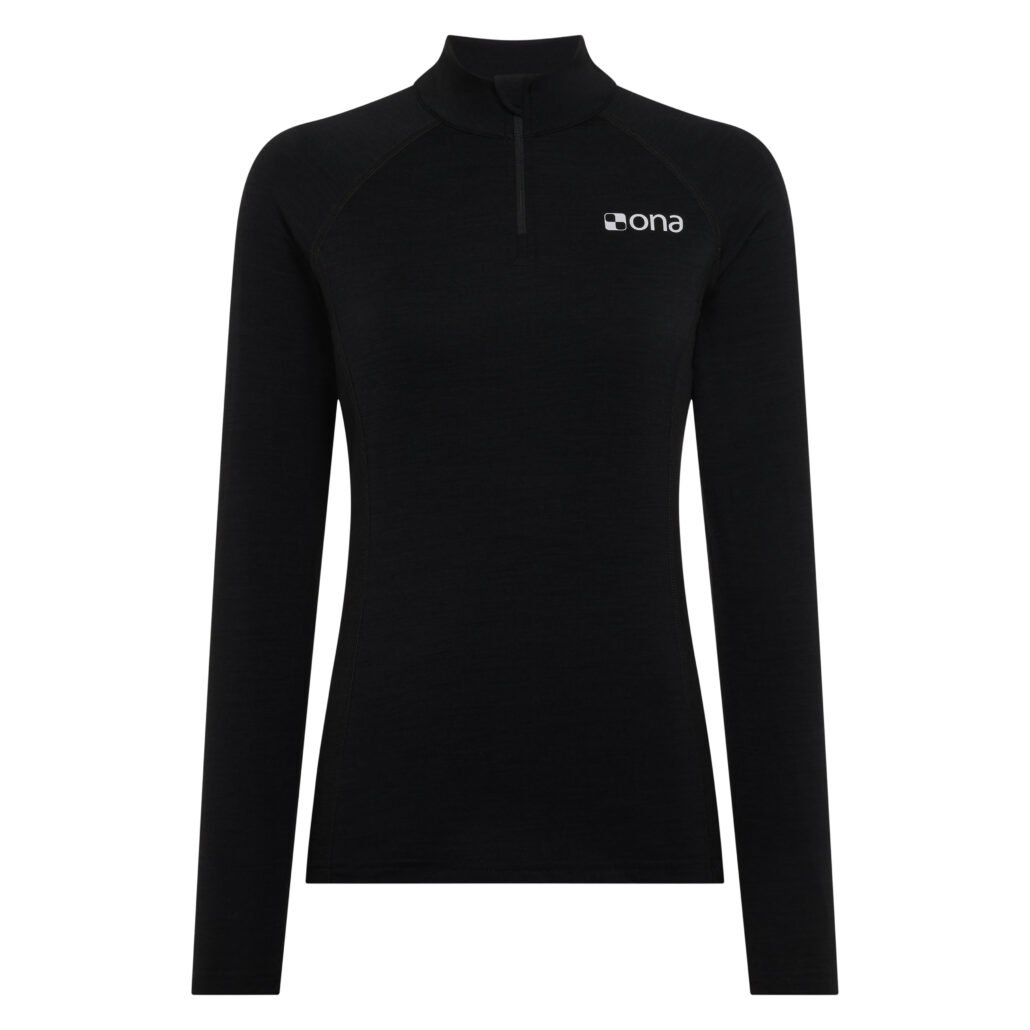
Selknam, Quillah and Howsh compared
| Selknam | Quillah | Howsh | |
| Cut | Women’s | Women’s | Men’s |
| Neck | Crew neck | Quarter-zip | Quarter-zip |
| Colours | Blossom, Mist, Lago | Basalt | Basalt |
| Merino treatment | Non-superwash | Superwash | Superwash |
| Washing | Wool cycle in a mesh bag, or hand wash | Straight into a 30°C wool cycle | Straight into a 30°C wool cycle |
| Price | $100 | $125 | $125 |
| Best for | Riders who want one top for the yard, the field and everyday wear | Players who need to regulate temperature during a match | Players who need to regulate temperature during a match |
Composition, weight, seam construction, fit and country of manufacture are identical across all three, so they are not listed as points of difference. Sizing runs S to XL in both the women’s and men’s patterns.
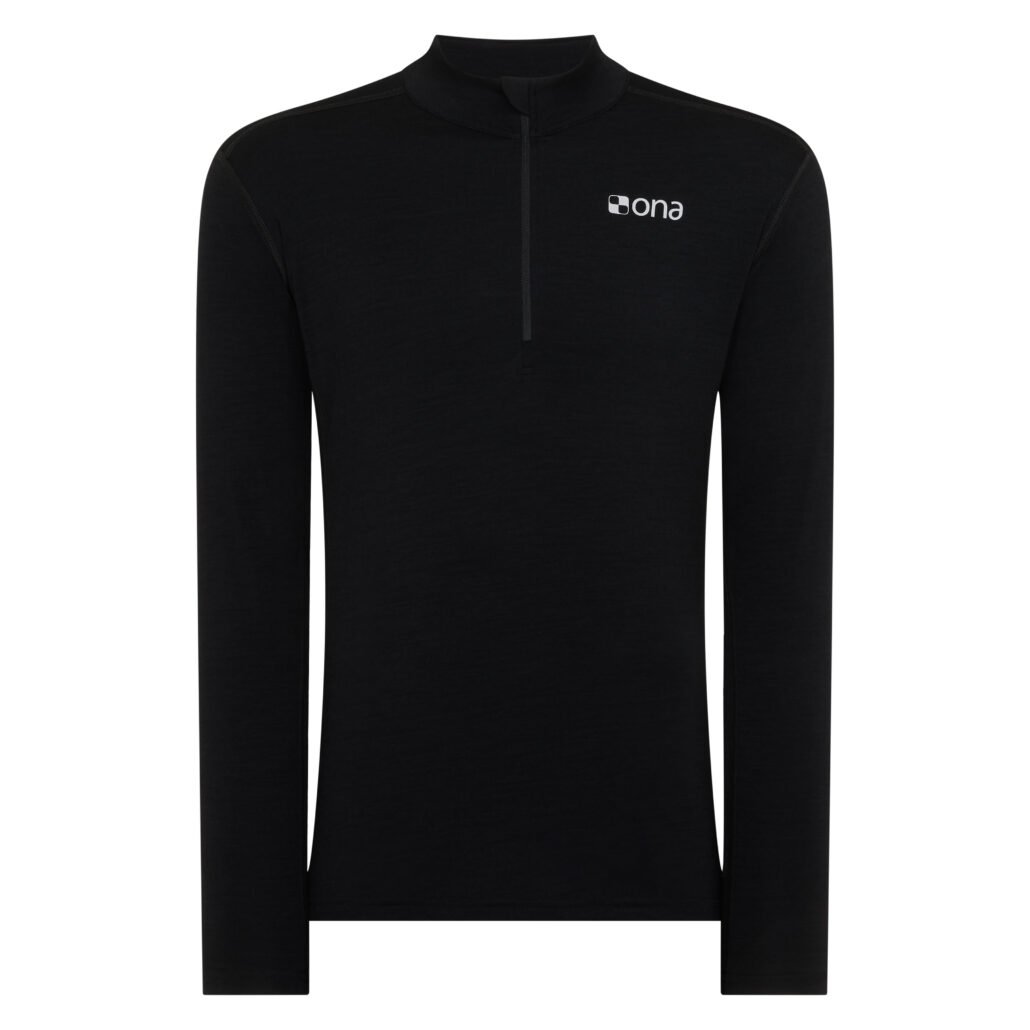
Decision one: Quarter-zip or crew neck
This is the variable that matters most, and it is not a style question. It is a ventilation question.
“The zip is not a detail. Watch players between chukkas and you will see the same movement over and over – the hand goes to the throat, the zip comes down, and they breathe out. It happens eight times an afternoon. That is not a feature you appreciate once; it is one you use constantly.” – Alejandra Falkinhoff, CEO, Ona Polo
The case for the quarter-zip: Quillah and Howsh
A quarter-zip gives you temperature control you can operate without removing anything. Open it walking off the field and you dump heat through the chest and throat immediately, at exactly the moment your body is producing the most and moving the least. Close it standing at the pony lines when the wind gets up, and you protect the throat – the place most riders lose warmth first.
On a match day this is worth more than it sounds. Conditions between the first chukka and the last can move ten degrees, the sun comes and goes, and you are alternating between full effort and standing still every seven minutes. A garment you can adjust mid-afternoon, one-handed, while holding a mallet, solves a problem that recurs constantly.
Quillah is the women’s quarter-zip; Howsh is the men’s. Both are offered in Basalt, a dark neutral chosen to sit discreetly under team colours where the collar shows.
The case for the crew neck: Selknam
A crew neck is lighter, flatter and simpler. With no zip and no hardware at the collar it sits cleanly under a fitted polo shirt, and for riders who find a zip pulls or sits awkwardly under a collar, that alone settles the question.
The stronger argument, though, is versatility. Selknam works as a standalone top – on the yard, under a jacket, on a cold morning that has nothing to do with polo. It is the garment in the collection most likely to be worn on days you do not ride, which changes the value calculation considerably. It is also the only style offered in a range of colours: Blossom, Mist and Lago, drawn from the Patagonian landscape.
There is a trade-off, and it is worth stating plainly. Without a zip you have no quick venting option; if you overheat mid-chukka, your only adjustment is to push the sleeves up. For riders who play competitively through a variable season, that is a real limitation.
A practical rule
If the garment’s primary job is playing polo, choose the quarter-zip. If its primary job is keeping you warm across a riding life that includes the yard, the school and the drive home, choose the crew. If you can stretch to two, most riders end up wanting one of each – not for warmth, but because a tournament weekend rarely leaves time for laundry.
Decision two: Superwash or not
This is the difference almost no buyer is told about, and for some riders it matters more than the neck.
“For Selknam, we worked with our mill in Italy to hand-pick a palette that felt personal rather than seasonal – the elegance of Blue Lago, the softness of Grey Mist, the joyfulness of Pink Blossom. Colours this true to what we wanted only exist in non-superwash merino. We think that’s a trade worth making.” – Alejandra Falkinhoff, CEO, Ona Polo
What superwash actually is
Untreated wool fibre is covered in microscopic overlapping scales. Under heat and agitation those scales interlock and the fabric felts – which is how a wool garment emerges from a hot wash two sizes smaller and permanently dense. Superwash is a finishing process that smooths or coats those scales so the fibre can no longer felt, making the garment fully machine washable without shrinkage or loss of shape.
The trade-off is subtle rather than dramatic. Superwash wool is more robust and far more practical for kit that is worn hard and washed often. Non-superwash wool keeps the fibre in its natural state, which some may find finer and softer against the skin, but it asks for gentler handling in return.
How this splits the collection
Quillah and Howsh use superwash merino. They go straight into a 30°C wool or gentle cycle, no mesh bag required, and lay flat to dry. This is the right specification for a garment that comes off muddy at the end of a tournament and needs to be ready again by Saturday.
Selknam uses a non-superwash merino at the cost of a little more care. Wash it on a wool cycle inside a mesh garment bag, or by hand in lukewarm water with a wool-specific detergent. Lay flat, do not wring, and store it folded rather than on a hanger, because knitted wool stretches under its own weight.
Neither approach is better in the abstract. The honest question is how you actually do laundry. A rider who washes kit on a Sunday night with everything else will be happier with superwash; a rider who does not mind a mesh bag will get a softer garment for less money.
Rules that apply to all three
- Wash cool – 30°C, gentle or wool cycle. Heat and agitation are what damage wool.
- Use a mild or wool-specific detergent; avoid biological and enzymatic products, which attack protein fibre.
- Never use fabric conditioner – it coats the fibre and undoes the moisture management.
- Never bleach, and never tumble dry.
- Lay flat to dry, away from direct heat and strong sunlight.
- Cool iron on the reverse only if genuinely needed.
- Air between wears rather than washing by routine. Merino resists odour, and every wash you skip extends the garment’s life.
Fit and sizing
All three are cut in a slim performance fit. A base layer needs contact with the skin across its whole area, because moisture transfer depends on that contact – loose fabric does not manage sweat, it hangs, and it bunches under the saddle or at the knee.
Ona recommends sizing up if you fall between sizes. The garment should feel snug rather than compressive: if you have to work to get into it, or if it restricts a full arm extension, it is too small, and no amount of stretch will fix that over four chukkas.
“A women’s base layer is not a men’s base layer made smaller, and anyone who has worn one knows the difference within a minute of sitting into a saddle. It is about where the garment is shaped, not how much of it there is. Get that wrong and it rolls at the waist the moment you fold forward.” – Alejandra Falkinhoff, CEO, Ona Polo
The women’s cut: Selknam and Quillah
Both women’s styles are shaped rather than simply scaled down. A genuine women’s pattern is shaped through the bust and tapered at the waist, with a different hip-to-waist ratio and adjusted body and sleeve length. This is not a cosmetic distinction: under a body protector, a shaped torso is what stops the garment bunching or rolling at the waist when you fold forward into riding position, and it helps the protector itself sit where it is meant to.
Women’s sizing – Selknam and Quillah
| Size | Chest (cm) | Waist (cm) | Hip (cm) |
| S | 87–92 | 69–74 | 83–88 |
| M | 93–98 | 75–80 | 89–94 |
| L | 99–104 | 81–86 | 95–100 |
The men’s cut: Howsh
Howsh is cut slim and close, designed to sit low-profile under polo whites or a jacket without adding bulk at the waist or shoulder.
Men’s sizing – Howsh
| Size | Chest (cm) | Waist (cm) | Hip (cm) |
| S | 92–97 | 77–82 | 88–93 |
| M | 98–103 | 83–88 | 94–99 |
| L | 104–109 | 89–94 | 100–105 |
| XL | 110–115 | 95–100 | 106–111 |
Sleeves and the glove interface
One detail worth checking when the garment arrives: extend your arm fully and see where the cuff sits. The sleeve should stay put through a full reach and sit slim enough at the wrist to slide cleanly inside a glove cuff without bunching. Bunched fabric at the wrist compromises the connection that matters most in this sport – the feel between hand, rein and mallet. Riders who already understand what a well-fitted glove does will recognise the same principle here.
Where the names come from
The three garments are named after the peoples and objects of Tierra del Fuego, the archipelago at the southern tip of South America – as is the brand itself. The stories are worth telling accurately.
The Selk’nam were the terrestrial hunter-gatherers of the interior of Isla Grande de Tierra del Fuego. “Selk’nam” is what they called themselves; “Ona” is the name given to them by the neighbouring Yahgan people, and it is the name under which they became known to the outside world. During the late nineteenth and early twentieth centuries the Selk’nam were subjected to a genocide, as sheep estancias, gold prospecting and colonisation displaced and killed the great majority of the population. For most of the twentieth century they were officially recorded as extinct. They are not. In October 2023 the Chilean state formally recognised the Selk’nam as a living people, and descendant communities are active today.
The Haush, who called themselves the Manek’enk, lived on the south-eastern peninsula of the same island, and are generally considered its oldest inhabitants. They were closely related to the Selk’nam in language and custom. The Haush did not survive the same period; the people and their language are understood to have died out around 1920. Howsh takes its name from them.
Quillah, according to Ona Polo, is named for the quillango – the guanaco-hide cape of Tierra del Fuego, worn fur-side inward directly against the skin. It is a fitting reference for a base layer: the first garment of warmth, worn closest to the body. The quillango is a documented Patagonian garment, though the tradition is most strongly recorded among the Tehuelche of the mainland.
There is a reason to set these out carefully rather than decoratively. Naming performance garments after peoples who were subjected to genocide is not a neutral act, and the minimum owed in return is accuracy: not treating the Selk’nam as a vanished curiosity, not inventing romantic etymologies, and not flattening distinct peoples into a single aesthetic. Readers who want to know more will find substantial scholarship on the Selk’nam and the Haush, and on the recognition campaign that led to the 2023 law.
“These names come from real people and a real history, and it is a history that is difficult to look at honestly. – Alejandra Falkinhoff, CEO, Ona Polo
So which one should you choose?
Reduced to the situations that actually determine the answer.
Matching the garment to the rider
| If this describes you | Choose |
| You are a man playing or practising through a cold season | Howsh – the only men’s style, and the quarter-zip is the right neck for play |
| You are a woman playing competitively and want to regulate temperature between chukkas | Quillah |
| You are a woman who wants one merino top for riding, the yard and everyday wear | Selknam |
| You wash kit with everything else and want no special handling | Quillah or Howsh – superwash, straight into the machine |
| You want the softest possible fibre next to the skin and do not mind a mesh bag | Selknam |
| You want a colour other than a dark neutral | Selknam – Blossom, Mist or Lago |
| You are buying two | One quarter-zip for playing, one crew for everything else |
For a first purchase, the simplest guidance is this: if you play, buy for the field and let everyday wear be the bonus. The quarter-zip solves a problem that occurs every time you come off a pony. The crew solves a problem that occurs on the walk to the car. Both are worth solving, but only one of them recurs eight times an afternoon.
The useful thing about a collection built on a single fabric is that it removes the questions that usually make base layer shopping difficult. You are not weighing one wool grade against another, or trying to compare a 200g garment to a 150g one across different blends. The merino performance is a constant. What remains is a set of practical questions with clear answers.
Do you need to vent mid-afternoon? Then a quarter-zip, Quillah or Howsh. Do you want a garment that works as readily off the yard as on it, in a colour you would choose for its own sake? Then Selknam. Will the garment be washed with everything else on a Sunday night? Then superwash, which means Quillah or Howsh again. Would you rather have the finer fibre and accept a mesh bag? Then Selknam.
Most riders who buy one eventually buy a second, and the pairing that tends to emerge is a quarter-zip for playing and a crew for everything else. That is not a sales argument so much as an observation about how kit actually gets used across a season: one garment for the field, one for the rest of the life that surrounds it.
Frequently asked questions
What is the difference between Selknam, Quillah and Howsh?
All three use the same fabric – 67% merino wool, 22% polyamide and 11% elastane at 160g. They differ in four ways: Selknam is a women’s crew neck in three colours with non-superwash merino; Quillah is a women’s quarter-zip in Basalt with superwash merino; Howsh is the men’s quarter-zip in Basalt with superwash merino. Selknam is $100; the two quarter-zips are $125.
Is there a men’s crew neck?
No. The men’s style in the collection is Howsh, a quarter-zip. Selknam, the crew neck, is cut on a women’s pattern.
Which base layer is best for playing polo?
A quarter-zip – Quillah for women, Howsh for men. The ability to vent through the chest and throat between chukkas, without removing a layer, is the single most useful feature during a match. The crew neck is the better all-round garment but has no quick venting option.
Is superwash merino better than non-superwash?
Neither is better; they suit different priorities. Superwash merino is treated so it cannot felt, which makes it fully machine washable and more practical for kit washed often. Non-superwash merino keeps the fibre in its natural state, which some people find softer next to the skin, but requires a mesh bag or a hand wash.
Do Selknam and Quillah run the same size?
Yes. Both women’s styles use the same size chart and the same slim performance fit; the difference is the neck construction, not the pattern. If you fall between sizes, size up.
Can I wear these under a team shirt in competition?
Yes. Governing body regulations concern the team shirt itself – its colours, its uniformity across the team and the player’s number – not what is worn beneath it. The Basalt colourway on Quillah and Howsh is a dark neutral chosen to sit discreetly where a collar or cuff shows.
Are these warm enough for winter?
As a next-to-skin layer, yes – provided you treat them as part of a system. At 160g these are designed to manage moisture during activity, with insulation coming from a mid-layer you add between chukkas and remove before you play. A heavier base layer worn during exercise usually causes more problems than it solves.
Why is Selknam less expensive than the other two?
The price difference reflects the construction rather than the fabric. All three use the same merino blend at the same weight; the quarter-zip styles carry the additional cost of the zip and its assembly.